How to Curve a Pickleball: Spin Techniques and Physics
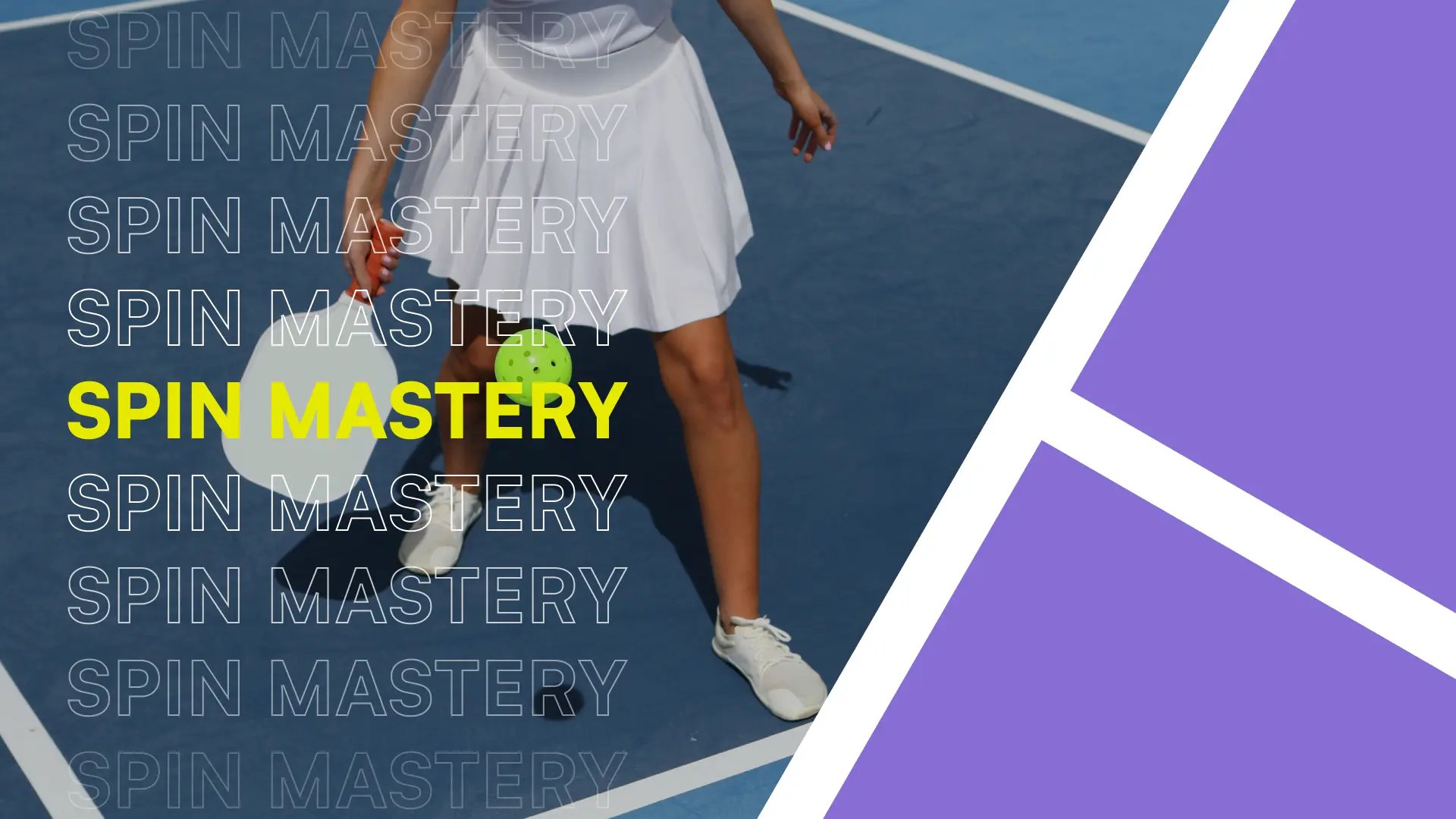
I remember the first time I saw someone put real spin on a pickleball. I was at open play, and this player hit a serve that curved away from me like it had a mind of its own. I whiffed. Completely. I had been playing for months and nobody had ever served me anything like that. After the game, I asked him how he did it. He said, "It is all in the brush."
That started a rabbit hole I am still in. At 11 PICKLES, we play every day, we train with pros, and we test paddles for our gear reviews. Spin is one of the most misunderstood skills in pickleball. Most players think they cannot generate spin on a wiffle ball. They can. Others think spin does not matter because the ball is too light. It does.
The truth is somewhere in the middle: pickleball spin is real, it is effective, and it plays by different rules than tennis spin. Understanding those rules will make your serves harder to return, your dinks harder to attack, and your drives harder to handle. Here is the complete breakdown.
The Physics of Curving a Pickleball
Stick with me here for a minute because understanding why a pickleball curves will make you better at generating spin and reading your opponent's shots. Most articles skip this part. I think it is worth knowing.
The Magnus Effect
When a pickleball spins, it creates differential air pressure on opposite sides of the ball. Air moving with the spin accelerates (creating lower pressure), while air moving against the spin decelerates (creating higher pressure). This pressure difference pushes the ball in the direction of the spin. That is the Magnus effect, and it is the same principle that makes a curveball curve in baseball.
The Role of the Holes
Here is where pickleball gets interesting. The holes do not just reduce air resistance. Air flows through the inside of the ball, not just around the outside. Depending on the spin direction, air can jet out of holes on one side and interact with external airflow, creating additional instability and unpredictability.
- Outdoor balls have 40 smaller holes (approximately 0.282 inches diameter). They spin more easily, play faster, and are more affected by spin.
- Indoor balls have 26 larger holes (approximately 0.43 inches diameter). They are softer, move slower, and do not spin as much.
If you are working on spin, outdoor balls are where you will see the biggest results.
The Topspin-Backspin Asymmetry
This is the most counterintuitive finding in pickleball physics. Research from Tennis Warehouse University found that topspin consistently produces larger lift forces than backspin at the same spin rate. In simpler terms: topspin makes the ball dip more aggressively than backspin makes it float.
Three factors explain this:
- Gravity-induced airflow bias: Gravity accelerates downward-moving air and decelerates upward-moving air, creating a persistent top-bottom asymmetry.
- Internal airflow effects: Holes scooping and jetting air interact differently with external flow depending on spin direction.
- Non-zero lift at zero spin: Even without rotation, a pickleball has measurable downward-biased lift from gravity's effect on airflow.
Why this matters for your game: Topspin is a more "rewarding" spin to learn than backspin. A topspin drive will dip more sharply than a backspin slice will float. This is why the best players, including ben johns and anna leigh waters, use topspin as their primary spin on drives and serves.
Pickleball Spin vs. Tennis Spin
If you came from tennis, forget what you know about spin generation. The differences are significant. For the full comparison, see difference between pickleball and tennis.
- Max spin rates: Pickleball paddles generate approximately 800-1,600 RPM. Tennis rackets generate 3,000-5,000+ RPM.
- Ball weight: A pickleball weighs 0.78-0.935 ounces. A tennis ball weighs nearly 2 ounces. The lighter ball is more affected by air resistance, so spin effects decay faster.
- Surface friction: Tennis balls have a fuzzy exterior that creates enormous friction for spin generation. Pickleballs are smooth plastic. Tennis racket strings "grab" the ball and snap back. Pickleball paddles are solid surfaces.
- Unique advantage: The holes create aerodynamic effects not present in tennis. Pickleball spin may be lower in RPM, but the ball's flight behavior is uniquely unpredictable.
Every Spin Type and How to Generate It
There are three primary spin types in pickleball, plus combinations. I use all of them during play, and each one has a specific purpose. Here is how to execute each one.
Topspin
Topspin makes the ball rotate forward, causing it to dip downward faster than gravity alone. It is the most useful spin in pickleball and the one the pros rely on most.
How to generate it:
- Start your paddle below the ball
- Brush up the back of the ball with a low-to-high swing path
- Close the paddle face slightly (angle it downward toward the court)
- Use wrist lag: let the wrist snap through contact
- Follow through high, finishing above your shoulder
Grip: Eastern or Semi-Western for maximum topspin. Continental works but generates less. For grip fundamentals, see our guide on how to hold a pickleball racket.
When to use it: Drives from the baseline, serves, passing shots, aggressive dinks, and third shot drives. Topspin allows you to hit harder while keeping the ball in the court because the ball dips.
Backspin (Slice)
Backspin makes the ball rotate backward, causing it to float longer and stay low after the bounce. It is the defensive spin, and it is essential for resets and drops.
How to generate it:
- Start your paddle above the ball
- Brush down the back of the ball with a high-to-low swing path
- Open the paddle face slightly (angle it upward toward the sky)
- Keep a firm but relaxed wrist through contact
- Follow through low, finishing below your waist
When to use it: Third shot drop pickleball shots, resets from the transition zone, slice serves, defensive returns against hard-hit balls, and neutralizing dinks. Backspin keeps the ball low after the bounce, making it harder for opponents to attack.
Sidespin
Sidespin makes the ball curve left or right in the air and kick sideways after the bounce. It is the least common spin in pickleball but can be highly effective for creating angles.
How to generate it:
- Brush across the side of the ball horizontally
- For right-to-left curve (right-handers): brush from right to left across the back of the ball
- For left-to-right curve: brush from left to right
- The paddle face should be slightly angled in the direction you want the ball to curve
- Follow through in the direction of the spin
When to use it: Serve variation, angled dinks, and creating unexpected bounce patterns. Sidespin is most effective on serves where the opponent has less time to read the spin.
Combination Spins
The most advanced players combine spin types. Topspin with sidespin creates a ball that dips AND curves. Backspin with sidespin creates a ball that stays low AND kicks sideways after the bounce. These combination spins are difficult to read and even harder to return cleanly.
How Spin Applies to Every Shot
Spin is not a standalone technique. It integrates into every shot you hit. Here is how spin changes the game shot by shot.
Serve Spin
This is where spin makes the biggest difference for most players. Professional players use topspin on approximately 90% of their serves. A topspin serve dips into the service box more aggressively, giving you a wider margin of error while maintaining speed. Backspin serves (slice) stay low and skid, making them difficult to return with power. Sidespin serves curve the ball away from the receiver, pulling them off the court.
For serve fundamentals, see how to serve in pickleball for beginners.
[EMBED: YouTube - Search "pickleball spin serve tutorial 2025" from Zane Navratil or Briones Pickleball]
Third Shot Drop Spin
The third shot drop pickleball is where backspin shines. A slice third shot drop stays low over the net and dies after the bounce, making it nearly impossible for the net player to attack. Anna leigh waters chooses drops approximately 70% of the time after deep returns, and her backspin is a significant reason they are so effective.
Topspin third shot drives are the alternative. They dip faster, reducing reaction time for opponents at the kitchen line. The choice between a spin drop and a spin drive depends on the situation. Read how to beat bangers in pickleball for when each option works best.
Dink Spin
Spin transforms dinking from a neutral exchange into a weapon:
- Topspin dinks push the ball down faster, forcing opponents to hit up on the ball. This creates attackable pop-ups.
- Backspin dinks keep the ball low and make it die on the bounce. Opponents have to reach down, reducing their ability to speed up.
- Sidespin dinks pull the ball away from opponents, creating angles and forcing them to move laterally.
The best dinking strategy mixes all three spins to keep opponents guessing. If you are only hitting flat dinks, you are leaving points on the table.
Drive Spin
Topspin drives are the bread and butter of aggressive pickleball. The ball dips more sharply, which means you can hit harder while keeping the ball in the court. Heavy topspin drives at the kitchen line are difficult to block cleanly because the ball jumps after contact with the opponent's paddle.
Return of Serve Spin
Deep returns with topspin push the serving team back and give you more time to approach the kitchen line. Slice returns stay low and force the serving team to hit up on their third shot. Mixing spin on returns keeps the serving team off balance.
The Truth About Paddle Surface and Spin
This section might change how you think about your next paddle purchase.
The Counterintuitive Finding
Research from Tennis Warehouse University has shown that for most shots (impact angles above 45-50 degrees), paddle surface roughness barely matters for spin generation. At these angles, all paddles, regardless of surface texture, reach the friction spin limit. The ball slides on the surface for the same distance regardless of roughness, producing nearly identical spin.
Surface texture matters more at lower impact angles (flatter contact), like drives and some serves. For dinks and drops, which involve steeper impact angles, the difference between a carbon fiber face and a fiberglass face is negligible.
What Actually Matters for Spin
- Your swing path and technique (the brush angle and speed of your swing)
- Impact angle (how steeply the ball contacts the paddle face)
- Wrist action (snap and follow-through)
- Ball type (outdoor balls spin more than indoor)
Legal Limits
Surface roughness is regulated. USAP limits surface roughness to 30 micrometers (Rz reading) and 40 micrometers (Rt reading). UPA-A caps spin directly at 2,100 RPM. For a full breakdown of paddle regulations, see our article on banned pickleball paddles.
Best Paddles for Spin
Carbon fiber faces generally produce more spin than fiberglass at lower impact angles. Here are the paddles I have tested that excel at spin generation:
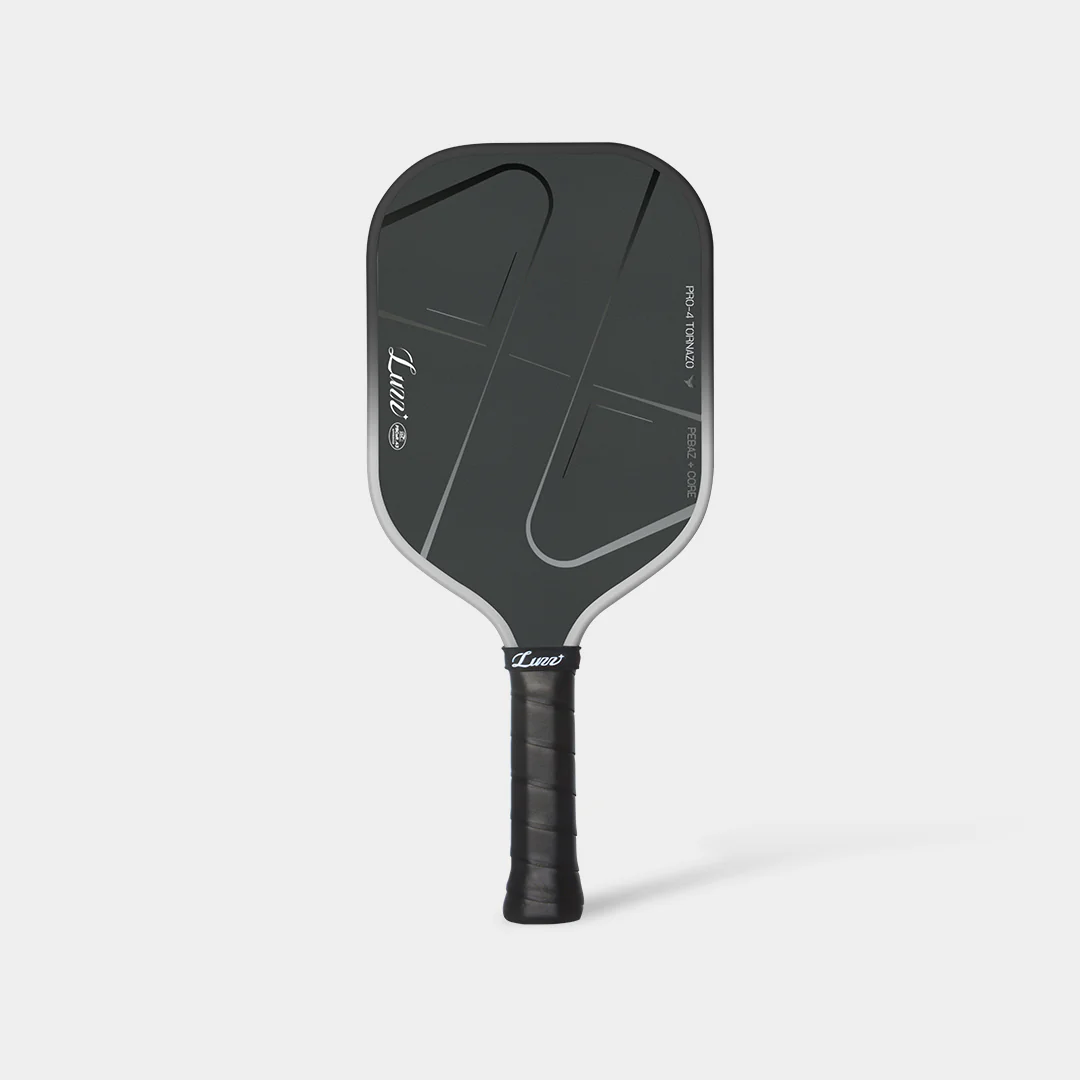
Luzz Pro 4 Tornazo Pickleball Paddle Review (the best spin paddle I have tested, outstanding on dinks and drops)
Luzz Pro 4 Inferno Pickleball Paddle Review (power with topspin on drives)
Luzz Cannon Pickleball Paddle Kung Fu Panda Review (elongated shape gives extra leverage on spin serves)
Use code 11PICKLES for 15% off at Luzz.
Drills to Build Your Spin Game
Spin is a skill you can practice deliberately. I built my spin game through these drills, starting with the wall and working up to live play.
Beginner: Wall Drills (Solo)
- Stand 10 feet from a wall
- Hit the ball with topspin (brush up) and watch the ball dip as it travels to the wall
- Hit with backspin (brush down) and watch the ball float
- Alternate between topspin and backspin every 5 shots
- Goal: feel the difference in your swing path and see the difference in ball flight
Intermediate: Target Drills (Solo or Partner)
- Set up a target in the kitchen (cone or towel)
- Hit topspin dinks trying to land on the target
- Hit backspin dinks to the same target
- Notice how topspin dinks bounce forward while backspin dinks die
- Practice sidespin dinks that curve away from the target
Advanced: Partner Drills
- Spin dink rally: Both players dink cross-court, alternating between topspin, backspin, and sidespin every 3 shots
- Spin serve game: Serve 10 topspin serves, 10 backspin serves, 10 sidespin serves. Track which gives your partner the most trouble.
- Third shot drop spin challenge: Partner drives the return; you hit 5 backspin drops and 5 topspin drops. Compare which land softer in the kitchen.
The 3-Step Topspin Progression
- Step 1: Hit flat balls (no spin) to establish consistent contact
- Step 2: Add a slight upward brush. Start at 10% more brush than flat.
- Step 3: Increase brush angle gradually until you see visible dip in ball flight
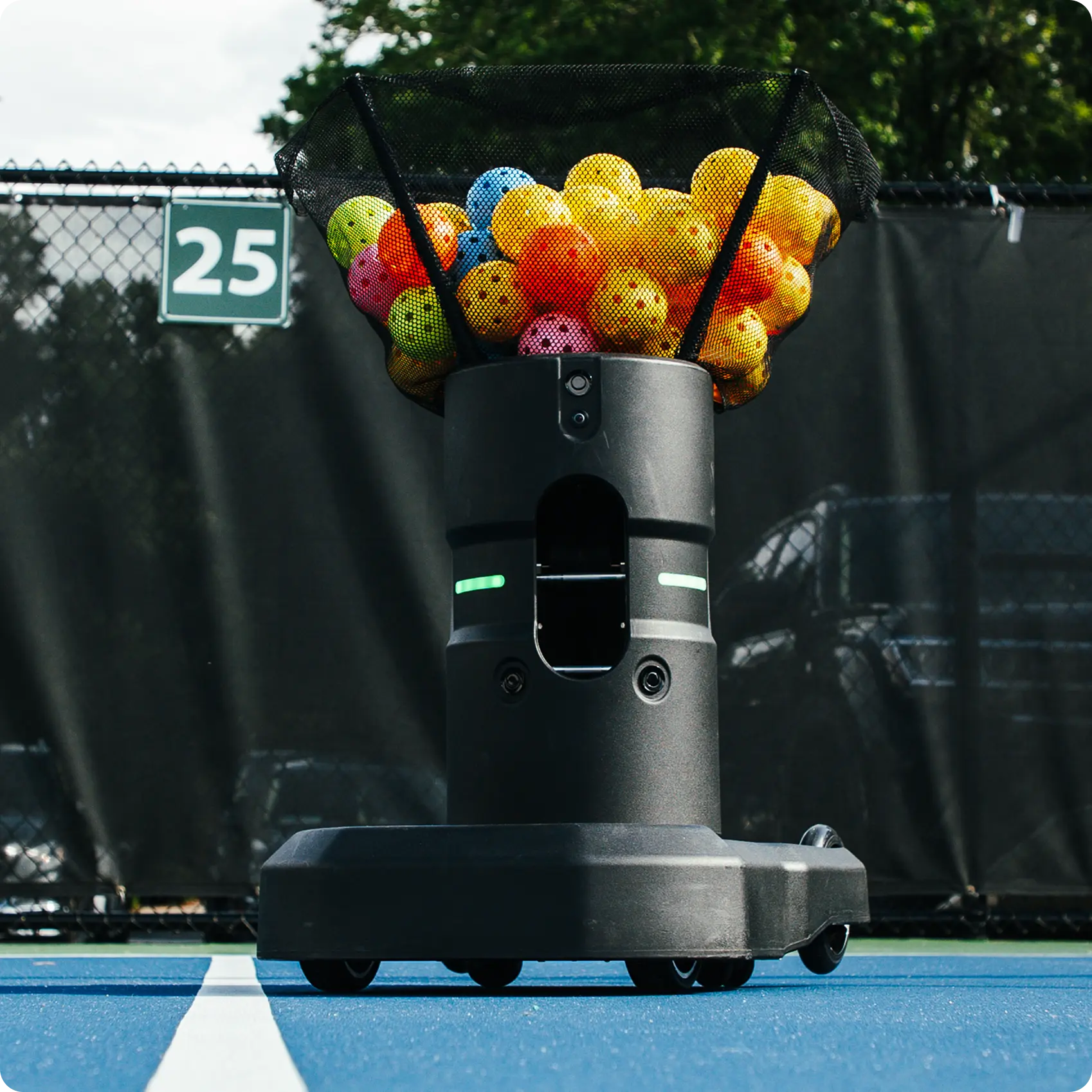
If you want to practice spin without a partner, the Tennibot pickleball machine lets you program drills with varying spin and placement so you can practice reading and returning spin shots on repeat. It is the fastest way to build spin recognition.
Save $50 with code 11PICKLES on the Tennibot Partner.
For more drill ideas, check out pickleball drills, pickleball practice at home, and pickleball at home.
What the Pros Do With Spin
Ben Johns' Spin Serve Strategy
Ben Johns uses spin on approximately 45% of his serves. I have watched every PPA tournament this season, and the way he varies spin is a masterclass. Research suggests his spin serves reduce return quality by 20-30% compared to flat serves. He mixes topspin, sidespin, and combination spins to keep opponents guessing. The key is not that he hits harder; it is that the ball moves unpredictably after the bounce.
Anna Leigh Waters' Drop Game
Anna Leigh Waters chooses drops approximately 70% of the time after deep returns. If you read her net worth profile, you know she is the most dominant player in the sport. Her spin is a huge reason why. Her backspin drops are among the most effective in the sport because the ball dies after the bounce, giving opponents nothing to attack. She also uses topspin dinks to force pop-ups during kitchen exchanges, then immediately speeds up with a flat or topspin volley.
Four Pro-Level Spin Patterns
- Topspin serve into backspin third shot drop: The serve pushes opponents back; the drop pulls them forward. The spin change is disorienting.
- Backspin dink, backspin dink, topspin dink: The pattern creates expectation. The topspin change-up catches opponents reaching too low.
- Sidespin serve to the backhand: Curves the ball away from the receiver's stronger side, forcing a weaker return.
- Heavy topspin drive followed by a slice reset: The drive creates pressure; the slice buys time and neutralizes the exchange.
And 11 PICKLES, spin is one of those skills that separates recreational players from competitive ones. If you are working on your game, check out how to keep the ball low in pickleball and how to be good at pickleball for more technique guides. Visit our Etsy shop for pickleball apparel, and subscribe to the 11 PICKLES newsletter for strategy content, gear reviews, and everything happening in the sport. We are here for all of it.
Transparency is key in pickleball and life. Some links on this site are affiliate links, which means if you click and make a purchase, we earn a small commission. It doesn't cost you extra, and it helps us keep serving up great content for the pickleball community.
Can You Actually Curve a Pickleball?
Yes, but with limitations compared to tennis or baseball. A pickleball can dip (topspin), float (backspin), and curve sideways (sidespin) due to the Magnus effect. The lightweight plastic ball with perforated holes creates unique aerodynamic behavior. Topspin is the most effective spin, producing larger lift forces than backspin at the same spin rate.
What Is the Best Spin to Use in Pickleball?
Topspin is the most useful spin in pickleball. It makes drives dip into the court (allowing harder shots with less risk), makes dinks push opponents down, and makes serves harder to return. Professional players use topspin on approximately 90% of their serves. Backspin is essential for drops and resets, and sidespin is effective for creating angles.
Does Paddle Surface Affect Spin?
Less than most people think. Research shows that for shots with impact angles above 45 degrees (most dinks, drops, and volleys), all paddle surfaces produce nearly identical spin regardless of roughness. Paddle surface matters more for flatter shots like drives and serves. Your swing technique, impact angle, and wrist action matter far more than your paddle face.
How Do I Add More Spin to My Pickleball Serve?
Brush up the back of the ball with a low-to-high swing path for topspin. Close the paddle face slightly. Use wrist lag to snap through contact. For sidespin, brush across the side of the ball horizontally. Mix spin types to keep opponents guessing. Ben Johns uses spin on approximately 45% of his serves, reducing return quality by 20-30%.


.webp)