Banned Pickleball Paddles 2026: Full List and Rules
If you play in tournaments, this matters. If you play rec, this still matters. The banned pickleball paddles conversation has gotten bigger, messier, and more important than most people realize, and it is not just about a few paddles getting pulled from a list. It is about the integrity of the sport, the safety of every player on the court, and the paddles sitting in your bag right now.
Here is the reality: at recent Golden Ticket events, USA Pickleball tested over 2,000 paddles on-site. 6% of them failed. That means roughly 1 in every 17 players showed up to a sanctioned tournament with a paddle that did not meet the current standards. Some of those players had no idea.
I play every day. I train with pros. I have tested dozens of paddles for 11 PICKLES, and I have watched this conversation evolve from a niche equipment debate into one of the biggest stories in professional pickleball. From the JOOLA Gen 3 scandal to the PBCoR testing rollout to $50,000 fines for repeat offenders in 2026, the rules around what you can and cannot use on a pickleball court have changed dramatically in the last two years.
This is everything you need to know: every paddle that has been banned, why paddles get banned in the first place, how to check if yours is approved, and what is coming next.
Every Banned Pickleball Paddle From 2022 to 2026
The list of banned paddles is longer than most people think. This is not just about the seven paddles USA Pickleball announced in December 2024. Paddle bans have been happening since 2022, and the reasons range from surface roughness violations to outright fraud. Here is the complete list broken down by the governing body that issued the ban.
Paddles Banned by USA Pickleball (USAP)
These paddles were officially removed from the USAP approved paddle list after failing PBCoR testing. The ban took effect July 1, 2025:
- JOOLA Perseus 14mm Mod TA-15
- JOOLA Perseus 16mm Mod TA-15
- Gearbox Pro Power Elongated
- ProKennex Black Ace Ovation
- ProKennex Black Ace Pro
- ProKennex Black Ace XF
A seventh paddle, the ProKennex 11mm Black Ace LG, was initially included on this list but was reinstated on June 3, 2025 after passing all testing requirements.
Previously Banned Paddles (Historical)
These paddles were removed from approved lists in earlier rounds of enforcement:
- JOOLA Gen 3 paddles (all models): Removed May 15, 2024. USA Pickleball found that the retail paddles contained significantly more foam than the paddles JOOLA submitted for certification. This was not a testing failure; it was a manufacturing discrepancy.
- CRBN paddles (all models): Temporarily removed April 29, 2022 during the US Open Championships after failing surface roughness testing. The paddle faces had too much grit, generating spin beyond legal limits. CRBN paddles were eventually reinstated, but a used CRBN X paddle failed compliance testing again at a PPA event in March 2023.
Paddles Banned by UPA-A (Pro Circuit)
The UPA-A, which governs the PPA Tour and MLP, runs its own approval system with stricter standards:
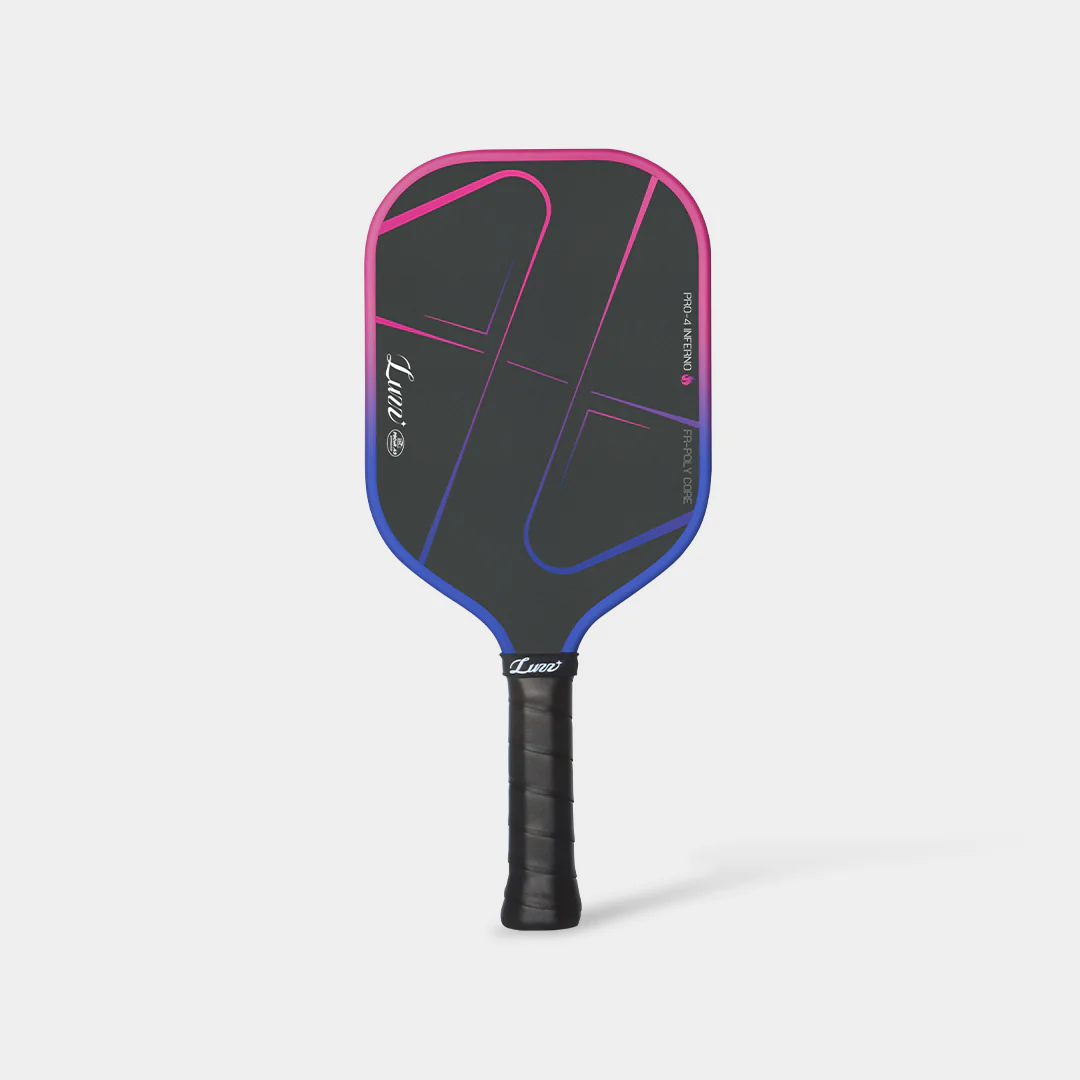
- All Luzz paddles: Removed from the UPA-A approved list in early 2025 after UPA-A found that Luzz submitted the "Cannon" paddle as a design variation of the approved "ZZ" model, when the two paddles were actually constructed differently with different performance characteristics. Some Luzz models have since been re-approved under proper submissions. As of March 2026, Luzz has four models back on the UPA-A approved list: the Pro Blade 2 (approved January 9, 2026), the Pro-4 Inferno (approved September 19, 2025), the Pro-Cannon (approved August 27, 2025), and the Tornazo (approved August 27, 2025).
- Selkirk Project Boomstik Elongated 16mm with MOI clamps: The UPA-A ruled that this paddle was only approved without the MOI clamp accessories. The paddle was submitted for testing without them, but the retail version ships with clamps included. The Boomstik Elongated is currently listed on the UPA-A approved paddle list without the clamp modification.
I have reviewed several Luzz paddles on this site, including the luzz pro 4 inferno pickleball paddle review and the luzz pro 4 tornazo pickleball paddle review. Both are excellent paddles. The UPA-A situation with Luzz was about the submission process, not the quality of the paddles themselves, and Luzz has since re-submitted and gotten models re-approved. If you own a Luzz paddle, check the current approved lists to confirm your specific model's status.
Use code 11PICKLES for 15% off at Luzz.
Why Pickleball Paddles Get Banned
Not all bans are the same. Some paddles get pulled because they were too powerful from the start. Others start legal and become illegal over time as the core breaks down. Understanding why paddles get banned helps you make smarter purchasing decisions and avoid showing up to a tournament with a paddle that will not pass inspection. Here are the main reasons a paddle ends up on the wrong side of the rules.
PBCoR Threshold Violations
PBCoR stands for Paddle/Ball Coefficient of Restitution. It measures how much energy a paddle returns to the ball on impact. Think of it as the "trampoline effect." As of November 2025, the maximum PBCoR value is 0.43, meaning the paddle can return no more than 43% of the incoming ball speed. Any paddle that exceeds this threshold is too powerful and gets pulled.
Core Crush and Degradation
This is the number one reason paddles fail on-site testing at tournaments. The honeycomb polypropylene cores that most paddles use lose structural integrity over time. Repeated impacts compress the core, making it softer. A softer core means more flex on contact, which means more trampoline effect, which means more power. Your paddle might have been perfectly legal when you bought it and now performs above the legal threshold.
I have experienced this firsthand. I rotate through paddles constantly because of how many I test for reviews, and there is a noticeable difference in feel and pop between a brand new paddle and one with 50 or 60 hours of hard play on it. The core gets softer. The sweet spot gets bigger. It feels great, but that is exactly what the rules are designed to catch.
Delamination
Delamination happens when the outer face of the paddle separates from the inner core. This creates an air gap between the layers that acts like a trampoline, launching the ball with significantly more pop and power. Thermoformed paddles are especially susceptible because the high heat used during manufacturing can compromise the adhesive materials holding everything together.
Surface Roughness and Excessive Spin
Paddles cannot exceed a surface roughness of 30 micrometers (Rz reading) or 40 micrometers (Rt reading). Anything beyond that generates spin beyond what the rules allow. USAP uses a Starrett SR 100 Surface Roughness Tester to measure grit. UPA-A takes it a step further and measures spin directly, capping it at 2,100 RPM. Anti-skid paint, sand-textured coatings, rubber surfaces, and spray-on grit are all prohibited.
Manufacturing Inconsistencies
This is what happened with JOOLA. The paddle submitted for approval is different from what ends up in the box on your doorstep. Whether it is additional foam, different core materials, or irregular construction, the retail product does not match the certified product. The rules now exist specifically because of this issue.
Break-In Manipulation
Some paddles get significantly more powerful during a "break-in" period. Players have figured this out and deliberately accelerate this process. The UPA-A addresses this with ABI (Accelerated Break In) testing, which physically breaks down the paddle structure in a controlled way to simulate months of play. If the paddle's PEF (Paddle Exit Factor) exceeds 0.405 after ABI testing, it fails.
How PBCoR Testing Works
Understanding PBCoR testing is worth your time because this is the standard that determines whether your paddle is legal. Whether you are buying a new paddle or wondering if your current one would still pass, here is how the test works.
The Test
- A pickleball is fired at 60 mph toward a paddle that is clamped and secured
- High-speed cameras and sensors measure the inbound ball speed and the outbound ball speed after contact
- The ratio of outbound to inbound speed equals the PBCoR value
- The paddle must score at or below the current threshold
The Thresholds
- November 2024: PBCoR threshold of 0.44 introduced
- November 2025: Threshold tightened to 0.43
The threshold will likely continue to tighten as paddle technology evolves. This is a moving target, and manufacturers know it.
Why PBCoR Replaced the Old Testing
The old deflection testing measured static stiffness by pressing a plunger into the paddle face. The problem? Advanced paddle constructions using compressible cores and thermoformed edges performed differently in static tests than they did during actual gameplay. PBCoR simulates real impact conditions. It is a more honest test, and it catches paddles that the old system missed.
USAP vs. UPA-A: Two Different Approval Systems
This is where it gets confusing for a lot of players, and I hear questions about it on the courts all the time. There are two separate governing bodies with two different approved paddle lists, and they do not always agree. Let me break it down clearly.
USAP (USA Pickleball) governs amateur tournaments and sets the recreational standard. They have over 2,500 paddles on their approved list. If you play in local sanctioned tournaments, USAP approval is what you need.
UPA-A (United Pickleball Association of America) governs the PPA Tour and MLP. Their approved list is much smaller: 38 brands and 183 paddle models as of March 2026. If you watch the pros on TV, those players must use UPA-A certified paddles.
Here is the key difference in testing:
- Power testing: USAP uses PBCoR (max 0.43). UPA-A uses PEF (max 0.385 new, 0.405 after break-in).
- Spin testing: USAP measures surface grit as a proxy for spin. UPA-A measures spin directly (max 2,100 RPM).
- Break-in testing: USAP does not do break-in testing. UPA-A does (ABI destructive testing).
- Enforcement: USAP started on-site testing at Golden Ticket events in January 2026. UPA-A tests at PPA and MLP events and can fine players up to $50,000 for repeat violations.
A paddle can be USAP-approved but not UPA-A-approved, and vice versa. If you only play recreationally or in amateur tournaments, USAP is your list. If you are competing at the pro level, you need UPA-A.
The Biggest Paddle Controversies
The paddle ban conversation did not happen in a vacuum. A series of scandals, lawsuits, and on-court incidents pushed the governing bodies to overhaul their testing and enforcement. These are the controversies that shaped the rules we have today.
The JOOLA Gen 3 Scandal
This is the one that changed everything. In November 2023, JOOLA submitted paddles for USAP certification. The Gen 3 line launched publicly in April 2024, and players immediately noticed they felt different, more powerful, more pop. There was a reason for that.
USA Pickleball discovered that the retail paddles contained significantly more foam than what JOOLA submitted for testing. The mass-produced paddles also had irregular, expanding foam around the rim. On May 15, 2024, USAP removed all JOOLA Gen 3 paddles from the approved list. JOOLA's response? They claimed they submitted "the wrong paddles" for certification.
The fallout has been massive:
- JOOLA sued USA Pickleball over the removal
- USA Pickleball filed a countersuit in April 2025, accusing JOOLA of a "fraudulent scheme" and "bait and switch"
- A class action settlement was reached: $300 refund with proof of purchase, or a $150 JOOLA gift code without
- The lawsuit between JOOLA and USAP remains unresolved as of March 2026
And then it happened again. The JOOLA Perseus Mod TA-15, approved in September 2023 as the Gen 3 replacement, also failed PBCoR testing. Both the 14mm and 16mm versions were banned effective July 1, 2025.
The CRBN Surface Roughness Ban
In April 2022, right in the middle of the US Open Championships, all CRBN paddles were pulled from the approved list. They failed surface roughness testing because their faces had too much grit, generating excessive spin. CRBN claimed it was an isolated batch issue, and their paddles were eventually reinstated after implementing quality control measures. But in March 2023, a used CRBN X paddle failed compliance testing at a PPA event again, raising questions about long-term surface degradation.
Pro Player Paddle Modifications
This is the elephant in the room. Multiple pro players have been flagged for using modified paddles. Catherine Parenteau's Paddletek Tempest Reign Pro allegedly had raw carbon fiber with excessive grit. Collin Johns, Elise Jones, Lea Jansen, Tyson McGuffin, and others have been named in the broader conversation about post-purchase modifications. Sanding, weighting, and surface alterations can all push a legal paddle past the legal limits. Some people call modified paddles the "performance-enhancing drugs" of the court, and honestly, that comparison is not far off.
The "Hot Paddle" Debate
A "hot paddle" is one that has broken in and produces more power than when it was new. Core crush increases deflection and bounciness over time, and some players deliberately accelerate this process. The UPA-A's ABI testing specifically targets this issue. But for recreational players, there is no on-site testing at your local courts. You could be playing against someone whose paddle would fail a tournament test, and neither of you would know it.
How to Check If Your Paddle Is Approved
This should be a regular habit if you play in any sanctioned events. The lists update frequently, and a paddle that was legal last month might not be legal today. Here is how to check.
Step 1: Determine Which List You Need
- Recreational play: No certification required. Play with whatever you want.
- Amateur USAP tournaments: Your paddle must be on the USAP approved list.
- PPA Tour or MLP pro events: Your paddle must have UPA-A certification (required since September 1, 2025).
Step 2: Look Up Your Paddle
- USAP Approved Paddle List: Visit equipment.usapickleball.org and search by brand or model name
- UPA-A Approved Paddle List: Visit upaa.unitedpickleball.com
- Third-party checker: Pickleballportal.com offers a paddle legality checker tool
Step 3: Check for Recent Changes
USAP maintains a decertified list that updates daily. Paddles can be removed at any time if they fail follow-up testing or if new information comes to light. Check before major tournaments, not just once.
What If Your Paddle Is Banned?
- You cannot use it in sanctioned tournament play. Period.
- It is still perfectly fine for recreational play at your local courts.
- You will need a replacement for tournament play. Check the approved lists before buying.
- If your paddle was part of the JOOLA Gen 3 class action, you may be eligible for a $300 refund.
Tournament-Legal Paddles We Have Tested and Recommend
If your paddle got banned, or if you just want to make sure your next purchase is safe, here are paddles I have personally tested and reviewed for 11 PICKLES. All of these are currently on the USAP approved list, and I have put real hours into each one on the court.
Luzz Pro 4 Inferno
The Inferno is a power paddle with a larger sweet spot that gives you forgiveness on off-center hits. I used this as my main paddle for about two weeks with roughly 20 hours of playtime, and the pop is excellent without feeling uncontrollable. Luzz re-submitted their paddles after the UPA-A situation, and newer models are back on approved lists.
Read the full Luzz Pro 4 Inferno review
Use code 11PICKLES for 15% off at Luzz.
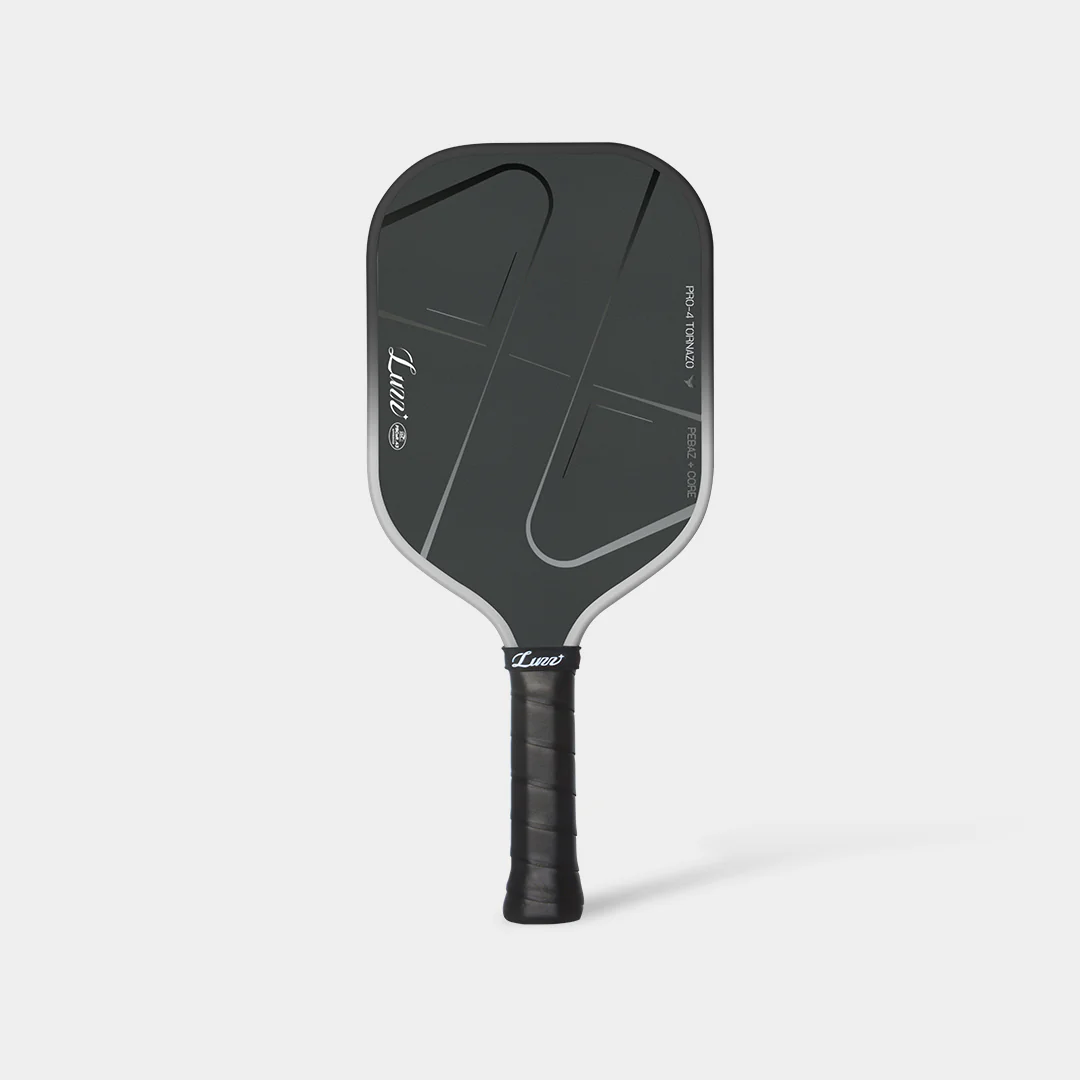
Luzz Pro 4 Tornazo
The Tornazo is the control-oriented sibling. If you prefer placement and spin over raw power, this is the one to look at. The feel at the kitchen line is outstanding, and the spin generation stays well within legal limits while still giving you plenty of bite on dinks and drops.
Read the full Luzz Pro 4 Tornazo review
Use code 11PICKLES for 15% off at Luzz.
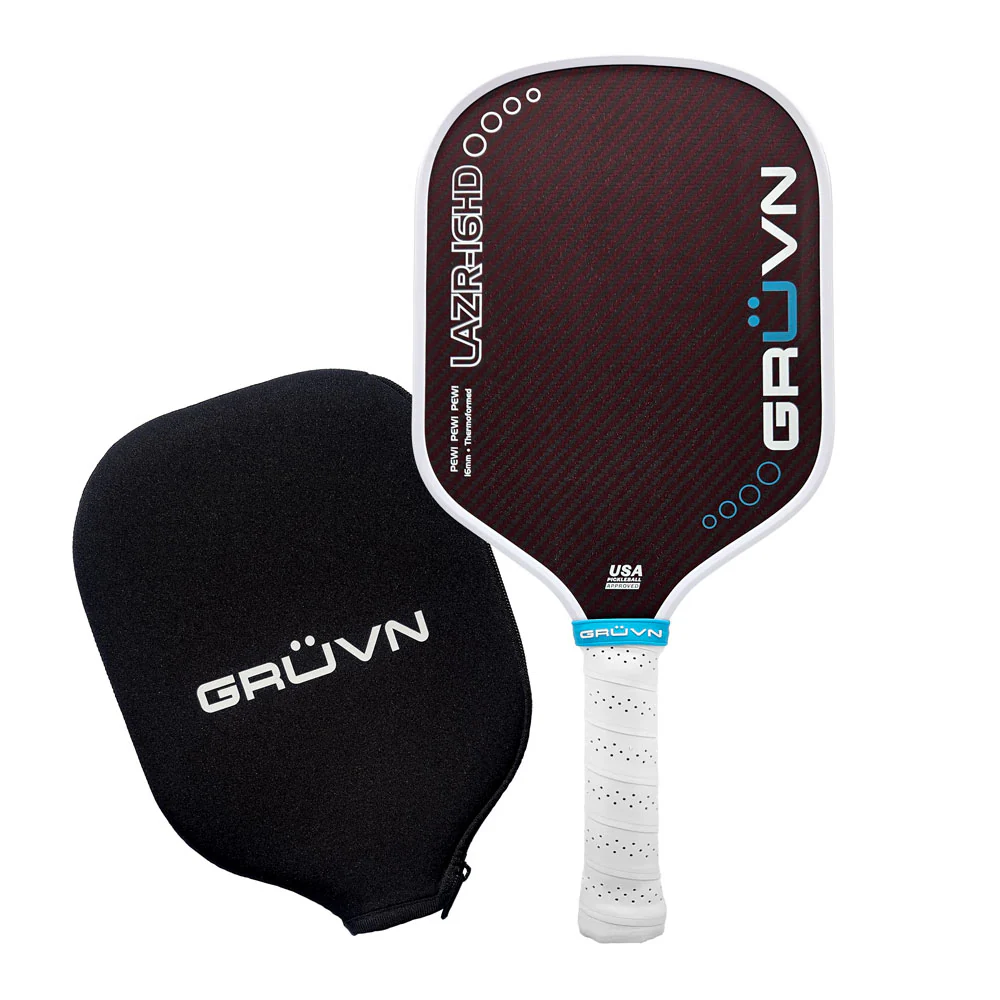
GRUVN LAZR 16HD
The GRUVN LAZR 16HD is a solid foam paddle with a 16mm core that delivers consistent power and a massive sweet spot. I had a few friends try this one too, and the feedback was unanimous: it plays above its price point. If you want something tournament-legal that does not break the bank, this is it.
Read the full GRUVN LAZR 16HD review
Use code 11PICKLES for 10% off at GRUVN.
What Is New in 2026
The enforcement landscape changed significantly this year. Whether you compete in sanctioned amateur events or follow the pro circuit, these updates affect you. Here is what is different.
On-Site Paddle Testing at Tournaments
Starting in January 2026, USA Pickleball partnered with Pickleball Instruments to bring field testing directly to Golden Ticket events. Testing has already happened in Glendale, Arizona and Las Vegas, with more events on the schedule. Each paddle test takes under five minutes and measures coefficient of friction, deflection, and weight balance.
RFID Tracking
Paddles that pass on-site testing now receive RFID stickers that store equipment data. This data updates in real time across testing locations. A mobile app is in development that will let players verify paddle compliance before matches. The RFID system also helps detect counterfeit paddles by checking manufacturer and origin data.
Escalating Fines
The penalty structure for paddle violations got much steeper:
- First offense: $1,000 fine
- Multiple offenses: Up to $10,000
- Repeat offenders: Up to $50,000
These fines apply to pro and sanctioned amateur events. The message is clear: if you knowingly use a non-compliant paddle, the consequences are serious.
The Counterfeit Paddle Crackdown
Knockoff paddles from CRBN, Selkirk, JOOLA, and Six Zero have been appearing on platforms like Alibaba, Temu, Facebook Marketplace, Amazon, and Walmart. A JOOLA Pro IV clone was found being sold on Walmart. An industry coalition including APP, DUPR, MLP, PPA, UPA-A, USAP, and the World Pickleball Federation has formed to fight counterfeits. UPA-A launched a "Don't Trust A Fake" campaign, and the new on-site testing also flags counterfeits through origin tracking.
Quarterly Compliance Checks
Starting January 2026, UPA-A introduced a quarterly Paddle Compliance Protocol. Three random brands are tested each quarter. This means even paddles that are currently approved could be pulled if follow-up testing reveals issues.
Banned Pickleball Paddles by the Numbers
Here are the key stats that tell the full story of where paddle enforcement stands right now.
- 6 paddles currently banned by USAP (as of March 2026)
- 2,500+ paddles on the USAP approved list
- 183 paddle models on the UPA-A approved list (38 brands)
- 2,000+ paddles tested at Golden Ticket events
- 6% failure rate at on-site testing
- 0.43 current PBCoR threshold (tightened from 0.44 in November 2025)
- 60 mph ball speed used in PBCoR testing
- 2,100 RPM maximum spin rate allowed under UPA-A rules
- $50,000 maximum fine for repeat paddle violations
- $300 refund available through the JOOLA Gen 3 class action settlement
- Under 5 minutes per on-site paddle test
What Is Next for Paddle Regulations
The trend is clear: testing is getting stricter, enforcement is getting more aggressive, and the technology to detect non-compliant paddles is getting better. The PBCoR threshold will likely continue to tighten. On-site testing will expand beyond Golden Ticket events. And the distinction between USAP and UPA-A standards may eventually narrow as both organizations push toward a more unified approach.
For now, the best thing you can do is check the approved paddle list before your next tournament, pay attention to how your paddle feels over time (if it suddenly feels "hotter" after months of play, core crush may be happening), and buy from reputable sources to avoid counterfeits.
I will keep updating this article as new paddles are added to or removed from the banned lists, new testing standards are introduced, and new controversies inevitably pop up. Because in pickleball equipment, the only constant is change.
And 11 PICKLES, if you are in the market for new gear while you are here, check out our Etsy shop for pickleball apparel that is actually worth wearing on and off the court. If you want to stay up to date on everything happening in pickleball, including PPA Tour coverage, gear reviews, and strategy guides, subscribe to the 11 PICKLES newsletter. We are here for all of it.
Transparency is key in pickleball and life. Some links on this site are affiliate links, which means if you click and make a purchase, we earn a small commission. It doesn't cost you extra, and it helps us keep serving up great content for the pickleball community.
Is My Pickleball Paddle Banned?
The fastest way to find out is to check the USAP approved paddle list. Search your brand and model name. If it does not appear, your paddle is not currently approved for sanctioned tournament play. For pro-level events, check the UPA-A list. Remember, a paddle can be on one list and not the other.
What Pickleball Paddles Are Banned in 2026?
As of March 2026, the paddles officially banned by USAP are:
- JOOLA Perseus 14mm Mod TA-15
- JOOLA Perseus 16mm Mod TA-15
- Gearbox Pro Power Elongated
- ProKennex Black Ace Ovation
- ProKennex Black Ace Pro
- ProKennex Black Ace XF
All JOOLA Gen 3 paddles also remain decertified. On the UPA-A side, additional restrictions include Luzz paddles that have not been re-submitted and the Selkirk Boomstik Elongated 16mm with MOI clamps.
What Is PBCoR Testing in Pickleball?
PBCoR stands for Paddle/Ball Coefficient of Restitution. It measures how much energy a paddle returns to the ball upon impact by firing a ball at 60 mph toward a clamped paddle and measuring the ratio of outbound to inbound speed. The current maximum PBCoR value is 0.43, meaning a paddle can return no more than 43% of the incoming ball speed. Any paddle above this threshold is too powerful for sanctioned play.
What Happens If I Use a Banned Paddle in a Tournament?
If your paddle fails on-site testing at a sanctioned event, you will not be allowed to compete with it. You must find an approved replacement before playing. Fines for knowingly using non-compliant paddles can reach $1,000 for a first offense and up to $50,000 for repeat violations. For recreational play at non-sanctioned venues, there are no restrictions on which paddles you can use.
What Is the Difference Between USAP and UPA-A Paddle Approval?
USAP governs amateur tournaments and has over 2,500 approved paddles on its list. UPA-A governs the PPA Tour and MLP with a much stricter standard, approving only 183 models from 38 brands. UPA-A tests for break-in performance (ABI testing) and measures spin directly, while USAP uses PBCoR for power and surface grit as a proxy for spin. A paddle can be approved by one organization and not the other.


.webp)