How to Hold a Pickleball Paddle: Grips, Pressure, Size
Your grip is the only connection between your body and the paddle. Every shot you hit, every dink you place, every drive you rip, every serve you land starts with how you hold the paddle. Get the grip wrong and everything downstream suffers: power, control, spin, touch, and eventually your elbow.
At 11 PICKLES, we play every day, train with pros, and test dozens of paddles for our gear reviews. We have spent hundreds of hours on the court watching how grip affects every aspect of the game, from dink battles at the kitchen to full-speed drives from the baseline. The single most common issue I see with new players, and honestly with a lot of intermediate players too, is grip technique. They are gripping too tight, holding the paddle in the wrong part of the hand, or using one grip for every shot when they should be adjusting. A pro I train with once watched me play for ten minutes and said the only thing I needed to change was my grip pressure. He was right. Everything else followed.
This guide covers everything: every grip type and when to use it, exactly where to place your hand, how tight to hold the paddle for each shot, how to find the right grip size, and the mistakes that are costing you points right now.
Some links on this site are affiliate links, which means if you click and make a purchase, we earn a small commission. It doesn't cost you extra, and it helps us keep serving up great content for the pickleball community.
The Five Pickleball Grips and When to Use Each One
There are five main grip types in pickleball. Most players only know one or two. Understanding all five and when to switch between them will immediately improve your game. Before we get into each grip, you need to understand the V-shape: the V formed between your thumb and index finger is your primary grip indicator. Where that V sits on the handle tells you which grip you are using.
Continental Grip (The "Hammer Grip")
This is the default grip for pickleball and the one you should learn first. Most professional players use Continental as their home base, especially at the kitchen line.
How to find it:
- Hold the paddle like you would hold a hammer about to drive a nail
- Place the V-shape formed by your thumb and index finger on top of the handle
- The big knuckle of your index finger should rest on the side of the handle
- Your knuckles should sit at approximately a 45-degree angle to the handle
When to use it:
- What is dinking in pickleball (dinks, volleys, blocks)
- Serves
- Third shot drop pickleball shots and resets
- Slices
- Any situation requiring quick forehand-to-backhand transitions
Why it works: Continental is the most versatile grip because it works for both forehand and backhand without switching. At the kitchen line, where exchanges happen in fractions of a second, you do not have time to change grips. Continental keeps you ready for anything.
The tradeoff: Less topspin and less natural forehand power compared to Eastern or Western. You sacrifice some offense for versatility and speed.
Eastern Forehand Grip (The "Handshake Grip")
This is the most natural grip for beginners and the one many pros, including Ben Johns and Anna Bright, use as their primary grip.
How to find it:
- Start with a Continental grip
- Rotate the paddle face approximately 45 degrees toward your forehand side
- It should feel like you are shaking hands with the paddle
- The V-shape between your thumb and index finger shifts slightly to the right (for right-handers)
When to use it:
- Forehand drives and groundstrokes
- Serves (especially for added power)
- Baseline play where you have more time
- General all-around play
Why it works: Eastern gives you a natural balance of power and control. It generates more topspin than Continental and feels comfortable immediately. It is also easy to switch from Eastern to Continental when you move up to the kitchen.
The tradeoff: Slightly slower forehand-to-backhand transitions than Continental. Less backhand power unless you switch grips.
Eastern Backhand Grip
A specialized grip for players who want a powerful one-handed backhand.
How to find it:
- From Continental, shift your hand so it favors the backhand side
- The V-shape moves to the left side of the handle (for right-handers)
- Your hand is fully behind the grip on the backhand side
When to use it: One-handed backhand drives and topspin shots. This is a situational grip, not a default. Players like AJ Koller switch to it for specific backhand attacks.
The tradeoff: Your forehand becomes very weak in this position. You must switch grips for forehand shots.
Western Grip (The "Frying Pan Grip")
The power grip. If you want maximum topspin and forehand pop, this is where it comes from.
How to find it:
- Place the paddle flat on the ground and pick it up naturally. Your hand sits fully behind the grip.
- The V-shape is positioned well to the right, with the palm almost entirely behind the paddle face
When to use it: Forehand topspin drives, putting away high balls, attacking forehands from the baseline. Riley Newman uses Western grip situationally for heavy forehand attacks.
Why it works: Massive topspin and power on forehands. Excellent for closing the paddle face on high balls and generating that heavy "windshield wiper" spin.
The tradeoff: Your one-handed backhand becomes, to put it bluntly, a nightmare. Western almost requires a two-handed backhand. It is rare as a primary grip among pros for this reason.
Semi-Western Grip
A middle ground between Eastern and Western. Good for players who want more topspin than Eastern provides without the extreme backhand limitations of Western.
How to find it:
- Start in Eastern position
- Rotate your hand slightly further toward the Western side
- The V-shape lands between where it would be for Eastern and Western
When to use it: Baseline forehand drives with heavy topspin, serves with added spin, groundstrokes from the back court. Anna Bright uses Semi-Western situationally for specific forehand attacks.
The tradeoff: Not suitable for consistent kitchen play. Requires switching back to Continental or Eastern at the net.
Where to Place Your Hand on the Handle
The exact position of your hand on the paddle handle affects your power, control, and maneuverability. Most players never think about this, but it matters.
Starting Position
Place your pinky finger near the butt cap (bottom) of the handle. Wrap your fingers naturally around the handle so your hand covers most of the handle length. Your index finger knuckle should sit about 1-2 inches from where the handle meets the paddle face.
Adjustments for Different Situations
- Need more maneuverability? Slide your hand up one finger-width toward the paddle face. This increases reaction speed for quick kitchen exchanges.
- Need more power? Keep your hand closer to the butt cap. The extra leverage translates to more force on drives and serves.
The Critical Distinction: Fingers vs. Palm
This is the single most important hand positioning concept most players get wrong. The paddle handle should rest primarily in your fingers, not deep in your palm.
When the handle sits deep in the palm, you lose wrist mobility, paddle angle adjustments, and "feel." Think of it as holding the paddle with your finger pads and the base of your fingers. The palm provides backup support, not primary contact.
Index Finger Separation
Your index finger should be slightly separated from the other three fingers, creating a "trigger finger" position. This separation provides paddle stability and allows micro-adjustments to paddle angle during play. Your thumb should rest diagonally along the back of the handle, creating a support structure. Do not bunch all your fingers together.
Grip Pressure: How Tight to Hold the Paddle
Grip pressure might be the most underrated skill in pickleball. Most players grip too tight, and it costs them touch, speed, and eventually their elbows. Here is the breakdown by shot type.
The Pressure Scale
On a scale of 1 to 10, where 1 means the paddle could slip out and 10 means you are white-knuckling it, your baseline grip pressure should sit at 3-4 out of 10. The analogy I use: hold the paddle like you are holding a small bird. Gentle enough not to hurt it, firm enough it cannot fly away.
Grip Pressure by Shot Type
Here is the breakdown that no other guide gives you:
- Dinks: 2-3 out of 10. Enhanced touch and placement. Absorbs your opponent's pace.
- Third shot drops and resets: 3-4 out of 10. Prevents pop-ups. Improves soft touch.
- Volleys and kitchen battles: 5-6 out of 10. Stabilizes exchanges. Quick reactions.
- Serves: 6-7 out of 10. Smooth, consistent motion with moderate power.
- Drives and groundstrokes: 7 out of 10. Power and spin generation.
- Overheads and smashes: 8-9 out of 10. Maximum power transfer at contact.
The key insight: your grip pressure should change with every shot. Most players lock in at a 7 or 8 and never come down. That is why their dinks pop up, their drops sail long, and their forearms burn after 45 minutes.
Why the Death Grip Kills Your Game
If you are squeezing the paddle at 7+ for every shot, here is what happens:
- Your dinks pop up. A tight grip cannot absorb incoming pace, so soft shots sail high.
- Your wrist locks. Tight grip locks the wrist, preventing spin generation and angle changes.
- You lose accuracy. Stiff muscles reduce fine motor control.
- Your hands slow down. Relaxed hands react faster during net exchanges. Tense muscles are slower muscles.
- Injury risk climbs. Death grip is a primary contributor to pickleball elbow (lateral epicondylitis). An 18.4% elbow injury prevalence has been documented among regular players.
- You fatigue faster. Forearm muscles stay "on" constantly, leading to early exhaustion.
The "Soft Hands" Concept
"Soft hands" is what separates intermediate players from advanced players at the kitchen line. It means holding the paddle with minimal tension so that your hands absorb incoming energy rather than reflecting it back. Professional players have exceptionally soft hands, which is why their dinks barely clear the net while yours pop up.
How to practice: hold the paddle and have someone try to twist it out of your hand. If they cannot, you are gripping too tight.
How to Find the Right Grip Size
The wrong grip size forces you to compensate in ways that hurt your game and your body. Here is how to find the right fit.
Standard Sizes
- Small (4" to 4 1/8"): Players under 5'2" or with smaller hands
- Medium (4 1/8" to 4 3/8"): Players 5'3" to 5'8" with average hands
- Large (4 3/8" to 4 1/2"+): Players over 5'8" with larger hands
Most pickleball paddles come with a standard grip circumference of 4" to 4 1/4", which is smaller than tennis rackets.
How to Measure (Two Best Methods)
The Ruler Test (most accurate):
- Hold your dominant hand open, palm up, fingers extended
- Find the two long horizontal creases running across your palm
- Place a ruler at the bottom crease
- Measure to the tip of your ring finger
- That measurement is your grip size
The Index Finger Test:
- Hold a paddle using an Eastern grip
- Look for the gap between your ring finger and your palm
- Slide the index finger of your opposite hand into that gap
- Correct fit: index finger fits comfortably
- Too small: no room for the index finger
- Too big: index finger cannot touch both the fingertips and the palm
When in Doubt, Go Smaller
If you are between sizes, choose the smaller grip. You can always build up a grip with an overgrip (a thin wrap that adds about 1/16" to the circumference), but you cannot make a grip smaller. Overgrips also add cushioning and absorb sweat.
What Happens with the Wrong Size
- Too small: You squeeze harder to maintain control. Hand fatigue, reduced playing ability, increased injury risk.
- Too large: Reduced wrist mobility, harder to switch grips, harder to generate spin.
If you are looking for a paddle with the right grip size, check our best pickleball rackets for beginners guide.
Overgrips are the easiest way to fine-tune your grip size and keep your paddle feeling fresh. A bulk pack keeps you covered for months.
Use code 11PICKLES at 11six24 for a discount on overgrips and grip accessories.
Grip Adjustments for Specific Shots
The best players do not use one grip for everything. They make subtle adjustments based on the shot. Here is how grip technique changes across the most common situations.
Serve
Use Continental or Eastern. Grip pressure at 6-7 out of 10. Keep the wrist relaxed through contact. For the drop serve (recommended for how to serve in pickleball for beginners), a lighter grip helps with consistency.
Dinks
Continental grip. Pressure at 2-3 out of 10. This is where soft hands matter most. The paddle should feel like an extension of your arm, not a weapon you are swinging. Relaxed grip absorbs the ball's energy and keeps dinks low over the net.
Drives and Groundstrokes
Eastern or Semi-Western for maximum topspin. Pressure at 7 out of 10. Tighten through contact, then relax immediately after. Do not stay at 7 for the next shot.
Volleys
Continental. Pressure at 5-6 out of 10. Firm enough to block hard shots, soft enough to redirect. Quick transitions between forehand and backhand require Continental's versatility here.
Third Shot Drop
Continental. Pressure at 3-4 out of 10. The third shot drop pickleball is all about touch. If your drops are popping up, your grip is too tight. Loosen up.
Overheads
Eastern or Continental. Pressure at 8-9 out of 10. This is the one shot where you grip hard. Maximum power transfer at contact.
Two-Handed Backhand
If you use a two-handed backhand (increasingly common, especially for players from a tennis background):
- Dominant hand uses Continental grip at the bottom of the handle
- Non-dominant hand uses Eastern forehand grip above the dominant hand
- The non-dominant hand drives the shot; the dominant hand guides
- Keep a small gap between hands or overlap slightly
Common Grip Mistakes and How to Fix Them
These are the mistakes I see most often at open play, and the fixes that work.
- Death grip (constant 7+ pressure). Fix: consciously loosen to 3-4 between points. Check your knuckles; if they are white, you are too tight.
- Palm-heavy grip. Handle buried deep in the palm instead of the fingers. Fix: re-grip with the handle resting on your finger pads. You should see daylight between the handle and your palm.
- Not switching grips. Using one grip for every shot. Fix: start with Continental at the kitchen and practice switching to Eastern for drives. It happens naturally with practice.
- Bunched fingers. All five fingers squeezed together. Fix: separate your index finger from the other three. Create that trigger finger position.
- Thumb on top. Common with table tennis players who place the thumb flat on the paddle face. Fix: wrap the thumb around the handle diagonally.
- Locked wrist. Wrist stays rigid through every shot. Fix: this is usually caused by gripping too tight. Loosen up and the wrist will follow.
- Not using the non-dominant hand. Your off-hand should cradle the paddle throat between shots. Fix: rest the paddle in your non-dominant hand during pauses. This prevents grip fatigue and helps reset your grip between rallies.
- Floating pinky finger. Pinky sticks out instead of wrapping the handle. Fix: all four fingers should wrap around the handle with the pinky near the butt cap.
What the Pros Do Differently
Professional players approach grip differently than recreational players in a few key ways:
- They switch grips constantly. Pros adjust between Continental, Eastern, and sometimes Western within a single rally. The transitions are so subtle you might not notice unless you are watching for it.
- Their hands are softer at the kitchen line. Pro-level dink battles look effortless because their grip pressure drops to 2-3 during soft exchanges.
- They use the non-dominant hand. Between every shot, the off-hand comes up to cradle the paddle. This resets the grip and prevents fatigue.
- They tighten only on contact. Pros keep the grip loose through the swing and tighten briefly at the moment of contact, then immediately relax again. This is called "squeeze and release."
If you want to see grip technique in action, watch Anna Leigh Waters at the kitchen line. Her hands are so relaxed that the paddle barely moves on dink contact. Then watch her rip a forehand drive and see the grip pressure jump for that single shot. That contrast is the whole lesson.
Paddles We Recommend for Grip and Feel
The paddle you use affects how grip technique translates to the court. Here are the ones I have tested that offer the best combination of grip comfort, balance, and feel:
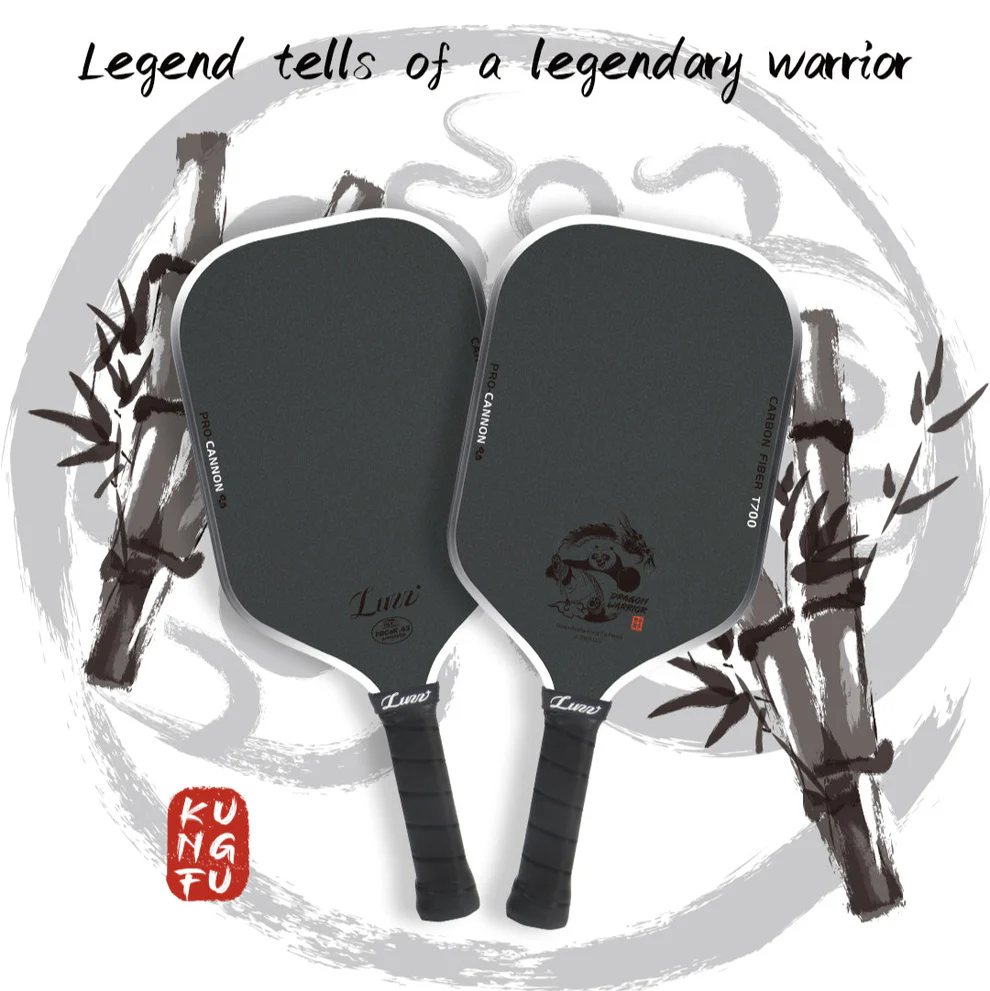
Luzz Cannon Pickleball Paddle Kung Fu Panda Review (elongated shape with excellent grip ergonomics)
Luzz Pro 4 Tornazo Pickleball Paddle Review (control-oriented, outstanding feel at the kitchen)
Luzz Pro 4 Inferno Pickleball Paddle Review (power with a forgiving sweet spot)
Use code 11PICKLES for 15% off at Luzz.
And 11 PICKLES, if you are working on your grip and want to test it with quality gear, check out our Etsy shop for pickleball apparel and visit our gear reviews to find the right paddle. For more technique guides, check out how to be good at pickleball and how to keep the ball low in pickleball. Subscribe to the 11 PICKLES newsletter for strategy content and beginner guides. We are here for all of it.
Transparency is key in pickleball and life. Some links on this site are affiliate links, which means if you click and make a purchase, we earn a small commission. It doesn't cost you extra, and it helps us keep serving up great content for the pickleball community.
What Is the Best Grip for Pickleball?
The Continental grip is the best overall grip for pickleball. It works for both forehand and backhand without switching, making it ideal for the fast exchanges at the kitchen line. Most professional players use Continental as their default grip. For forehand drives from the baseline, many pros switch to an Eastern grip for added power and topspin.
How Tight Should I Hold a Pickleball Paddle?
Your baseline grip pressure should be 3-4 out of 10, where 10 is maximum force. Grip pressure should change by shot: dinks at 2-3, volleys at 5-6, serves at 6-7, and overheads at 8-9. Gripping too tight (the "death grip") causes dinks to pop up, reduces accuracy, slows hand speed, and increases the risk of pickleball elbow.
How Do I Know What Grip Size I Need?
Measure from the bottom lateral crease of your palm to the tip of your ring finger using a ruler. That measurement corresponds to your grip size. Alternatively, hold a paddle in an Eastern grip and check if your opposite hand's index finger fits comfortably in the gap between your fingers and palm. If between sizes, choose smaller and add an overgrip.
Should I Switch Grips During a Pickleball Game?
Yes. Advanced players switch grips regularly during play. Use Continental at the kitchen for dinks and volleys, switch to Eastern or Semi-Western for forehand drives, and adjust to Eastern Backhand for one-handed backhand attacks. The transitions become automatic with practice.
What Grip Does Ben Johns Use?
Ben Johns primarily uses an Eastern forehand grip, which gives him a natural balance of power and control with easy grip switching during rallies. At the kitchen line, like most pros, he transitions to a Continental grip for dinks and volleys. His grip switching is subtle and nearly invisible in real-time play.


.webp)