Pickleball Court Lighting Layout: Standards, Specs, and Layouts
At 11 PICKLES, I play pickleball three hours a day, and the single most frustrating thing I run into on travel courts is bad lighting. Shadows cut across the kitchen, glare bounces off a dark sky on an 11pm outdoor speedup, and a hot spot at the baseline sits right next to a black hole on the non-volley line. None of that is the game's fault; it is the lighting layout.
Layout is the thing most people get wrong. You can buy the brightest fixtures on the market and still put them in the wrong place, at the wrong height, with the wrong aim, and hand your players glare instead of usable light. A good pickleball court lighting layout is a design problem first and a hardware problem second, and when the geometry is right, even mid-tier fixtures play well. Even Ben and Collin Johns have called out lighting as a factor in how a match plays.
This guide covers the foot-candle targets that actually matter, the pole heights and setbacks the pros use, the 2-pole versus 4-pole tradeoff, uniformity ratios nobody talks about, and the fixture specs to build against. I pulled the numbers from USA Pickleball, the Illuminating Engineering Society, and the manufacturers I trust for court-ready LED systems. If you are building a home court, retrofitting a club, or speccing a new facility, this is the layout blueprint I would want in front of me.
Why Pickleball Court Lighting Layout Matters
Lighting is the difference between a court people book at 9pm and one nobody plays on after dark. A pickleball comes off the paddle at professional speedup pace, routinely over 60 mph in PPA Tour matches. At that speed, your eyes need three things from the lighting system: enough total light, even distribution, and no direct glare into your field of view.
When you miss on any of the three, the game breaks down. Players miss resets, mishit put-aways, and start blaming their paddle. I have watched 4.5 players turn into 3.0 players on a poorly lit court because they simply could not pick up spin fast enough.
Here is why layout drives those three variables more than any single fixture choice:
- Total light (foot-candles) depends on fixture output and mounting height together. A 30,000-lumen fixture at 22 feet delivers different court-level brightness than the same fixture at 16 feet. Layout sets both numbers.
- Even distribution depends on pole placement and fixture aim. Two poles on one side create a stripe. Four poles in the right positions create a field.
- Glare depends on mounting height, cutoff, and fixture positioning relative to the player's sight line. Short poles plus wide beams equal glare in every direction.
Every decision below ties back to one of those three variables.
Pickleball Court Lighting Foot-Candle Standards
The lighting target for a pickleball court is measured in foot-candles, which is the unit that describes how much light hits the playing surface. One foot-candle equals one lumen spread across one square foot of surface. The number you aim for depends entirely on who is playing and whether anyone is filming the match.
Here are the accepted foot-candle targets, sourced from USA Pickleball's facility guidance and lighting design standards referenced by commercial manufacturers like Access Fixtures and NGU Sports Lighting:
- Recreational and residential play: 20 to 30 average maintained foot-candles on the court surface
- Club and league play: 30 to 50 average maintained foot-candles
- Tournament and competitive amateur play: 50 to 75 average maintained foot-candles
- Professional and broadcast play: 75 to 125 foot-candles horizontal, plus 40 to 50 foot-candles vertical for camera pickup
The word "maintained" matters. LED fixtures lose roughly 10 to 30% of their output over a 10-year lifespan (the L70 depreciation standard used by sports lighting designers), depending on the driver and the ambient conditions. A system designed for exactly 30 foot-candles on day one will measure 21 to 27 foot-candles in year seven. Design for the maintained number, not the initial number, and you will not be replacing fixtures halfway through the warranty.
Pole Mounting Heights for Pickleball Courts
Mounting height is the most undervalued variable in court lighting design. If you get this wrong, no other number you tune can save the court. If you mount too low, you get glare straight into players' eyes on lobs and overheads. If you mount too high, you lose foot-candles at the surface and end up overspending on fixtures to make up the difference.
The accepted range for pickleball court lighting is 18 to 25 feet of mounting height, depending on the application:
- Residential single-court installations: 18 to 20 feet is standard. This range stays code-friendly in most neighborhoods while keeping fixtures out of direct sight lines on normal shots.
- Club and multi-court facilities: 20 to 22 feet is the sweet spot. This height keeps overhead lobs clear of the fixture plane and delivers enough foot-candle efficiency that you do not need oversized luminaires.
- Tournament and broadcast venues: 22 to 25 feet or more. Taller poles trade lumen efficiency for cleaner vertical illumination and better camera angles.
A rule of thumb I trust: if you play pickleball atp shots, lobs, or any deep-court ball that arcs over 14 feet at apex, your fixtures need to sit well above that apex. Twenty feet is the practical minimum for serious play. Eighteen feet works for recreational use where the lob game is limited.
The 4-Pole Versus 2-Pole Court Layout Debate
This is where most residential builds go sideways. A single pickleball court is 20 by 44 feet inside the lines, with at least 10 feet of safety run-out recommended on all sides. That gives you a 40 by 64 foot functional space that your lighting has to cover. The layout choice is 4 poles or 2 poles, and each has a specific use case.
Four-pole layout is the professional standard. Two poles sit on each long side of the court, set behind the safety run-out, typically 3 to 5 feet outside the sideline. The poles are staggered so each fixture has a cross-court aim, which cancels out shadows on off-center contact. This is what you see at most PPA Tour venues and high-end club facilities.
Two-pole layout is the residential compromise. One pole stands on each side, centered on the net line, with wider-beam fixtures to cover the full court. This setup saves on pole and wiring cost, but uniformity drops and shadows show up on short dinks and hard speedups. The tradeoff is real.
Here is how to decide between the two:
- Go 4-pole if you are running club play, league nights, or anything competitive. The uniformity upgrade is worth every dollar.
- Go 2-pole if you are building a residential court for family rec play, your budget is tight, and you can live with a max/min uniformity ratio closer to 3:1 instead of 2:1.
- Go 6-pole or 8-pole if you are lighting multi-court complexes and want shared poles between adjacent courts. Shared poles often cut total fixture count by 20 to 30% across a facility.
Pole setback from the sideline should be 3 to 5 feet minimum for safety. If the poles sit any closer, a diving reset turns into a hospital visit.
Fixture Count, Lumen Output, and Wattage per Court
Once you know your foot-candle target, mounting height, and pole count, the fixture specs fall into place. A typical single-court installation uses between 4 and 8 LED sports fixtures, depending on the layout and the brightness target. Here are the baseline ranges I see most often in spec sheets from reputable manufacturers:
- Recreational 4-pole layout (30 fc target): 4 fixtures at 250 to 350 watts each, roughly 35,000 to 50,000 lumens per fixture
- Club 4-pole layout (50 fc target): 4 to 6 fixtures at 400 to 500 watts each, roughly 55,000 to 75,000 lumens per fixture
- Tournament 4-pole layout (75 fc+ target): 6 to 8 fixtures at 500 to 800 watts each, roughly 75,000 to 110,000 lumens per fixture
Add a 10 to 15% buffer to every number above for maintenance depreciation. LED drivers age, diffusers yellow slightly over time, and ambient dust cuts effective output. Design for the measurement you want in year seven, not year one.
Color temperature matters more than most buyers realize. For pickleball specifically:
- 5000K (cool white) is the tournament and broadcast standard. This temperature delivers the cleanest color rendering, the best ball visibility, and the least eye strain during long sessions.
- 4000K (neutral white) works for residential and club play. The feel is warmer and goes slightly easier on the eyes at the end of a 10pm hit.
- Avoid 3000K or lower. Yellow-tinted light washes out the yellow ball and makes tracking harder.
Color rendering index (CRI) should be 75 or higher. Below 75, the ball, lines, and paddle colors start to muddy.
Uniformity Ratios and Why They Decide How a Court Plays
Most lighting conversations stop at foot-candles. Serious designers never do. Uniformity, the ratio between the brightest and darkest spots on the playing surface, is what separates a court that plays fast from a court that plays like a flashlight in a cave.
The two uniformity ratios to know, both defined by IES RP-6 sports lighting standards:
- Max-to-min ratio: The brightest point on the court divided by the darkest point. Target: 2.0 or less for competitive play. Recreational play can live with up to 3.0.
- Average-to-min ratio: The court-wide average divided by the darkest point. Target: 1.5 or less for competitive play. Up to 2.0 for recreational.
A court that measures 50 average foot-candles with a 3.0 max-to-min ratio feels worse to play on than a court that measures 35 average with a 1.8 ratio. Players do not feel the total; they feel the swings. A consistent 35 foot-candles across every square foot of court is more playable than a 60-foot-candle hot spot next to a 20-foot-candle dead zone.
Uniformity is almost entirely a layout problem. Cross-aimed fixtures from a 4-pole layout deliver 1.8 to 2.0 max-to-min ratios without much tuning. Single-aimed fixtures from a 2-pole layout typically land at 2.5 to 3.5 unless the fixtures have very wide asymmetric optics, which trade off against glare.
Outdoor Versus Indoor Pickleball Lighting Layout
Indoor and outdoor courts share most of the design logic, but three things change meaningfully. I want to flag them because I see a lot of residential builds copy an indoor design outdoors and wonder why the result is off.
Here are the three real differences:
- Ambient spill and light trespass. Outdoor fixtures need BUG (Backlight, Uplight, Glare) ratings tight enough to keep light on your court and off your neighbor's bedroom window. Full-cutoff or house-side shielded fixtures are close to mandatory in residential zones.
- Pole anchoring and wind load. Outdoor poles need concrete foundations rated for local wind loads. An 18-foot pole with a 50-pound fixture head creates real leverage. Consult a structural engineer. Do not eyeball it.
- Surface reflectivity. Indoor courts, especially in gyms, bounce light off the floor and cut the effective foot-candle target. Outdoor acrylic surfaces absorb more and reward slightly higher mounting heights to distribute light.
Weather rating matters outdoors, and so does drainage. Fixtures should be IP65 or better for rain resistance, and drivers should be surge-protected to at least 10 kV for lightning-prone areas. These specs do not affect layout, but they do affect how long your layout keeps performing. For more on outdoor play conditions, see our guide to whether you can you play pickleball in the rain.
Common Pickleball Court Lighting Layout Mistakes
I have played on dozens of community courts with homemade lighting retrofits, and the same mistakes show up every time. Here is the list I would hand anyone before they sign a purchase order:
- Mounting too low. Fifteen-foot poles save around $200 on steel and cost you every overhead and lob. I would hard-pass on anything under 18 feet.
- Aiming fixtures down the court instead of cross-court. End-to-end aim puts glare in players' eyes on serves and returns. Cross-court aim keeps fixtures out of sight lines.
- Using parking-lot or barn lights. These are designed for broad ambient coverage, not court uniformity. Sports-rated fixtures have much tighter beam optics and deliver the max/min ratios pickleball needs.
- Skipping the photometric plan. Any reputable manufacturer will produce a free photometric plan showing foot-candle values at a grid of points across your court. If a vendor will not produce one, find a different vendor.
- Mixing color temperatures. Installing 4000K on one pole and 5000K on the other looks patchy and makes ball tracking harder. Pick one and stick with it.
- Ignoring sustained foot-candles. Designing for 50 foot-candles day one means 35 foot-candles year seven. Add the depreciation buffer up front.
The fix on all of these is spending 30 extra minutes in the design phase. Nobody regrets a good photometric plan. Plenty of court owners regret the lights they already installed.
Gear Worth Knowing if You Are Lighting or Playing Courts
If you are building a court, the lighting line item is a conversation with a manufacturer who will spec fixtures to your layout. I am not going to recommend specific fixtures because the right pick depends on your pole count, mounting height, target foot-candles, and local utility cost. Access Fixtures, LED Lighting Supply, and NGU Sports Lighting all produce credible photometric plans on request.
If you are a player showing up to courts with inconsistent lighting, the gear that actually helps is eyewear, grippy shoes (see our pick of the best sneakers for pickleball for footing on shadowed spots), and a paddle that tracks well in low light. A few 11 PICKLES picks worth knowing:
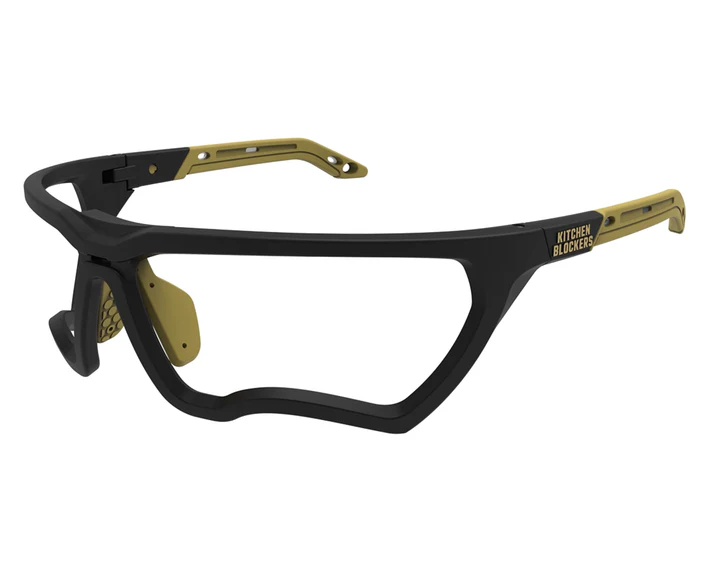
Kitchen Blockers Lens-Free Goggles
Court lighting varies wildly from venue to venue. At badly lit indoor courts, lens glare from traditional safety glasses is a bigger problem than the lighting itself. Lens-free Kitchen Blockers solve that by taking the lens out of the equation entirely.
Here's our Kitchen Blockers pickleball review.
Use code 11PICKLES for 10% off.
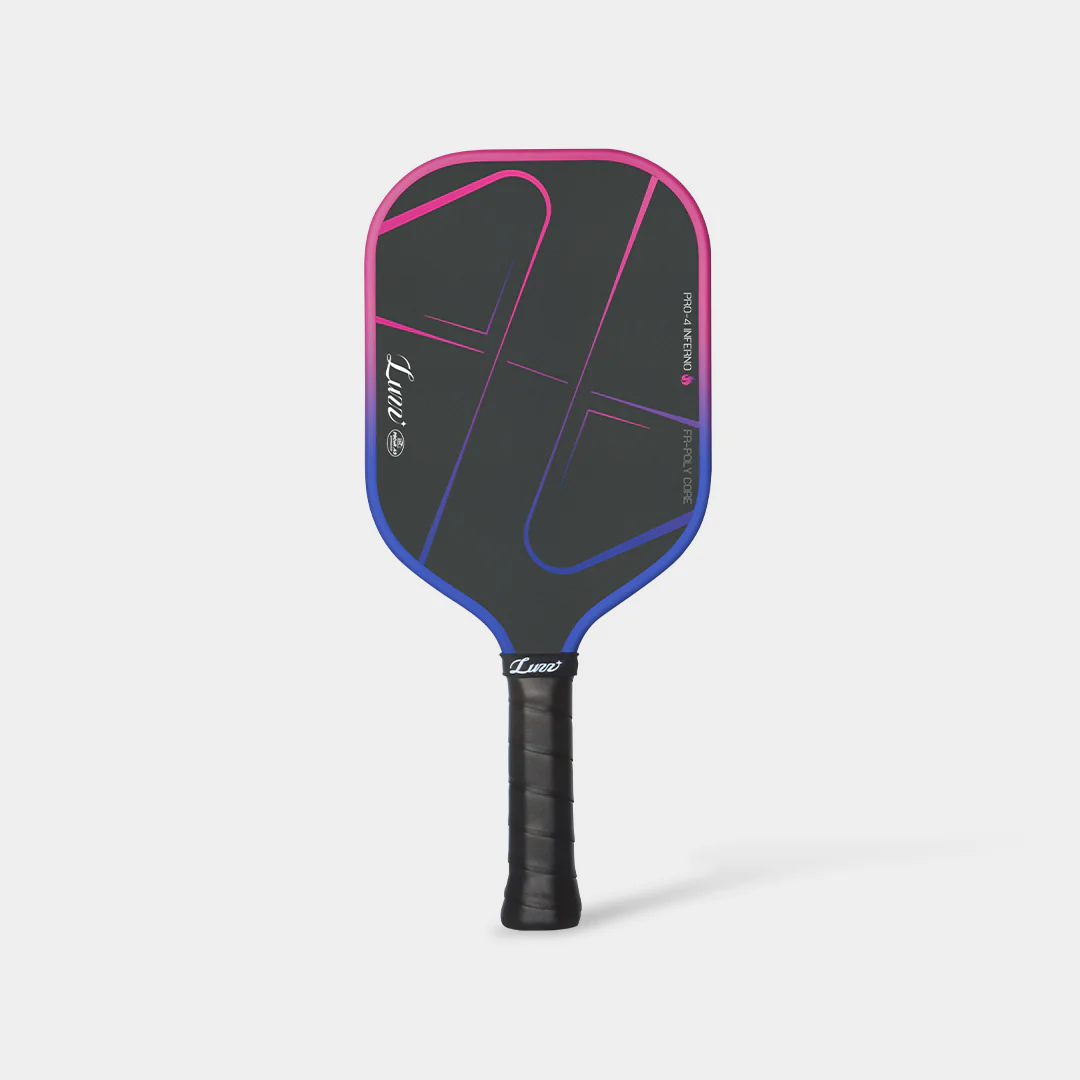
Luzz Pro 4 Inferno Paddle
A paddle with a poppy, high-spin face makes up for some of what bad lighting takes away. The Inferno's raw carbon face and aggressive core give you margin on fast exchanges when the court is underlit.
Here's our Luzz Pro 4 Inferno paddle review.
Use code 11PICKLES for 15% off at Luzz.
Luzz Pro 4 Tornazo Paddle
For the control player who plays a lot of low-light kitchen battles, the Tornazo gives you dwell time and touch that faster paddles trade away. I reach for this one at my home club, where the lighting is old and uneven.
Here's our Luzz Pro 4 Tornazo paddle review.
Use code 11PICKLES for 15% off at Luzz.
Tennibot Pickleball Ball Machine
If you are building a court at home, a ball machine changes how much return you get on the investment. The Tennibot Pickleball Ball Machine lets you drill on your own court whenever the lights are on, whether or not a partner shows up. If you are setting up a backyard or garage court, our pickleball at home and pickleball practice at home guides walk through the rest of the kit.
Use code 11PICKLES for $50 off.
Frequently Asked Questions About Pickleball Court Lighting Layout
How Many Foot-Candles Do You Need for a Pickleball Court?
A recreational pickleball court needs 20 to 30 average maintained foot-candles on the playing surface. Club and league play calls for 30 to 50 foot-candles. Tournament play requires 50 to 75 foot-candles horizontal, and professional broadcast play needs 75 to 125 foot-candles horizontal plus 40 to 50 foot-candles vertical for camera pickup.
How Tall Should Pickleball Court Light Poles Be?
Pickleball court light poles should be 18 to 25 feet tall, depending on the level of play. Residential courts use 18 to 20 feet. Club and multi-court facilities use 20 to 22 feet. Tournament and broadcast venues use 22 to 25 feet or more. Mounting below 18 feet creates glare on lobs and overheads.
How Many Poles Does a Pickleball Court Need?
A single pickleball court typically uses a 4-pole layout, with two poles on each long side placed 3 to 5 feet outside the sidelines. A 2-pole layout is a residential compromise that saves on cost but sacrifices uniformity. Multi-court facilities often use shared 6-pole or 8-pole layouts that cut total fixture count across the facility.
What Color Temperature Is Best for Pickleball Court Lighting?
Pickleball court lighting should use 5000K (cool white) for tournament and broadcast play, and 4000K (neutral white) for residential and club play. Avoid 3000K or lower, since yellow-tinted light washes out the yellow pickleball and makes tracking harder. Color rendering index should be 75 or higher.
What Is the Uniformity Ratio for Pickleball Court Lighting?
Competitive pickleball courts should hit a max-to-min uniformity ratio of 2.0 or less and an average-to-min ratio of 1.5 or less, per IES RP-6 sports lighting standards. Recreational courts can accept up to 3.0 max-to-min. Uniformity is mainly driven by pole placement and fixture aim, not fixture brightness.
Can You Use Parking Lot Lights for a Pickleball Court?
You can, but you should not. Parking-lot fixtures have broad beam optics designed for ambient coverage, which produces poor uniformity and noticeable hot spots on a pickleball court. Sports-rated fixtures have tighter beams and deliver the max-to-min ratios the sport needs. The cost difference is modest and the playability difference is significant.
How Much Does It Cost to Light a Pickleball Court?
Industry ballpark quotes from commercial lighting manufacturers put a residential 4-pole LED pickleball court lighting system at roughly $8,000 to $15,000 installed, depending on fixture quality, pole height, and electrical infrastructure. Club-grade systems run $15,000 to $30,000. Tournament-grade broadcast systems can exceed $50,000. Costs scale down per court in multi-court facilities that share poles.
Build It Right the First Time
Pickleball court lighting layout is not complicated, but it is unforgiving. Miss the foot-candle target, the mounting height, or the uniformity ratio and every match played on that court is a worse match than it should be. The good news is that the variables are all knowable, the standards are all public, and the manufacturers worth using will produce a photometric plan before you spend a dollar. Get those three things in front of you and the rest of the install is just wiring and concrete.
If you are playing courts with bad lighting right now, the best thing you can do is push your club to commission a retrofit. Share this article, share USA Pickleball's facility resources, and push for sports-rated fixtures on properly spaced poles. If you are shopping for the rest of your kit at the same time, our best pickleball brands breakdown covers who is making what and why it matters. Every well-lit court grows the sport.
And 11 PICKLES, while you are here, check out our Etsy shop for gear and apparel that holds up on court whether the lights are great or terrible. Dig into more gear takes in our topics/reviews library, browse strategy deep-dives in topics/advanced, and start from the top in topics/beginners if you are newer to the sport. Want to stay current on pickleball news, gear, and pro coverage? Subscribe to the 11 PICKLES newsletter. We are here for all of it.
Some links on this site are affiliate links, which means if you click and buy, we earn a little something. It does not cost you extra, but it helps us keep the pickleball content flowing.


.webp)