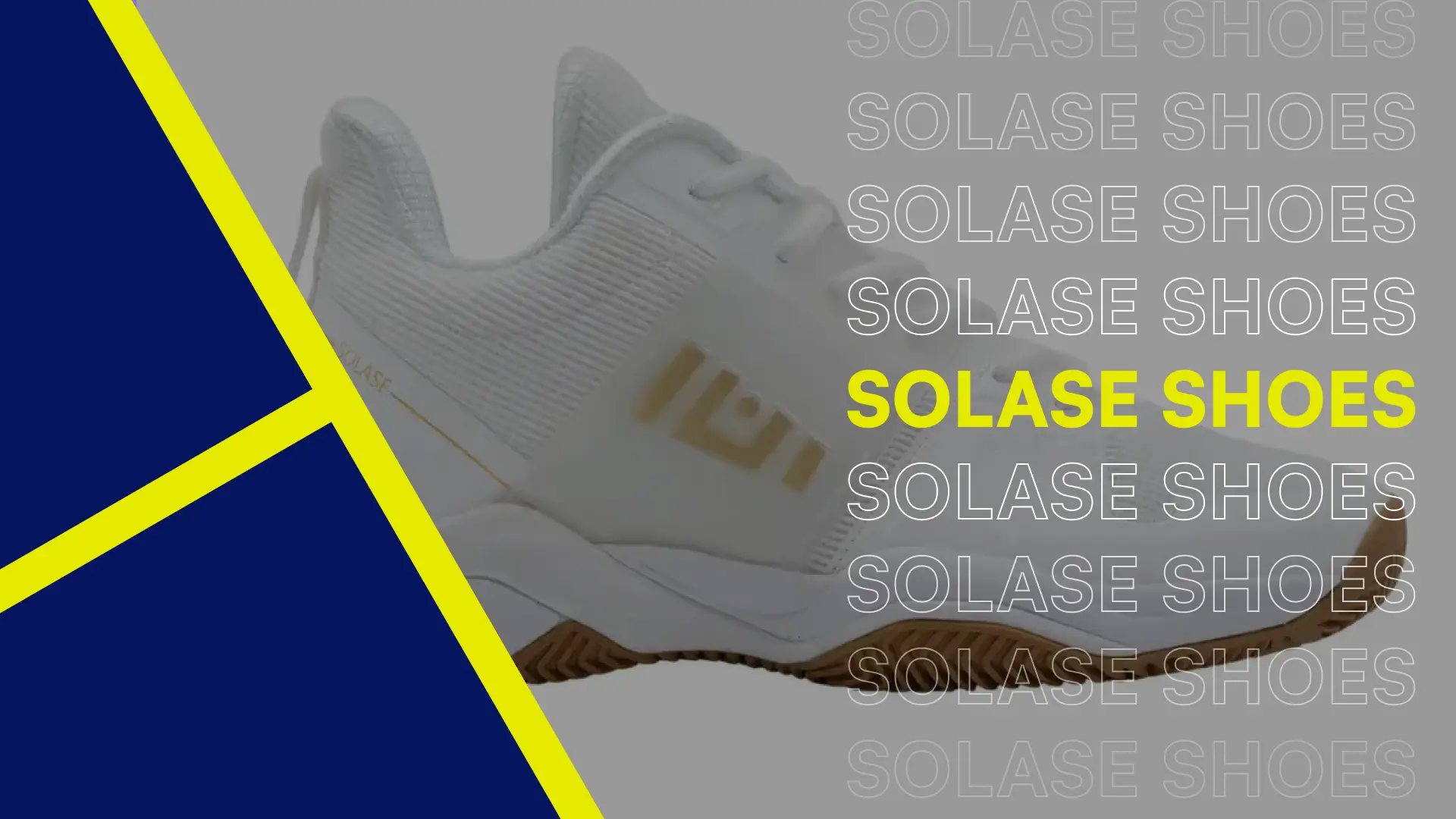
I am a 3.8 DUPR player chasing 4.0, I play indoor pickleball two to three hours a day, four to five days a week, and I burn through court shoes. My ASICS, which I genuinely like, start breaking down around the three to four month mark. So when Solase sent me a pair of their GoldForce shoes to test, I had one real question: would they survive my schedule, and would my ankles feel better for it?
11 PICKLES is a pickleball gear review and lifestyle brand, and we don't write a shoe review off one session. The first hour in any shoe tells you almost nothing. You are still fighting the fit, the weight feels strange, and whatever you think about comfort changes by hour 10. I have now used the Solase GoldForce for 40 hours, all of it indoor, at the pace above. People keep complimenting them on the court, which never happens with my ASICS, so let me walk you through what is going on with this shoe.
Here is where I landed. The GoldForce has real ankle support, a roomy toe box, and a build that has barely worn while my usual shoes would already be on their way out. It also runs big, feels a little heavy out of the box, and took a few sessions to break in. Below is the full breakdown, including who should buy it and who should skip it.
For 10% off, use code 11pickles.
Ankle Support and a Wide Toe Box Are the Reasons to Buy
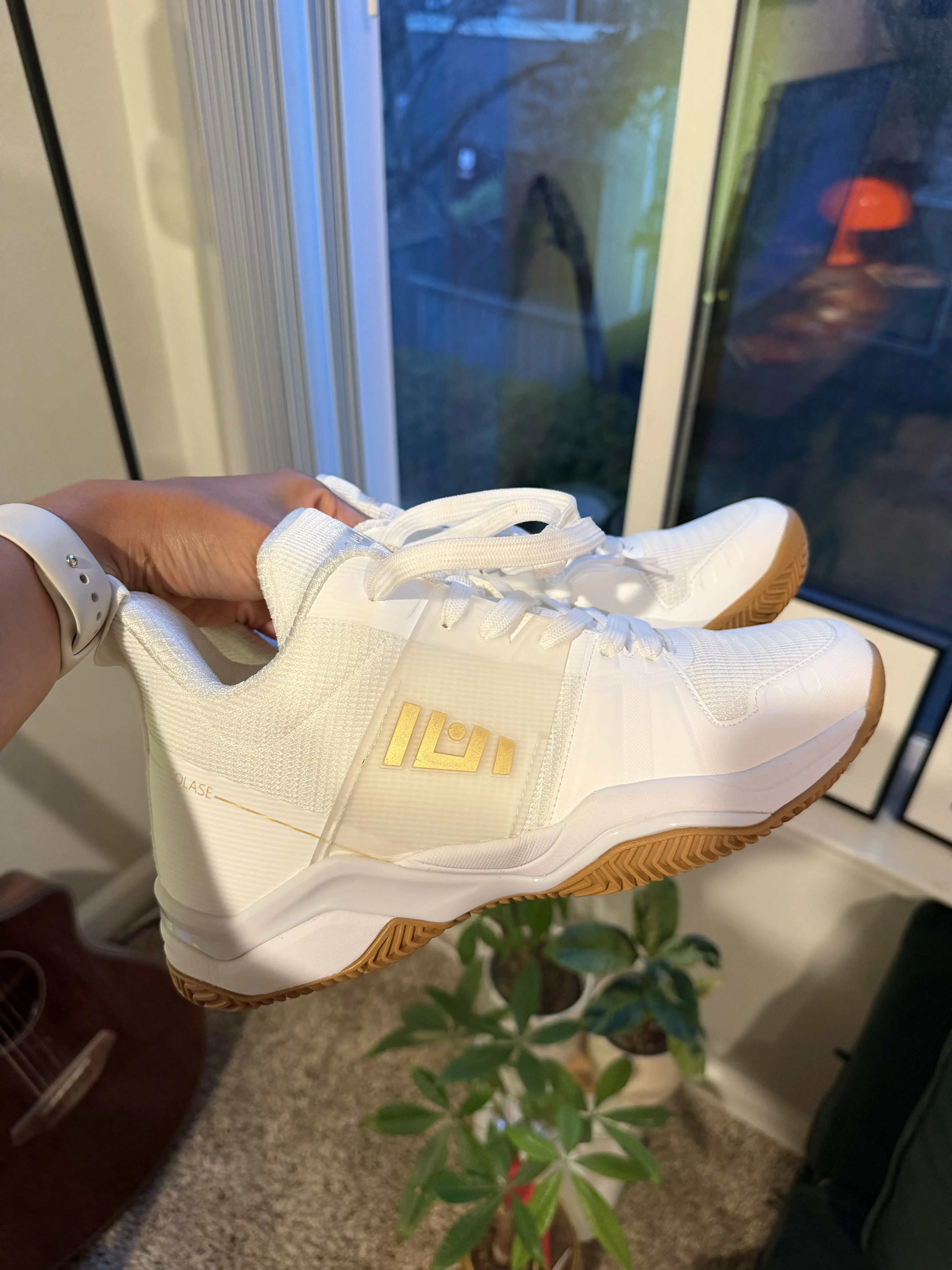
The ankle support is the real reason to grab these, and the injury data backs up why it matters. In a 2024 Cureus study of pickleball lower-extremity injuries, the ankle sprain was the single most common injury at 21.7% of cases, and the most common mechanism was a sudden change in direction, the exact lateral cut you make a hundred times a session. The GoldForce is a mid-cut shoe with a memory foam collar that wraps your ankle and keeps it from rolling when you push hard side to side. The kitchen line is where ankles give out, and that collar gave me a locked-in feeling on hard pushes that my low-top ASICS have never come close to.
That is not a happy accident. Christina built Solase around ankle support specifically, and you feel it the second you lace up. If you have rolled an ankle sprinting to the net, or you play a little scared of it, this is exactly the problem the GoldForce is trying to solve.
The toe box is the other thing I noticed early. It is wide, so your toes can spread on landings instead of getting crushed, which is one of the most common gripes with court shoes. Mine had room without feeling sloppy, and the reinforced cap up front takes the toe-drag abuse without pinching.
A few things that stood out in my first week:
- Mid-cut collar: genuine ankle hold when you change direction, not just padding for show
- Wide toe box: room for your toes to spread, no pinching on landings
- Reinforced toe cap and side guards: they protect the spots where most shoes blow out first
- Herringbone outsole: predictable grip indoors, no surprise slides
The Break-In Period Is Real: They Feel Big and Heavy at First
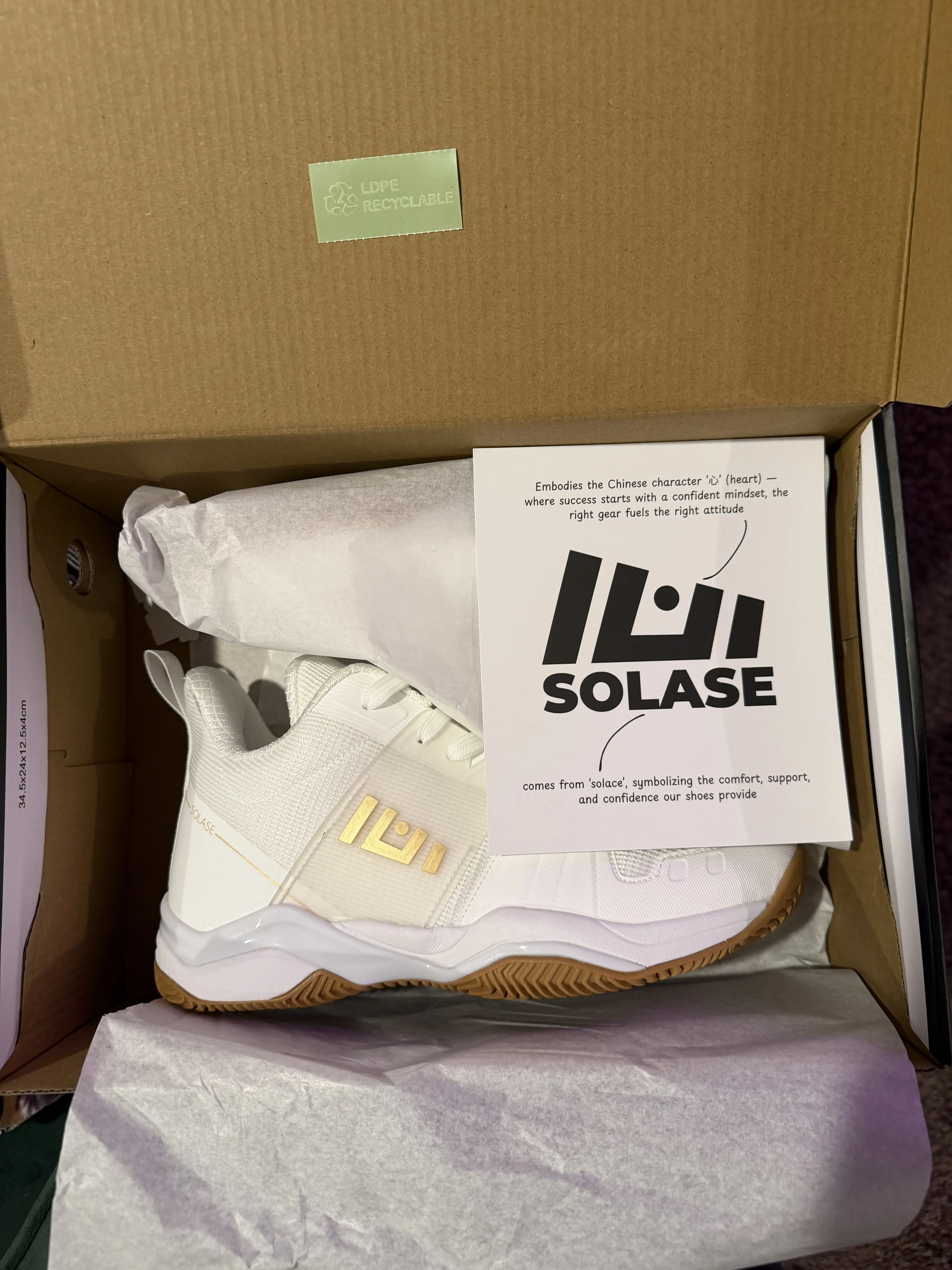
I want to be honest about the part that took some patience. Out of the box, the GoldForce feels big and a little heavy. Next to a low, light running-style shoe, there is more shoe here, and you feel it on your first few points.
The break-in took me a bit. For the first couple of sessions, the shoe felt stiff, and I was aware of it on my feet in a way you do not want when you are trying to focus on a third shot drop. Plenty of players say the same thing, and it lines up with how snug and supportive the build is. A shoe that holds your ankle this well is not going to feel like a slipper on day one.
Then it flipped. Around the third or fourth session, the shoe softened into my foot and the bulk stopped registering. The same structure that felt heavy at first became the thing I like most: stability I do not have to think about. If you buy these, give them a few sessions before you judge them. Here is how I would speed up the break-in:
- Wear them around the house for an hour or two before your first session so the collar and midsole start to flex.
- Lace them firmly but not at full tension for the first two sessions, then dial in your real fit once the upper softens.
- Play your early sessions on indoor courts, not cold in a tournament.
- Give it three to four sessions before deciding. The shoe at hour 12 is a different shoe than at hour one.
Keep the weight note in perspective. Solase markets these as lightweight, and on court after the break-in they did not feel heavy to me anymore. But if you are coming from a barely-there racing shoe, the first impression is more shoe and more structure. That is the trade you make for the ankle protection.
Lateral Movement and Comfort Once They Break In
Past the break-in, the GoldForce got genuinely comfortable, and side-to-side movement is where it earns its money. The dual EVA midsole with a TPU layer gives you cushion underfoot and a stable base when you load up to change direction. On a hard push to chase a wide ball, the shoe stayed planted and my ankle stayed put. No rolling, no sloppy lean.
The other win is comfort over a long session. I regularly play two to three hours straight, and my feet were not wrecked at the end the way they sometimes are. The padded collar, the cushioned midsole, and the removable shock-absorbing insole add up to a shoe you can grind in. If you have dealt with pickleball knee pain or general foot fatigue, the cushioning is worth something.
Two honest notes on feel:
- They look fancy. The GoldForce reads more like a basketball shoe than a traditional court shoe, with a higher cut and a bolder shape. I love it, and it is why people keep complimenting them, but if you want something low and understated, this is not it.
- The structure is always there. This is a supportive shoe by design. If you like to feel almost nothing on your feet, the GoldForce will always feel like more shoe than a minimalist trainer, even broken in.
If you are still piecing together your kit, our guide on what do you need to play pickleball covers the basics.
Durability: 40 Hours In, the Outsole Has Barely Worn
This is the section that surprised me, and it is the strongest case for the GoldForce.
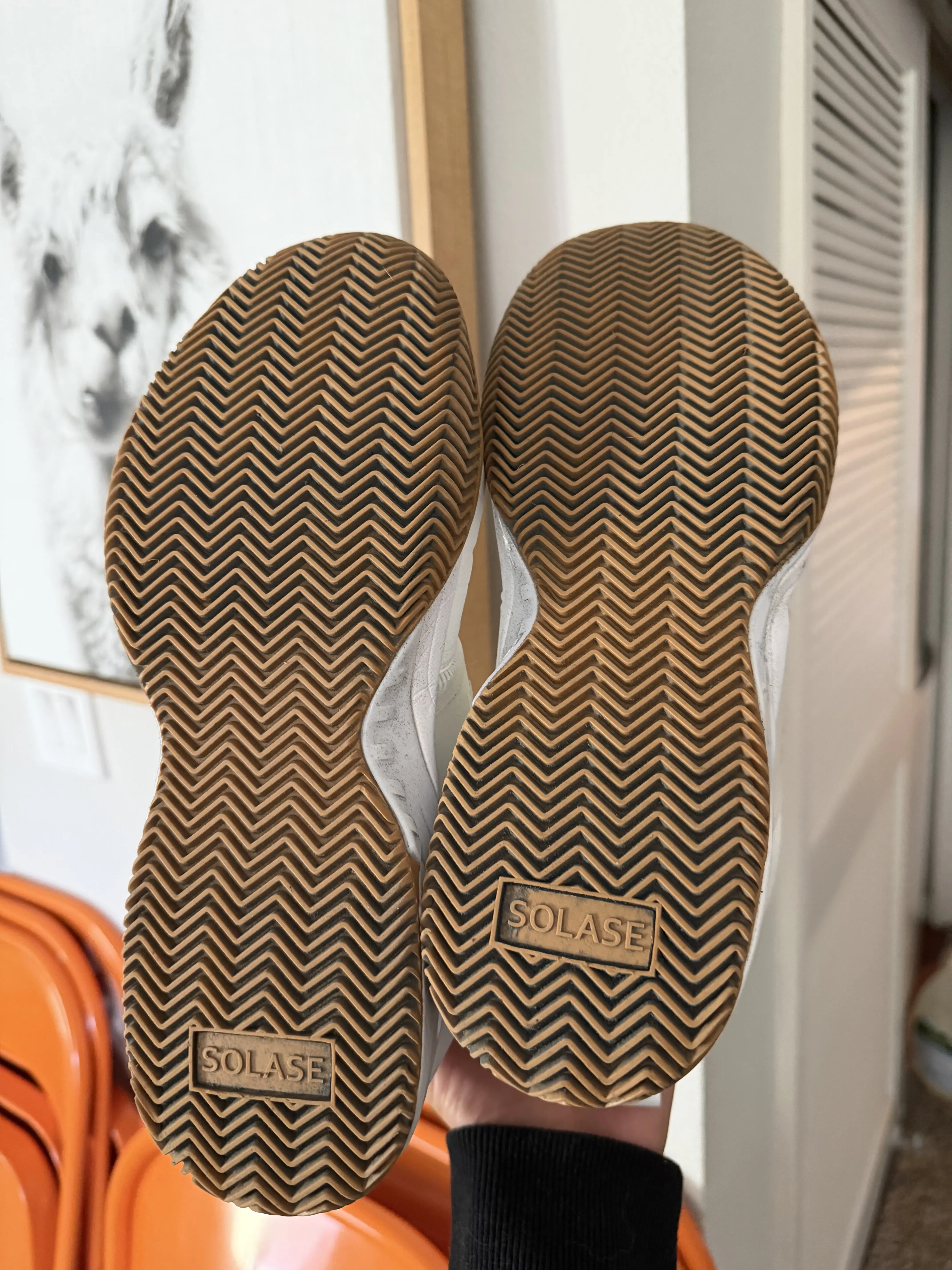
I have put 40 hours on these shoes, all indoor, at four to five sessions a week. The outsole has hardly rubbed down. The herringbone tread still looks close to new, and the shoe has kept its shape instead of collapsing at the heel or packing out through the midsole the way tired shoes do.
That matters because of how hard I am on shoes. On this same schedule, my usual pair would already be smoothing out and losing support. The GoldForce is still going strong with no real wear to report. For a player who replaces shoes constantly, that is not a nice bonus, it is the whole point, because a shoe that lasts twice as long is effectively half the price.
Here is what is holding up at the 40-hour mark:
- Outsole tread: barely touched, grip still predictable indoors
- Shape: no heel collapse, no midsole breakdown, still supportive
- Toe cap and side guards: the high-wear zones look intact, no early blowouts
- Upper and collar: broken in and softened, but structurally solid
I will keep playing in these and update the review past the 100-hour mark, which is where most shoes finally start to show real wear. For now, durability is the GoldForce's best argument.
Solase GoldForce vs. My ASICS
Because I play in ASICS every day, this is the most useful comparison I can give you.
My ASICS are comfortable, familiar, and basically have no break-in. I put them on and play. The GoldForce asked for more patience up front, and it sits higher and heavier on the foot. So on day one, the ASICS win.
Two things flipped me. First, ankle support. My low-top ASICS give me almost nothing above the ankle, and since I play a lot and worry about rolling one, the GoldForce's mid-cut collar is a real jump in confidence when I cut. Second, durability. My ASICS wear out every three to four months. The GoldForce, on the same brutal schedule, has barely worn at 40 hours. If that pace holds, I am buying shoes far less often, which adds up when you play this much.
So the honest call: the ASICS are the lighter, easier, no-break-in option, and if you do not have injury worries and do not mind replacing shoes a few times a year, they are great. The GoldForce is the pick if you want ankle support and a shoe that lasts. For my game, the switch stuck. If you want to shop the wider field, our roundup of the best sneakers for pickleball lays out the options with affiliate picks, and it is worth learning how to prevent pickleball injuries no matter which shoe you land on.
The Story Behind Solase: A Founder-Led Asian American Pickleball Brand
Part of why I wanted to test the GoldForce is the brand itself. Solase is an Asian American, founder-led company, and I love seeing players start specific brands that solve real problems instead of chasing every category at once.
The founder, Christina, grew up in Asia and moved to the United States, where she fell in love with pickleball. The idea for Solase came out of pain, literally. She rolled her ankle on the court more than once and watched other players struggle in shoes that were never built for the sport's quick lateral movement, so she set out to fix it. She surveyed more than 1,500 players, spent a year refining prototypes on real courts, and launched on Kickstarter in 2024, where backers funded the project.
The name comes from the word "solace," the comfort and support the shoes are meant to give you, and the logo carries the Chinese character 心, meaning heart. The idea is that the right gear fuels the right mindset. It is a founder who got hurt doing the thing she loved and built the product she wished she had. As someone who plays this much, I am rooting for that.
I also appreciate the range of colorways. The GoldForce is the loud, fun one, but the same shoe comes in NightBolt and Onyx if you want something more low-key.
Solase GoldForce Price, Sizing, and Fit
The Solase GoldForce lists at $125. That puts it in the mid-to-premium range for a dedicated pickleball shoe, above a basic court shoe but below the most expensive specialty options. Given the ankle support and the durability I am seeing, the price feels fair, and it gets more reasonable the longer the shoes last.
One thing to get right before you order: these run large. Solase tells you to size up only if you are between sizes, but in practice the GoldForce skews big, and a lot of players, me included, would do well to account for that. The shoe also suits average to wider feet thanks to that roomy toe box, so narrow-footed players should factor that in.
Here is how I would approach sizing:
- If you are a true, consistent size, order your normal size and expect it to fit roomy rather than snug.
- If you are between sizes, do not size up. These already run large, so default to the smaller of your two sizes.
- If you have narrow feet, know the wide toe box will feel generous, and a snug lacing matters more for you.
- Use the free 30-day return window. Solase offers free returns and exchanges on unworn shoes within 30 days in the United States, so you can dial in your size without risk.
The GoldForce sells out regularly, so if your size is in stock, that is worth knowing.
The Tech Specs
- Price: $125
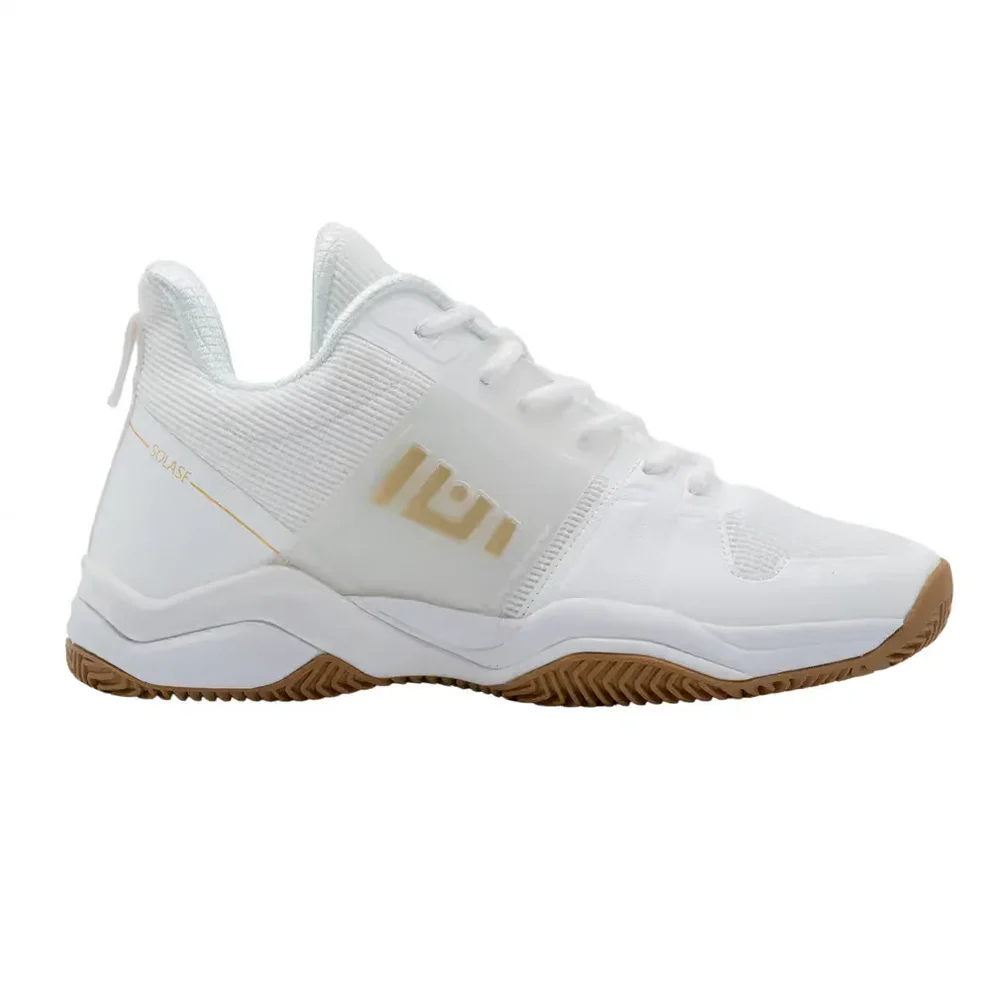
- Cut: Mid-cut with a memory foam padded collar for ankle support
- Toe box: Wide, for natural toe spread; suits average to wider feet
- Midsole: Dual EVA with a TPU midsole for stability and energy return
- Upper: Light, breathable mesh
- Outsole: Herringbone pattern for multidirectional court grip
- Insole: Removable, shock-absorbing
- Protection: Reinforced toe cap and side guards
- Sizes: M4/W6 through M13/W15
- Fit note: Runs large; size down if between sizes
- Colorways: GoldForce, NightBolt, Onyx (same shoe, different colors)
- Returns: Free returns and exchanges within 30 days on unworn United States orders; international sales final
- Brand: Founder-led, Asian American; launched via Kickstarter in 2024
A few specs are worth a closer look.
Mid-cut collar with memory foam. This is the shoe's identity. It is the source of the ankle support and the reason the GoldForce sits higher and feels like more shoe than a low-top. If ankle protection is your priority, this is the spec that matters most.
Dual EVA plus TPU midsole. The cushioning is what makes long sessions comfortable, and the TPU adds the stability you feel when you cut. It is also part of why the shoe holds its shape instead of packing down.
Herringbone outsole. A proven court tread. At 40 indoor hours, mine has barely worn, which is the standout durability story here.
Who Should Buy the Solase GoldForce
After 40 hours on court, here is my take.
Buy the Solase GoldForce if you are:
- A player who wants real ankle support and a mid-cut shoe built for cutting
- Someone who has rolled an ankle before, or plays worried about it
- A high-volume player who burns through shoes and wants something that lasts
- A player with average to wider feet who needs a roomy toe box
- Someone who wants to back a founder-led, Asian American brand solving a specific problem
Look elsewhere if you are:
- A player who wants the lightest, lowest-profile shoe possible with zero break-in
- Someone with narrow feet who needs a snug, locked-in fit out of the box
- A player who will not give a new shoe three or four sessions to settle in
- Shopping at the lowest possible price rather than for support and longevity
For most players who take this sport seriously and play often, especially anyone with ankles to protect, the GoldForce earns a spot in the bag. The break-in and the run-large sizing are the only two things to plan around, and both are easy to manage.
The Solase GoldForce is a supportive, durable, genuinely comfortable pickleball shoe once you get past a short break-in. The ankle support is real, the wide toe box is a relief, and the durability sold me: 40 hours of hard indoor play and the outsole has barely worn, while my ASICS would already be fading. It runs large and feels like more shoe at first, so size down if you are between sizes and give it a few sessions before you judge it.
For someone like me who is on court four to five days a week and worries about rolling an ankle, this is a shoe I am happy to keep wearing. It looks great, it lasts, and it holds my ankle when I need it to. That is the whole job.
If you want to try a pair, head to Solase and use code 11PICKLES at checkout. It supports the reviews we publish at 11 PICKLES, where we test what actually shows up on court.
Solase GoldForce Pickleball Shoe FAQ
Are Solase Pickleball Shoes Worth It?
Yes, Solase pickleball shoes are worth it if you want ankle support and durability. The GoldForce is a mid-cut shoe with a memory foam padded collar, a wide toe box, and a herringbone outsole that has barely worn after 40 hours of indoor play in my testing. At $125, the value grows the longer the shoes last, and Solase offers free 30-day returns on unworn United States orders so you can confirm the fit. Plan for a short break-in and size down if you are between sizes.
Do Solase GoldForce Shoes Run Big or Small?
Solase GoldForce shoes run large. If you are between sizes, size down rather than up, even though the brand's general guidance is to size up. The shoe also has a wide toe box that suits average to wider feet, so narrow-footed players should account for the extra room. Use the free 30-day return window to dial in your size.
How Long Do Solase Pickleball Shoes Last?
In my testing, the Solase GoldForce has held up far better than my usual ASICS. After 40 hours of indoor play at four to five sessions a week, the outsole has barely worn and the shoe has kept its shape, while comparable shoes start breaking down around the three to four month mark on the same schedule. I will update this review past the 100-hour mark, but early durability is the GoldForce's strongest feature.
Are Solase Shoes Good for Ankle Support?
Yes. Ankle support is the entire reason Solase exists. The GoldForce is a mid-cut shoe with a memory foam padded collar that holds your ankle when you cut, which is where most pickleball ankle rolls happen. If you have rolled an ankle before or play worried about it, the mid-cut build is a real upgrade over a low-top court shoe.
Is There a Break-In Period for the Solase GoldForce?
Yes. The GoldForce feels big and a little heavy out of the box and took me three to four sessions to break in. After that, the shoe softened into my foot and the bulk stopped registering. Wear them around the house first, lace them firmly but not at full tension early on, and give them several sessions before judging them.
Who Makes Solase Pickleball Shoes?
Solase is a founder-led, Asian American pickleball brand started by Christina, who grew up in Asia and moved to the United States. She created the company after rolling her ankle on the court more than once and seeing other players struggle in shoes not built for the sport. The brand surveyed more than 1,500 players, refined prototypes over a year, and launched on Kickstarter in 2024. The name comes from "solace," and the logo carries the Chinese character 心, meaning heart.
Transparency matters in pickleball and in life. Some links on this site are affiliate links, which means if you click and make a purchase, we may earn a small commission at no extra cost to you. Solase provided a pair of GoldForce shoes for this review. Every opinion above is based on 40 hours of my own on-court testing and is entirely my own.


.webp)