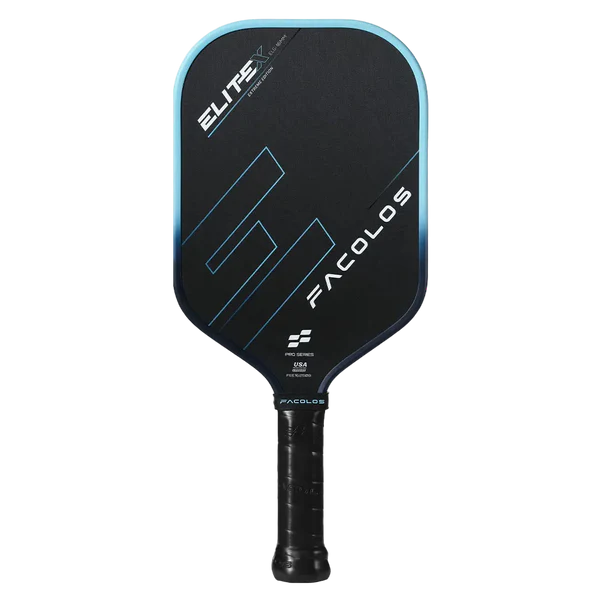
Facolos Elite X 16mm Review: Plush Control, Spin, and the Approval Catch
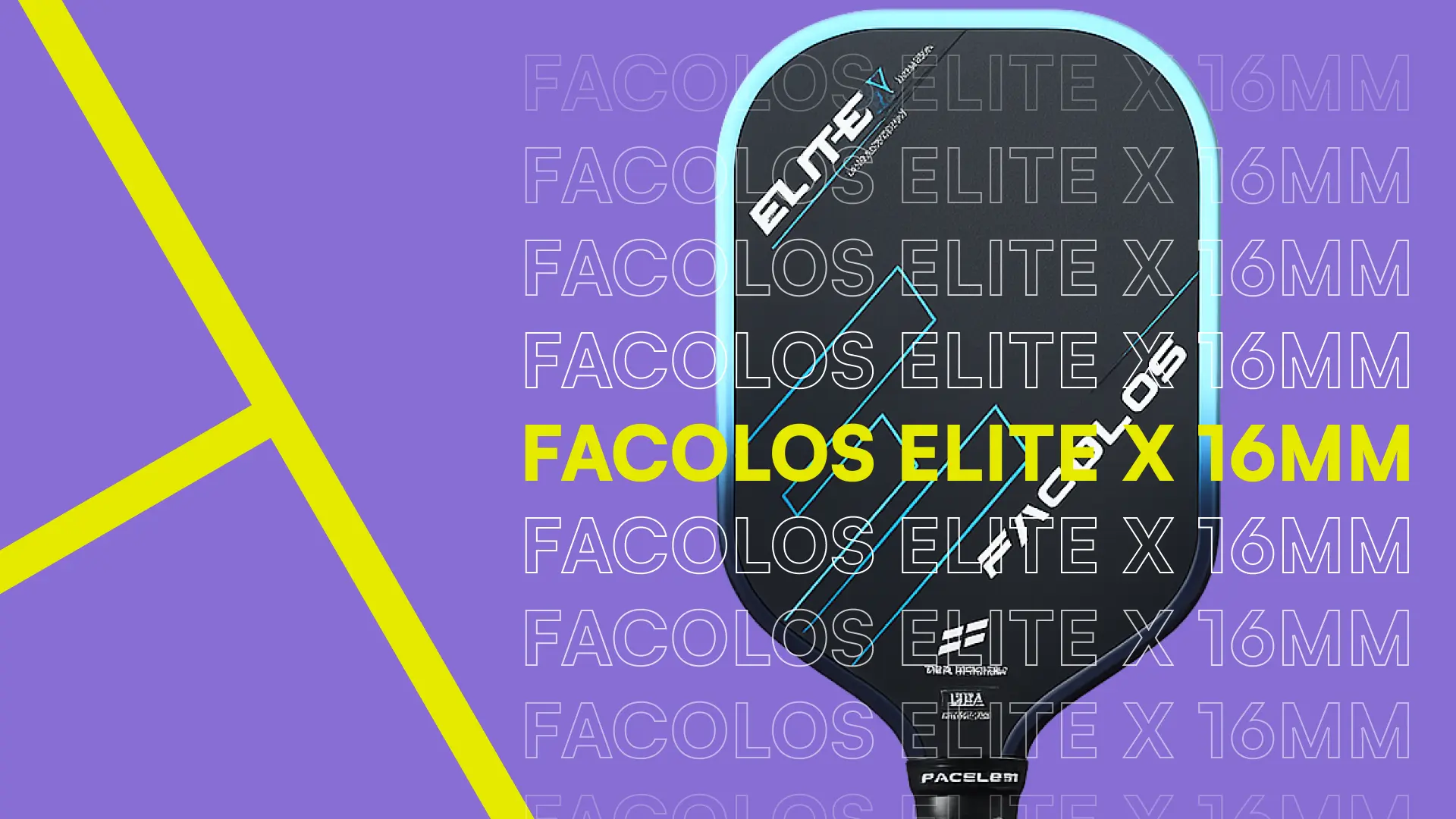
My Facolos Elite X 16mm review comes down to one clear verdict: this is a plush, spin-friendly control paddle that makes placement feel natural, but it asks you to create your own pace. I picked it up after playing with a power paddle, and I expected a long adjustment period. I did not get one. Drops, resets, dinks, and shaped drives started landing where I wanted almost immediately.
The catch matters as much as the performance. USA Pickleball removed the Pro Series Elite X from its approved list on May 28, 2026. The current UPA-A approved paddle list still includes an Elite X entry, so legality depends on the governing body and the exact model in your hand. I will explain that distinction clearly because nobody should discover an approval problem at tournament check-in.
I will also cover the stock feel, the weighted setup, power and pop, sweet spot, spin, specs, and how this paddle fits the game of Gabe Tardio. And 11 PICKLES, take every feel description with a grain of salt. My hands, swing, comparison paddles, and added weight all affect what I feel.
Facolos Elite X 16mm Review: Quick Verdict
The Elite X 16mm earns its place as a control-first all-court paddle, although I would put it much closer to control than power. It rewards clean mechanics, purposeful placement, and spin. It does not give a player much free speed when the swing gets short or late.
It is best for control players, spin-heavy players, strong ball strikers, and doubles players who value resets and placement, and its play style is control-first all-court through and through. The strongest traits are a plush feel, easy shot shaping, precise placement, and accessible spin, and the tradeoffs are just as clear: limited free power, limited pop, and only a decent stock sweet spot. Stock, it is playable immediately, quick through contact, and easy to direct. Weighted, it gets more stable and more complete, but it never becomes a genuine power paddle. And there is a real tournament warning here: USA Pickleball removed it from the approved list, while the UPA-A list still includes an Elite X model. My bottom line is that I would recommend it to a player who already creates pace and wants the paddle to help with everything else.
A lot of paddles claim all-court versatility because that label sounds safe. The Elite X actually makes a choice. It gives me confidence when I slow the ball down, change its shape, or aim at a small target. In exchange, it makes me supply the acceleration.
How I Tested the Facolos Elite X 16mm
I tested the Elite X as a player coming directly from a power paddle, which gives this review a useful bias. I notice missing pace quickly. I also notice when a softer paddle improves my margins on the shots that usually punish aggressive players.
I kept the testing simple. First, I played the paddle stock so I could judge its balance, hand speed, natural sweet spot, pop, and baseline power without changing the factory setup. Then I added perimeter weight in small steps and watched how stability, blocking, resets, and drive depth changed. Finally, I compared the fully weighted setup against power paddles I know well, then set aside the label on the box and classified it by actual court behavior.
That process matters because weight can rescue a paddle's weak spots, but it can also hide what a buyer receives. When I say the Elite X improves with weight, I do not mean the stock paddle fails. I mean the added mass makes the good control platform feel more stable and complete.
I also judged the paddle across different shot families: baseline serves, returns, drives, and passing shots; third-shot drops, transition resets, blocks, and defensive counters; crosscourt dinks, speedups, rolls, and flicks; and overheads and putaways where easy power matters.
If you want more detail on why the soft game separates good paddles from exciting ones, read my guides to the Third Shot Drop Pickleball and What Is Dinking in Pickleball. The Elite X makes both shot families easier than a hot power paddle does.
Feel and Control: The Best Parts of the Elite X
The Elite X feels plush, connected, and predictable. I can sense the ball on the face long enough to direct it, but the paddle never feels like a pillow. That distinction explains why I could switch from a power paddle without spending a week relearning every drop.
Placement Feels Immediate
My favorite Elite X trait is simple: the ball goes where I aim. That sounds basic until you play a paddle that launches a routine block or sends a dink 8 inches deeper than expected. With the Elite X, I trusted my line early.
I noticed the benefit most in three situations. On a third-shot drop, I could lift with shape instead of steering the ball and hoping the face absorbed enough pace. In transition, I could soften a hard drive without the paddle adding an unwanted rebound. And during crosscourt dinks, I could change from a neutral ball to an aggressive angle without changing my swing dramatically.
That matters because control reduces decision pressure. If I trust the paddle response, I can choose a smaller target and still swing through the ball. That confidence creates better offense than a raw power number does on many doubles points.
Resets and Blocks Stay Manageable
The Elite X handles pace well because it does not throw the ball off the face. On resets, I could hold the face, absorb speed, and guide the ball into the kitchen. On blocks, I still had to supply direction, but I rarely fought a trampoline response.
This paddle will not fix a loose wrist or a late contact point. No paddle will. It does give a player a calm enough response to practice the right mechanics. If drives keep jumping off your current paddle, the Elite X can lower the difficulty without making the face feel dead.
The Plush Feel Still Gives Feedback
Some soft paddles mute contact so much that center hits and slight misses feel almost identical. I do not love that. I want comfort, but I also want information.
The Elite X gave me enough feedback to know where I caught the ball. Center contact felt full and soft. Contact toward the edge lost some authority. That feedback helped me adjust during a game instead of waiting for video later.
Power and Pop: You Need to Do the Work
Power and pop describe different parts of a paddle, and the Elite X sits below true power paddles in both during my testing. Power shows up on full swings such as serves, drives, and overheads. Pop shows up on short swings such as punch volleys, counters, and speedups.
Full-Swing Power Is Usable, Not Free
I could drive hard with the Elite X, but I had to accelerate and meet the ball cleanly. The paddle did not turn a compact swing into a heavy ball. Against a genuine power paddle, I lost easy depth and some finishing speed.
That result does not make the Elite X weak. One independent measurement profile recorded a 60.2 mph serve from a tested 16mm sample, which sat near the middle of that database. My court experience still felt control-first because I compared it against paddles that live above the middle.
That distinction matters. A player with fast hands and a complete kinetic chain can create enough pace, but a player who relies on the paddle for depth may leave returns and drives short. A former tennis player may appreciate the predictable launch because that player already knows how to accelerate, while a player with a compact swing may prefer a livelier face.
Pop Sits on the Low Side
The Elite X never gave me the instant counter speed I get from a hot power paddle. During hands battles, I had to punch through the volley. On a late block, the ball sometimes came back shorter than I wanted.
That low pop helps the soft game. It also asks for better preparation when the rally speeds up. I would not sell that as an automatic advantage. If your backhand counter already lacks depth, this paddle may expose the problem.
Weight Helps, but It Does Not Change the Category
Perimeter weight gave the Elite X more authority. Drives carried deeper, off-center counters held their line better, and blocks felt less fragile. Even fully weighted, it never matched the easy offense of the best power paddles I have used.
Stock, the Elite X feels like a precise control paddle with enough pace for a complete player. Add moderate perimeter weight and it becomes a more stable all-court paddle. Build it heavy and it gains plow-through, but the core response still favors control.
So don’t buy this paddle as a power project. Buy it because you like the feel, control, and spin, then use weight to improve stability and depth.
Spin and Shot Shaping: A Real Strength
The multidirectional T700 raw carbon face gives the Elite X obvious bite. I could roll the ball, cut a return, shape a drop, and bring a drive down without fighting the surface.
Topspin Comes Easily
Topspin serves and drives cleared the net with useful margin, then dipped. I still had to create racquet-head speed, but the surface gave the ball enough grip to reward it.
An independent profile measured about 2,241 RPM from one 16mm sample. Treat that number as a reference, not a promise. Ball type, wear, temperature, swing path, and test method all change RPM. My useful conclusion is simpler: the paddle offers enough spin for advanced shaping and never felt slick.
Slices and Rolls Feel Predictable
The Elite X did more than create a high spin number. It let me predict the result. A good slice return stayed low, a roll dink cleared the net safely, and an angled speedup bent into the target window.
For players learning how paddle path changes the ball, my guide to How to Curve a Pickleball explains the technique. The Elite X gives that technique a cooperative surface.
The Delisting Confirms the Surface Was Aggressive
I need to separate a strong review point from a legal conclusion. The grit felt excellent, but USA Pickleball found that the production Elite X exceeded its allowable surface roughness standards. Facolos also acknowledged that the production paddle differed from the sample submitted for certification.
That does not mean a recreational player must stop using it. It does mean the surface performance came with a compliance problem, and I would never hide that in a buying recommendation.
Sweet Spot, Stability, and Hand Speed
The Elite X has a decent sweet spot, not a huge one. Center contact feels lovely. Small misses remain playable. Contact farther toward the sides loses pace and can twist the face more than a high-stability widebody would.
Stock Sweet Spot
I would call the stock sweet spot adequate for an elongated control paddle. I did not feel trapped in a tiny center patch, but I also did not get the automatic forgiveness of the widest modern shapes.
An independent sample measured a 5.6 twist weight. Twist weight estimates how strongly a paddle resists rotating on off-center contact. Higher numbers usually indicate more lateral stability. A 5.6 reading supports what I felt: usable, but not class-leading.
Weighted Sweet Spot
Added mass near the lower sides of the face made the effective sweet spot feel broader. The paddle resisted twisting better, and balls outside the center kept more depth.
I would test weight in order: start with a small, equal amount on both lower sides of the paddle, play at least one full session before adding more, move weight higher only if you want more plow-through and accept a slower swing, and stop as soon as stability feels good, since extra mass can hurt hand speed and fatigue the arm.
Every paddle and every arm differs. I would rather add too little, test, and repeat than build a heavy paddle from an online recipe.
Hand Speed Remains Good
The elongated shape never felt cumbersome to me. The approximate 7.9-8.3 oz factory range and moderate swing-weight profile keep it quick enough for kitchen exchanges. Added weight will change that, so players who win with fast hands should use restraint.
Facolos Elite X 16mm Specifications
Specs cannot tell me whether I will like a paddle, but they explain why a paddle behaves the way it does. Facolos lists the following figures for the elongated Elite X on its official U.S. product page.
- Shape: Elongated
- Face: Multidirectional T700 raw carbon
- Core: ElasticPP honeycomb
- Thickness: 16mm
- Weight: Approximately 7.9-8.3 oz
- Length: Approximately 16.5 inches
- Width: Approximately 7.5 inches
- Handle length: Approximately 5.1 inches
- Grip circumference: Approximately 4.3 inches
- Current U.S. price researched: $169.99 sale price, sold out on July 24, 2026
Sample measurements can vary. One independently profiled unit weighed 7.99 oz, carried a 113.55 swing weight, and posted a 5.6 twist weight. I care more about that variation than a false sense of precision. If you buy one, weigh the exact paddle and tune that unit.
USA Pickleball and UPA-A Approval Status
The approval story requires exact language. USA Pickleball and the United Pickleball Association of America, commonly called UPA-A, run separate equipment programs for different competitions.
Why USA Pickleball Removed the Elite X
On May 28, 2026, USA Pickleball announced that additional testing found the Facolos Pro Series Elite X exceeded allowable surface roughness, that Facolos acknowledged the production version differed from the originally submitted version, and that USA Pickleball had removed the paddle from its approved list.
As a result, I would not bring the original Elite X to a USA Pickleball-sanctioned tournament. Packaging, an old approval mark, or a January database screenshot does not override the current decision. My broader guide to Banned Pickleball Paddles explains why current status matters more than purchase date.
Why the UPA-A Status Differs
The current UPA-A list includes the Facolos Elite X, model FER162504, 16MM, added August 28, 2025, and the Facolos Elite X 2.0 Gabe Tardio, model FE2GTE16260A, 16MM, added June 30, 2026.
That means a UPA-A listing still exists for the Elite X family. PPA Tour and Major League Pickleball competition follows UPA-A equipment rules, but players still need to match the exact model number and event requirements.
Before a tournament, I would read the event's sanctioning-body rules, search the exact brand, model, thickness, and model number on that body's live list, take a screenshot on the day of travel, and bring a legal backup paddle.
That four-step check takes minutes and can save an entire tournament.
Does Gabe Tardio Still Use the Facolos Elite X?
Gabe Tardio used the Facolos Elite X family during the 2026 season, but I would not claim that he currently uses this exact original retail model. The UPA-A added a separate Elite X 2.0 Gabe Tardio entry on June 30, 2026, which shows that the family now includes a distinct signature model.
The original Elite X still makes sense for Tardio's game. He wins with compact counters, spin, placement, and disciplined kitchen patterns. You can see that tactical fit in my coverage of Ben Johns Gabe Tardio Doubles Pickleball and Gabe Tardio’s Wins Singles Doubles PPA.
This video offers another player's view of the 16mm paddle:
A pro endorsement can show how a paddle fits an elite style, but it can’t tell me whether the retail paddle fits your swing. Pros also use custom weight, grip builds, and model revisions, which is why I treat the endorsement as context, not proof.
Who Should Buy the Facolos Elite X 16mm?
The Elite X suits a specific player, and the approval split narrows the audience further. I would buy it for its control profile, not because a top pro used the family.
Buy It If
- You generate your own pace and want more confidence on drops, resets, and dinks.
- You use spin to create margin and angles.
- You like a plush 16mm response with clear feedback.
- You enjoy tuning paddles with small amounts of perimeter weight.
- You play recreationally or in an event that accepts your exact UPA-A-listed model.
Skip It If
- You want easy power on compact swings.
- You need explosive pop for counters and speedups.
- You want a giant stock sweet spot.
- You compete in USA Pickleball-sanctioned events.
- You do not want to track changing approval lists or model numbers.
My simplest buying test comes down to three questions: can you create enough pace without help from the paddle, do you value placement and spin more than counter speed, and will your events accept the exact model you plan to use? If all three answers are yes, the Elite X deserves a demo. If the third answer is no, stop there.
Other 11 PICKLES Paddle Reviews to Compare
The Elite X does not exist in a vacuum. I would compare it with one stable value paddle and one familiar control-oriented carbon paddle before buying.
Warping Point Neon
The Neon offers a more accessible price and a balanced performance profile. I like it as a comparison for players who want modern construction without the Elite X approval complication.
GRUVN LAZR 16HD
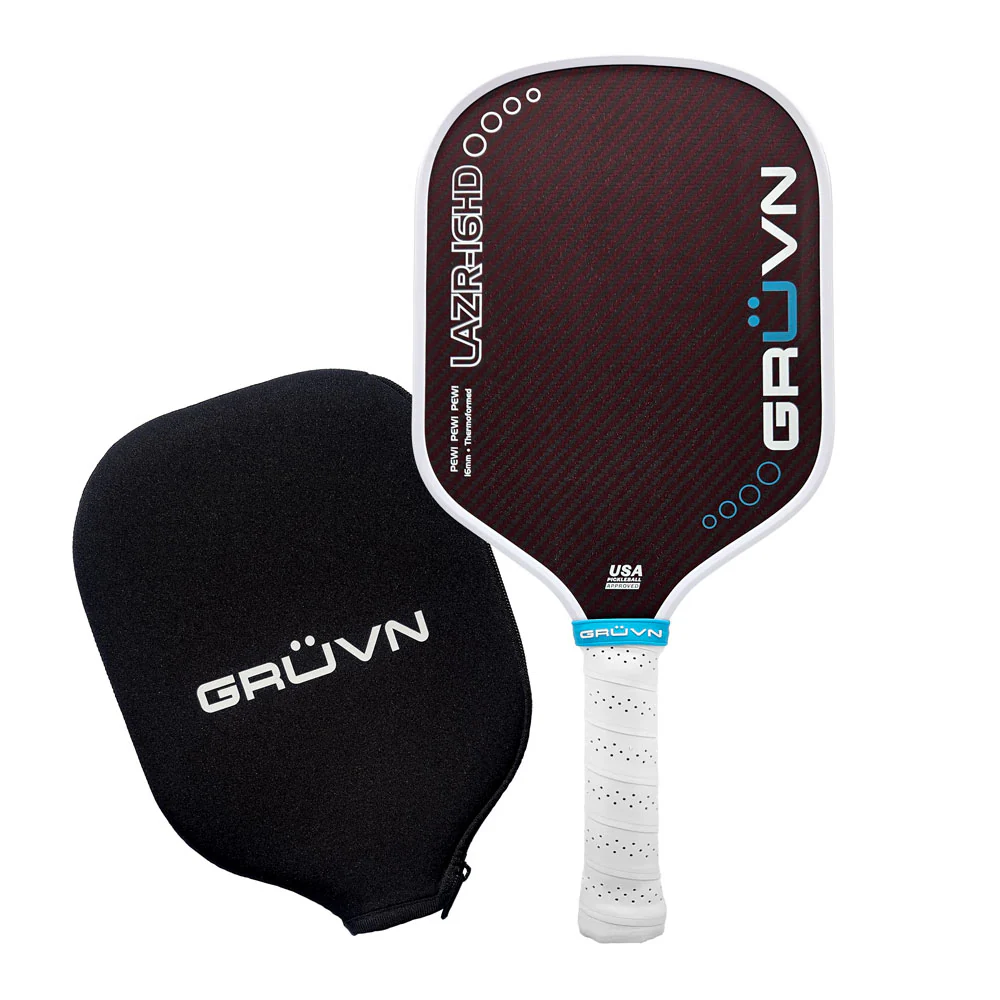
The LAZR 16HD gives control players another carbon-face option with a different shape and feel. I would compare handle, balance, and sweet spot before choosing between them. Save 10% at GRUVN with code 11PICKLES.
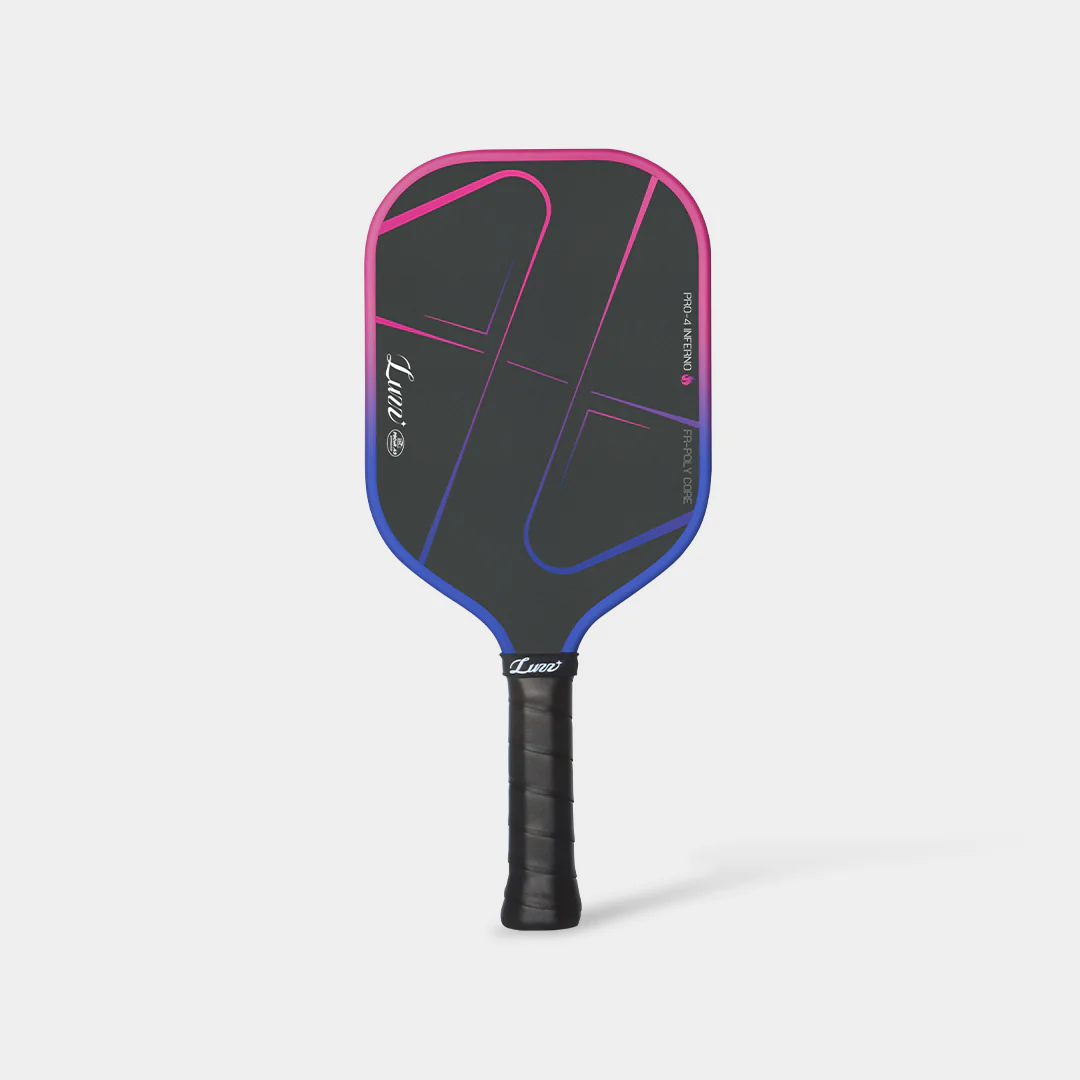
Luzz Pro 4 Inferno
The Inferno sits much farther toward power. I would choose it over the Elite X if I wanted easy offense, a larger sweet spot, and a full-foam feel that still plays lively. Save 15% at Luzz with code 11PICKLES.
Facolos Elite X 16mm Pros and Cons
The pros and cons tell the same story as the full review. The Elite X makes the soft game and ball shaping feel natural, but it gives up free offense and carries a serious approval caveat.
Pros
- Plush, connected contact
- Excellent placement
- Easy drops and resets
- Strong spin access
- Quick learning curve
- Useful gains from perimeter weight
- UPA-A currently lists an Elite X model
Cons
- Low free power compared with power paddles
- Low pop on short counters
- Sweet spot feels decent, not huge
- Added weight improves stability but slows the paddle
- USA Pickleball removed the Pro Series Elite X
- A new 2.0 signature entry makes exact model identification more important
Facolos Elite X 16mm FAQ
The approval split creates more confusion than the performance, so these direct answers cover the questions I would ask before buying.
Is the Facolos Elite X 16mm a Power or Control Paddle?
The Facolos Elite X 16mm is a control-first all-court paddle. It offers usable pace on a full swing, but it gives much less free power and pop than a true power paddle.
Is the Facolos Elite X 16mm USA Pickleball Approved?
No, USA Pickleball removed the Facolos Pro Series Elite X from its approved list on May 28, 2026. The organization cited excessive surface roughness and a difference between the production paddle and the submitted certification sample.
Is the Facolos Elite X 16mm UPA-A Approved?
Yes, the UPA-A list currently includes a Facolos Elite X 16mm entry, model FER162504. It also includes a separate Elite X 2.0 Gabe Tardio 16mm entry, so players must match the model number on their paddle before a PPA or MLP event.
Does Adding Weight Help the Facolos Elite X?
Yes, small amounts of balanced perimeter weight can improve stability, sweet-spot performance, and drive depth. Added weight does not transform the core into a power-paddle response, and too much can reduce hand speed.
Does Gabe Tardio Use the Facolos Elite X?
Gabe Tardio used the Elite X family in 2026, but a separate Elite X 2.0 Gabe Tardio model entered the UPA-A list on June 30, 2026. I would not assume that his current tournament paddle matches the original retail Elite X reviewed here.
Final Verdict: Precise, Plush, and Complicated
I liked playing with the Facolos Elite X 16mm because it made the shots I value feel simple. I could place the ball, shape it, absorb pace, and trust the response without a long adjustment period. Weight made it better, especially outside the center, but it never became a power paddle. That is fine. The Elite X feels most honest when I call it a control paddle for a player who already owns the power.
The approval situation prevents a universal recommendation. USA Pickleball removed it. UPA-A still lists an Elite X entry. A separate Gabe Tardio 2.0 model now exists. Recreational players can focus on feel, but tournament players need to focus on the exact model and sanctioning body first.
And 11 PICKLES, if you want more honest gear testing, browse all of our reviews. You can also check the 11 PICKLES Etsy shop for pickleball merch, then subscribe to the 11 PICKLES newsletter so you do not miss the next paddle test. I will keep testing the claims, adding weight, and telling you when the downside matters.
Transparency is key in pickleball and life. Some links on this site are affiliate links, which means if you click and make a purchase, we earn a small commission. It does not cost you extra, and it helps us keep serving up great content for the pickleball community.


.webp)