5.0 Pickleball Strategy: What Separates Advanced Players
The difference between a 4.0 and a 5.0 is not how hard you hit the ball. It is how rarely you miss, how quickly you read your opponent, and how consistently you make the right decision under pressure. I have played against 5.0 players who never hit a single shot that looked impressive on camera. They just never gave me anything to attack, and every time I sped up, they were already in position for the counter.
At 11 PICKLES, we play every day and train with pros. We cover every PPA Tour event and watch the best players in the world execute these strategies at the highest level. The patterns that 5.0 players use are the same patterns Ben Johns and Anna Leigh Waters use. The difference is execution speed. But the strategy itself is learnable.
This is the comprehensive 5.0 pickleball strategy guide that every competitor article leaves half-finished. Not 5 tips. Not a listicle. The full breakdown of what separates advanced players from everyone else, with the drills to get there.
What a 5.0 Player Actually Looks Like
Before diving into specific strategies, you need to understand what you are building toward. A 5.0 player on the DUPR rating system is an elite amateur or semi-pro. Most recreational players sit between 2.5 and 4.5. Getting to 5.0 means you have crossed into a level where the game changes fundamentally.
Here is what separates a 5.0 from a 4.0 in concrete terms:
- Unforced errors: A 4.0 player gives away multiple points per game through missed shots. A 5.0 player forces opponents to beat them. The errors are rare.
- Dink rallies: A 4.0 breaks down after 5-8 exchanges. A 5.0 stays in 15-20+ rally dink battles without anxiety and creates offense from within them.
- Third shots: A 4.0 is inconsistent. A 5.0 delivers consistent third shot drops, drives, or resets depending on the situation.
- Speed-ups: A 4.0 views the speed-up as the winner. A 5.0 views it as the setup for the next shot.
- Adaptability: A 4.0 has one game plan. A 5.0 reads the opponent within 2-3 points and adjusts.
5.0 Pickleball Strategy: Dinking Mastery
Dinking is not a defensive skill at the 5.0 level. It is an offensive weapon. The ability to stay in extended dink rallies without missing, while actively creating attack opportunities from within those rallies, is the single biggest differentiator between 4.5 and 5.0.
What 5.0 Dinking Looks Like
- Topspin pressure dinks that push opponents down and force pop-ups
- Dinking to the inside foot of opponents, exploiting the lowest point of the net at center court
- Holding the ball longer before contact for disguise. Your opponent cannot read whether you are dinking or speeding up.
- Two-handed backhand dinks for topspin generation and disguise. Anna Leigh Waters built her game around this shot.
- Taking high dinks out of the air instead of letting them bounce. This steals time from opponents and creates attack windows.
- Cross-court to down-the-line pattern changes that move opponents laterally and open the middle
The Grip Pressure Rule
Your grip pressure during dinks should sit at approximately 40% of your maximum squeeze. Here is how to train this: wrap a towel around your paddle handle and play a dinking set with it. The extra thickness forces you to loosen your grip. When you remove the towel, the light grip feeling stays.
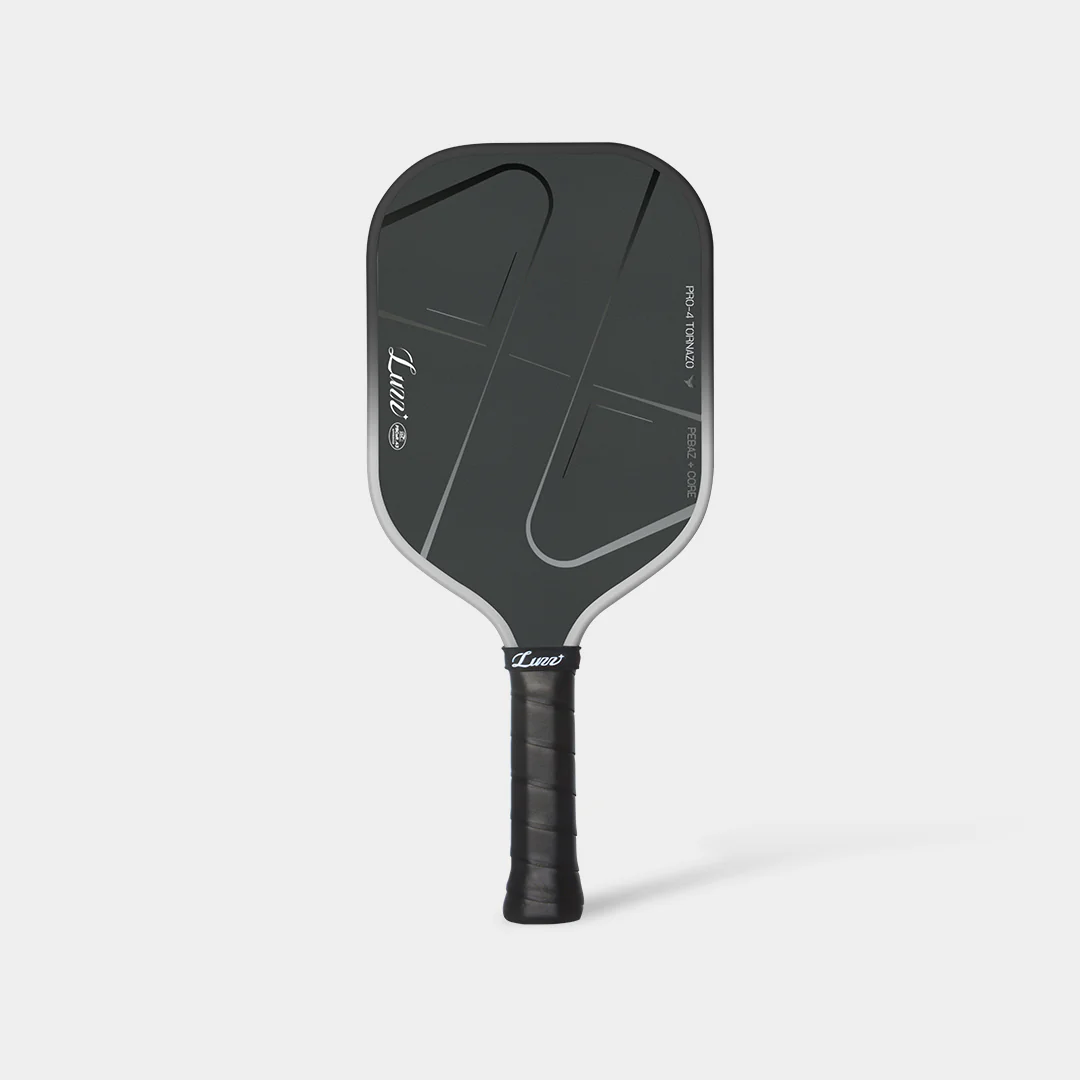
For more on grip technique, read how to hold a pickleball racket. A paddle with a textured carbon fiber face helps with spin generation on pressure dinks. The Luzz Pro 4 Tornazo is what I use when I want maximum spin and control at the kitchen.
Use code 11PICKLES for 15% off at Luzz.
Court Shrinking and Positioning
5.0 players make the court feel smaller for their opponents while creating more space for themselves. This is not about speed. It is about geometry.
How Court Shrinking Works
When your opponent hits wide, you do not chase the ball and then return to center. You move to bisect the angle of their possible returns. If the ball goes to the right corner, you shift right because their next shot is limited to a predictable arc. Your partner shifts to cover the gap you left.
Why 5.0 Players Dink to the Middle
Dinking to the middle is not lazy. It is strategic. A middle dink removes your opponent's angles. If they speed up from the middle, the ball comes right back at you. It is predictable. It is coverable. It creates confusion between partners about who takes the ball. The middle is the safest place to attack from and the hardest place to attack to.
The Transition Zone: Where 4.0 Players Get Stuck
The space between the baseline and the kitchen line is where most 4.0 players lose points. They either rush to the kitchen and get caught with a ball at their feet, or they stay back and never get into position. 5.0 players treat the transition zone as a process, not a sprint.
Reset Technique
The reset is the skill that takes players from 3.5 to 5.0. Here is the mechanical breakdown:
- Grip pressure: 3 out of 10. Light. Let the paddle absorb the pace.
- Paddle position: In front of your chest, contact point slightly ahead of your body.
- For low balls: Drop the paddle face below the ball, open the face slightly.
- Body: Athletic stance, knees bent, weight on the balls of your feet.
- The key: There is no swing. Track the ball, open the paddle face, and let the paddle do the work. This is a touch shot, not a hit.
- Target: Center of the net (34 inches vs. 36 inches at the sides). Soft arc into the kitchen.
- Movement: Stop your body before hitting the reset. Do not hit while moving forward.
Pros sometimes do not reach the kitchen until their 5th, 7th, or even 9th shot. Patience in the transition zone is a 5.0 skill.
Triangle Theory: Reading Your Opponent's Counter
Triangle theory is one of the most powerful concepts in advanced pickleball, and most competitors barely explain it. Here is the full breakdown.
How It Works
When you speed up, your opponent's counter follows a predictable triangular pattern approximately 70% of the time:
- Speed up cross-court and the counter goes down the line
- Speed up down the line and the counter goes cross-court
- Your speed-up is side 1, their counter is side 2, and the ball's return angle is side 3 of the triangle
How to Use It
Move your feet toward the expected return before your opponent hits. This is why 5.0 players look like they have fast hands. They are not reacting faster. They are pre-positioning based on geometry. Tell your partner where to expect the counter before you speed up.
When It Fails
Triangle theory breaks down when your opponent has time to think. If your speed-up is slow, telegraphed, or predictable, they can override the instinctive counter and place the ball wherever they want. The theory only works on reactive counters.
Stacking: The Formation Every 5.0 Team Uses
Stacking is conspicuously absent from every competitor article about 5.0 strategy, even though every PPA Tour team uses it. Here is why it matters and how to do it.
What Stacking Is
Both partners line up on the same side of the court before the serve or return, then slide to their preferred positions once the ball is in play.
Why 5.0 Teams Stack
- Keeps forehands in the middle. A right-hander on the left side and a left-hander on the right means both players' forehands cover the center.
- Puts the stronger player in the optimal position regardless of the score.
- Creates better poaching opportunities from the middle.
- In mixed doubles: Keeps the stronger player covering more court.
Communication
Use hand signals behind your back. The non-volley line player signals to the partner whether to stack or play straight. Simple signals: fist = stay, open hand = switch.
Stacking is 100% legal. The only rule is that the correct server serves from the correct court and the correct returner returns.
Speed-Up Timing: When to Attack and When to Wait
The biggest difference between a 4.0 and a 5.0 is not the ability to speed up. It is knowing WHEN to speed up.
The Traffic Light System
- Red light (ball below your knee): Always dink or reset. Attacking from below the knee is a losing proposition.
- Yellow light (ball between knee and hip): Proceed with caution. Dink is usually safer unless conditions are perfect.
- Green light (ball above hip): Attack. This is your window.
Three Conditions Before You Speed Up
All three must be true at the same time:
- You are balanced (not leaning, not reaching)
- You are in position (feet set, not scrambling)
- The ball is at attackable height (green or strong yellow)
If any one of these is missing, dink.
Where to Target Speed-Ups
- Right hip: The chicken wing zone. Hardest to defend.
- Right shoulder: Forces an awkward backhand counter.
- Straight at the body: Jams the opponent, removes their angles.
- Down the line: Highest risk but hardest to read if disguised.
The Two-Handed Backhand: Why It Dominates at 5.0
The two-handed backhand has become the dominant meta at the 5.0+ level, and there are specific reasons why.
- Disguise. Same body mechanics for the dink AND the speed-up. Opponents cannot read you.
- Topspin. Easier to generate heavy topspin on dinks, creating balls that jump after the bounce.
- Power. More power on speed-ups than a one-handed backhand.
- Stability. More stable at the contact point. Absorbs more pace on defense.
The tradeoff is 20-25% reduced reach compared to one-handed. But the disguise advantage alone makes it worth it. Anna Leigh Waters and Catherine Parenteau both use it as a primary weapon.
Erne Shots and ATPs: The 5.0 Weapons
These are the shots that separate advanced players from elite ones.
The Erne
The Erne is a volley hit from outside the court, jumping around or past the kitchen. Setup: work your opponent with cross-court dinks toward the sideline. When their momentum shifts toward the sideline and their ball tracks toward yours, sprint alongside the kitchen, jump to clear the non-volley zone, and volley before landing. Read pickleball ATP for the full breakdown.
The ATP (Around the Post)
When a ball is pulled wide enough, you can hit it around the net post instead of over the net. It is legal, dramatic, and demoralizing for your opponent. The ball does not need to clear the net; it just needs to land in the court.
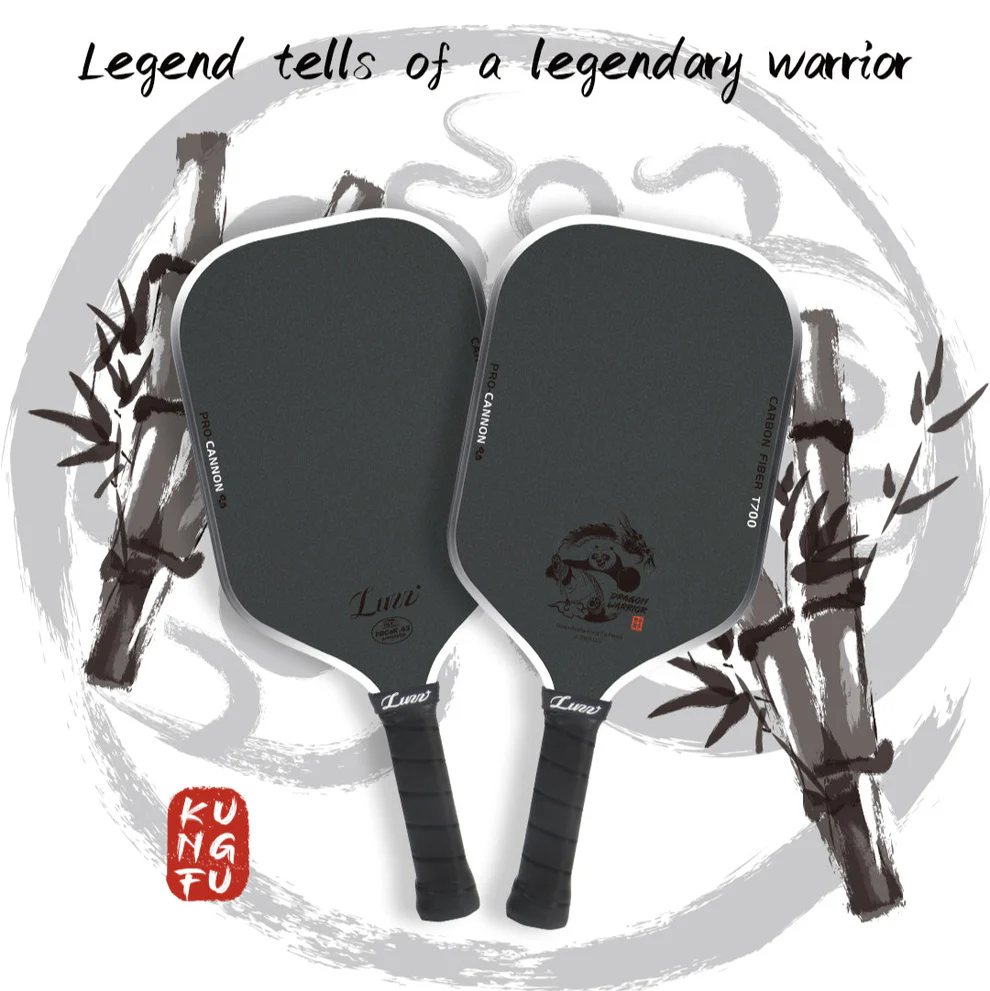
Both shots are high-risk, high-reward. Use them selectively. If you try an Erne every other point, your opponent will read it and drop behind you. An elongated paddle like the Luzz Cannon gives you extra reach on Erne attempts and passing shots.
If you want a closer look at how it actually performs, check out our full review of the Luzz Cannon Pickleball Paddle Kung Fu Panda edition.
10 Mistakes That Keep 4.0 Players Stuck
I see these at open play every single day. If you are stuck at 4.0-4.5, check this list honestly.
- Speeding up on red-light balls. Attacking from below the knee produces errors, not winners.
- Rushing the kitchen after a bad third shot. If your drop was too high, stay back and reset. Do not sprint into a ball at your feet.
- Playing one game plan against every opponent. Read your opponent. Adapt.
- Breaking in dink rallies out of impatience. If you speed up because you are bored, not because you have a green light, you will lose the point.
- 100% power drives. 60% drives that dip over the net create more offense than full-power blasts into the net or out.
- Ignoring stacking. If you and your partner are not stacking, you are giving away positioning advantages in every game.
- One-dimensional speed-ups. If you always speed up to the same spot, your opponent will adjust by game 2.
- Not resetting from the transition zone. Taking a big swing at a ball in no man's land is a 4.0 move. Resetting to the kitchen is a 5.0 move.
- Telegraphing attacks. If your body language changes before you speed up, your opponent reads it. Keep your dink and speed-up mechanics identical.
- Not watching pro matches. The patterns are all there. Watch PPA Tour coverage and study what the top players do in dink battles.
Drills to Develop 5.0 Skills
Here is a 60-minute practice session structured around 5.0 development.
Warm-Up (10 Minutes)
- 5 minutes of cross-court dinking (count to 25 before speeding up)
- 5 minutes of transition zone resets (partner drives, you reset to kitchen)
Skill Work (30 Minutes)
- Triangle theory drill (10 min): Partner A speeds up, Partner B counters. Partner A moves to the predicted triangle position before the counter arrives. Alternate roles.
- Two-handed backhand dink to speed-up (10 min): Dink 5 times with two-handed backhand, then speed up on the 6th. Partner tries to read which shot is the speed-up.
- 60% drive drill (10 min): Hit drives at 60% power. The ball must dip below the net height before reaching your opponent. Full power drives that sail high do not count.
Live Play (20 Minutes)
- Play games with one rule: you can only speed up on green-light balls (above hip). Any speed-up below the hip costs you a point regardless of outcome.
For solo practice, the Tennibot Pickleball Ball Machine ball machine lets you program drills that simulate the patterns above, including varying spin and placement to train your transition zone game.
Save $50 with code 11PICKLES on the Tennibot Pickleball Ball Machine.
If you are looking for a power paddle for those 60% drives that dip over the net, the Luzz Pro 4 Inferno delivers strong energy transfer without sacrificing control at the kitchen.
Use code 11PICKLES for 15% off at Luzz.
And 11 PICKLES, the path to 5.0 is a grind, but it is the most rewarding journey in pickleball. We are here for all of it. For more strategy content, check out how to beat bangers, how to keep the ball low, and how to be good at pickleball. Browse our gear at 11pickles.com/products and subscribe to the 11 PICKLES newsletter for strategy guides, gear reviews, and tournament coverage.
Some links on this site are affiliate links, which means if you click and make a purchase, we earn a small commission. It doesn't cost you extra, and it helps us keep serving up great content for the pickleball community.
What Does a 5.0 Pickleball Player Look Like?
A 5.0 pickleball player on the DUPR scale is an elite amateur or semi-pro. They rarely make unforced errors, stay in 15-20+ dink rallies without breaking, deliver consistent third shot drops and drives, read opponents within 2-3 points, and adjust strategy mid-game. The gap between 4.0 and 5.0 is primarily mental and tactical, not physical.
What Is the Triangle Theory in Pickleball?
Triangle theory predicts where your opponent's counter will go after you speed up. Speed up cross-court and the counter goes down the line. Speed up down the line and the counter goes cross-court. It works approximately 70% of the time on reactive counters. Move your feet toward the predicted return before your opponent hits.
How Long Does It Take to Become a 5.0 Pickleball Player?
It depends on your starting point, athletic background, and practice frequency. Most players who train deliberately (drills, coaching, competitive play) reach 5.0 in 2-4 years. Former tennis players may reach it faster. The key accelerators are consistent drilling, playing against better opponents, and studying pro matches.
What Is Stacking in Pickleball?
Stacking is when both partners line up on the same side before the serve or return, then slide to preferred positions once the ball is in play. It keeps forehands in the middle, puts the stronger player in the optimal position, and creates better poaching opportunities. Every PPA Tour team uses some form of stacking.
What Mistakes Keep 4.0 Players From Reaching 5.0?
The most common mistakes are speeding up on low balls (below the knee), rushing to the kitchen after a poor third shot, playing the same game plan against every opponent, breaking in dink rallies out of impatience, and hitting 100% power drives instead of controlled 60% drives that dip over the net.


.webp)