Pickleball Noise Reduction: Solutions That Actually Work
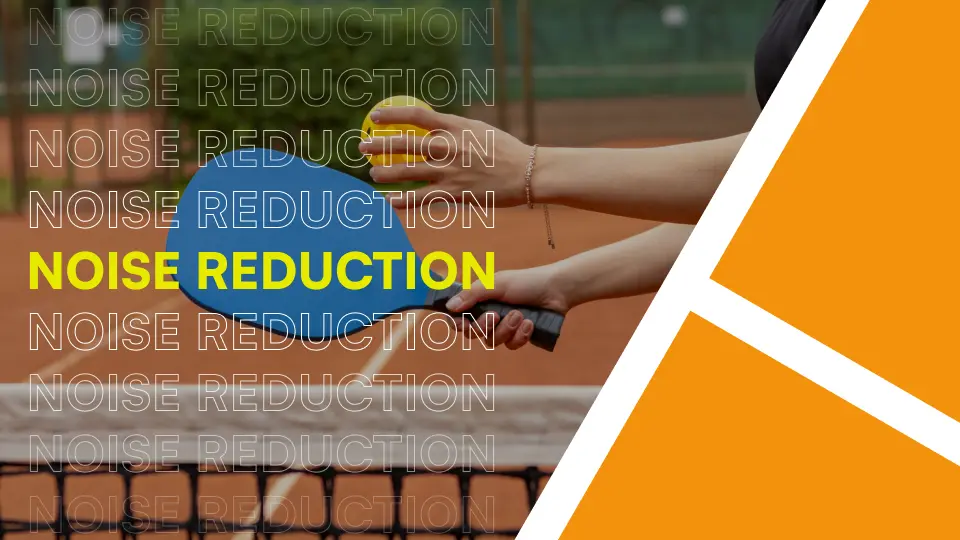
I love pickleball. I play every day. And I understand why the neighbors hate all the pickleball noise.
The sound a pickleball makes when it hits a paddle is not like any other sport. It is a sharp, high-pitched crack that repeats thousands of times per day, carries hundreds of feet, and falls in the exact frequency range where the human ear is most sensitive. It is not background noise. It is an impulsive sound, the acoustic equivalent of a car backfiring, repeated every few seconds for hours.
At 11 PICKLES, we cover pickleball from every angle: gear reviews, tournament coverage, and the issues affecting the sport's growth. The noise problem is real, and it is one of the biggest threats to new court construction and community access. Cities are banning pickleball. Courts are being permanently closed. Lawsuits are piling up. And the solutions exist, but most players do not know about them.
This is the complete guide to pickleball noise reduction: the science of why it is loud, the equipment that actually reduces it, the facility solutions for courts and communities, and how to handle the conflict when neighbors push back.
Why Pickleball Is So Loud
Understanding the science helps you make smarter decisions about equipment and court design. The noise is not random. It has specific acoustic properties that make it uniquely annoying.
The Impulsive Sound Problem
The "pop" of a pickleball hitting a paddle lasts approximately 2 milliseconds. That makes it an impulsive sound, a short burst that starts and stops almost instantly. Research from the Acoustical Society of America shows that impulsive sounds annoy people significantly more than steady-state sounds (like an air conditioner or traffic) at the same decibel level.
A dripping faucet at 40 dB is more annoying than a fan at 60 dB. Pickleball follows the same principle. The sharp pop triggers a stress response that continuous noise does not.
The Frequency Problem
The pickleball pop occurs between 1,000 and 2,000 Hertz. This falls within the range where human hearing is most sensitive. Your ear perceives it as louder than its decibel level suggests, and the higher pitch carries farther than lower-frequency sounds like tennis.
The Numbers
- At the paddle: 85-90+ dBA for a standard strike
- At 100 feet: approximately 68-70 dBA
- At 400 feet: approximately 58 dBA
- At 500 feet (along the length of the court): approximately 55 dBA, which is the common residential noise ordinance threshold
Pickleball is approximately 20-25 decibels louder than tennis because of the hard plastic ball and solid paddle construction. And more noise travels off the ends of the court than the sides, which matters for court orientation.
Why Communities Are Frustrated
Residents near courts can experience 20,000-40,000 individual noise events per day across 12-14 hours of play. Multiple simultaneous games multiply the strikes. Hard court surfaces bounce and amplify the sound. The combination of impulsive quality, midrange frequency, high repetition, and all-day duration creates a soundscape that is genuinely difficult to live next to.
I understand both sides. I play every day and I would not want to live 100 feet from a court.
Pickleball Noise Reduction: Equipment Solutions
The fastest way to reduce noise is to change what you play with. Quieter paddles and balls exist, and some of them perform well enough for serious play.
Quiet Paddles
What makes a paddle quiet:
- Polypropylene honeycomb core absorbs impact vibrations
- Thicker cores (16mm+) absorb more energy, producing a low thud instead of a high-pitched pop
- Graphite or carbon fiber faces increase dwell time (how long the ball stays on the surface), transferring more energy into the paddle and less into the air as sound
- Softer face materials (eTPU foam) further dampen impact
Thicker paddles with softer faces can be up to 7 dBA quieter than thin, stiff models.
Specific Quiet Paddles
OWL Paddles (~$170): The first paddle certified under USA Pickleball's Quiet Category. Uses Acoustene material that drops the sound below 80 dBA (vs. 85+ standard) and shifts the frequency below 600 Hz. Approximately 50% noise reduction. Approved for all sanctioned play.
Diadem Hush (~$190): Lab-tested to be 40% quieter than standard paddles. 18mm polypropylene core with eTPU foam face. Note: currently Quiet Approved by USA Pickleball but not General Use Approved for sanctioned tournament play. Best for recreational settings where noise is the priority.
**GAMMA 405 and 505:** Qualified for USA Pickleball's "Noise Reduced" designation. Part of GAMMA's quiet equipment line.
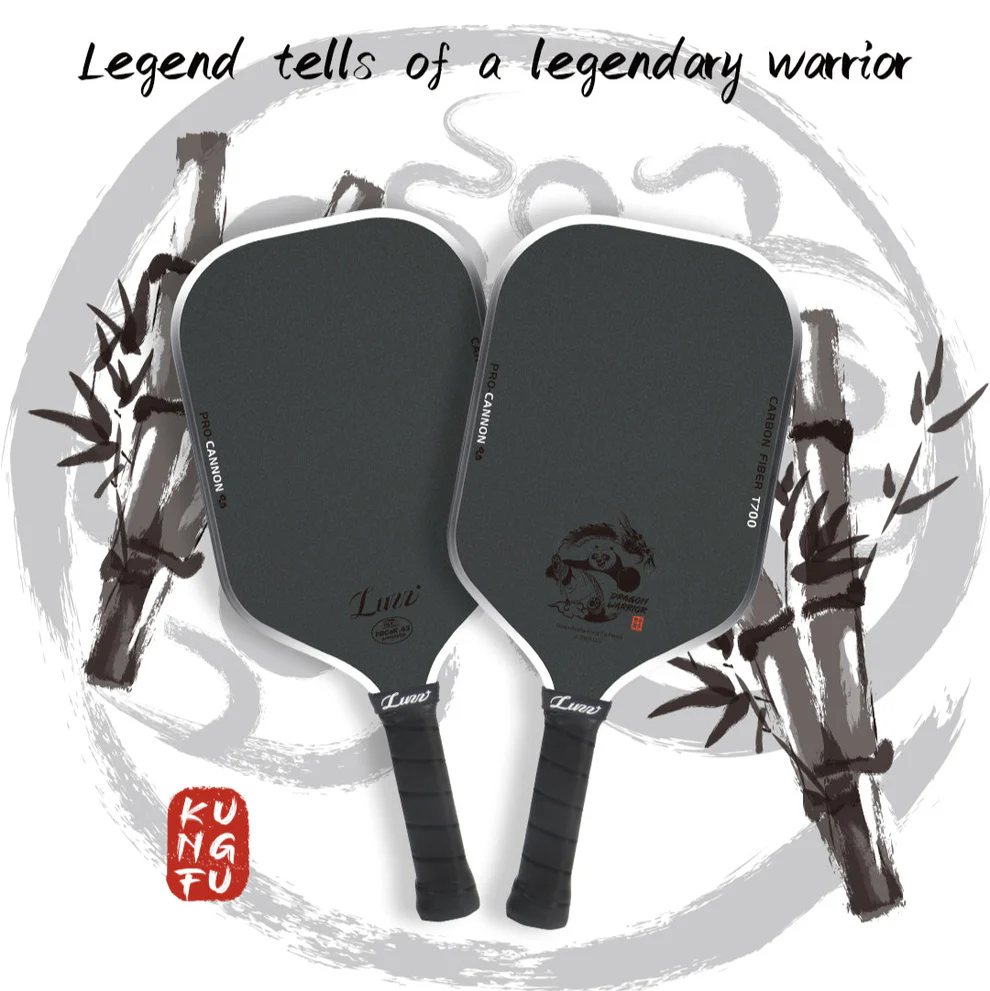
For comparison, the paddles we review at 11 PICKLES use polypropylene cores and carbon fiber faces, which sit in the moderate noise range. The Luzz Pro 4 Tornazo and Luzz Pro 4 Inferno or Luzz Cannon Kung Fu Panda ****are not marketed as "quiet" paddles, but their 16mm cores produce less noise than thinner models.
Use code 11PICKLES for 15% off at Luzz.
Noise-Reducing Paddle Pads
**Quiet Strike:** Adhesive pads that attach to the paddle face. Proven to reduce noise by up to 50%. This is the easiest retrofit if you do not want to buy a new paddle.
Quiet and Noise-Reduced Balls
**GAMMA Photon:** USA Pickleball "Noise Reduced" designation. GAMMA engineered this ball for outdoor play with reduced acoustic output.
GAMMA Librarian Foam Pickleball: Approximately 60 dB (equivalent to normal conversation vs. 70-90 dB for standard balls). Foam construction with no holes. Tradeoffs: it bounces higher, the game plays faster, and it does not maintain altitude as long. Best for practice and noise-restricted areas.
**ONIX Fuse G2:** The softest USAPA-approved outdoor ball currently available. It drops 1-3 dBA from average match sound. A realistic option for players who want tournament-legal play with slightly reduced noise.
**Diadem Official Quiet Ball:** The companion to the Diadem Hush paddle. Diadem calls it "The Official Quiet Pickleball."
Pickleball Noise Reduction: Facility Solutions
Equipment changes help, but facility-level solutions make the biggest difference. If you are involved in court planning, park design, or community advocacy, these are the options.
Sound Barriers and Fence Wraps
**Acoustiblok Pickleblok:** Soundproofing material that reduces noise by 10-12 decibels, which represents a 50% reduction as perceived by the human ear. Wraps around existing fencing.
**FenceScreen Pickleball SoundBlock:** Acoustical dampening material for court fences. Provides sound reduction and privacy.
**PICKLEGLASS transparent barriers:** Soundproof glass panels verified to reduce noise by 50%. Higher cost but preserves visibility for spectators.
Court Design Principles
If courts are being built or modified, these design choices reduce noise impact:
- Orient courts north-south to minimize sun glare AND align noise projection away from residences
- Position courts so the SIDES face residences, not the ENDS. More noise travels off the ends.
- Maintain minimum 800-foot setback from residential properties (2024 Model Ordinance recommendation)
- Use acoustic fencing on all sides at minimum, with double barriers on the residential side
- Plant dense vegetation buffers between courts and homes (trees and shrubs absorb some sound)
- Use rubber or cushioned court surfaces instead of bare concrete (absorbs more impact energy)
USA Pickleball Quiet Category
USA Pickleball created two official designations for noise-reduced equipment:
- Quiet Category: Equipment that meets strict acoustic standards for significantly reduced noise. The OWL paddle is the first certified product.
- Noise Reduced Category: Equipment that demonstrates measurable noise reduction but does not meet the full Quiet Category threshold. GAMMA products carry this designation.
The Quiet Category is USA Pickleball's official response to the noise crisis. As more products get certified, expect facilities to start requiring quiet-certified equipment during certain hours or in noise-sensitive locations.
How Communities Are Handling the Noise Problem
The conflict between pickleball players and residents is real and escalating. Here is how different communities have responded.
Courts That Were Shut Down or Restricted
- Martinez, California (March 2026): The city council voted 4-0 to permanently close eight pickleball courts at Hidden Valley Park that had only opened in February 2025. The $1.5 million conversion attracted large crowds, noise complaints, parking problems, and reports of players breaking in during closed hours. An acoustical engineer found no feasible noise mitigation. The courts lasted barely one year.
- Boise, Idaho (August 2025): The city settled a lawsuit and shut down pickleball courts at both Manitou Park and Willow Lane Athletic Complex. The $1.6 million tort claim was triggered by noise complaints, including reports of vulgar language from late-night players.
- Carmel-by-the-Sea, California: First California city to ban pickleball at public facilities. The city tried limiting hours and providing quieter equipment for two years before the council voted unanimously to ban pickleball at Forest Hill Park, saying it had "turned into a madhouse."
- Laguna Beach, California: Adopted an ordinance requiring players to switch to quieter paddles or face citations.
- Newport, Rhode Island: Neighbors sued the city over pickleball noise despite recent changes to hours of play.
- Apollo Beach, Florida: Ten homeowners sued the HOA for illegally approving conversion of tennis courts to pickleball without a community vote, claiming pickleball is 4x louder than tennis.
- The Villages, Florida (March 2026): Hundreds of residents signed a petition for noise mitigation near the Saluki Recreation Center, where multiple courts sit close to homes.
- Braintree, Massachusetts: Neighbors described "constant stress" from nearby courts as the local player base grew from 12 to nearly 600 over a decade.
- Multiple communities nationwide have imposed time restrictions (no play before 8 AM or after 8 PM) and day-of-week limits.
The pattern is clear: courts that are built too close to homes without acoustic planning are getting shut down. And once a court closes, it rarely reopens.
Communities That Found Solutions
- The Villages, Florida: Built new dedicated pickleball facilities with acoustic barriers, separating them from residential areas.
- Several municipalities have adopted the 2024 Model Ordinance framework from the Noise Pollution Clearinghouse, recommending 800-foot setbacks and 68 dBA limits at the nearest residence.
- Facilities with proactive acoustic planning that install sound barriers before complaints start have avoided the shutdown cycle entirely.
What Players Can Do
- Play with quieter equipment during early morning and evening hours
- Support facility upgrades with sound barriers and acoustic fencing
- Communicate with neighbors before conflict escalates. Invite them to play. Seriously.
- Advocate for dedicated pickleball facilities rather than converting courts next to residential windows
- Follow court hours without exception. Being the person who plays at 6 AM next to someone's bedroom window hurts everyone.
What Players Need to Know About Noise Ordinances
Most residential noise ordinances cap sound at 55 dB at the property line. Standard pickleball exceeds this threshold within 500 feet of the court. This means:
- Courts within 500 feet of homes may violate local ordinances without mitigation
- Players can face fines if noise complaints result in enforcement
- New court construction increasingly requires acoustic assessments
- The 2024 Model Ordinance from the Noise Pollution Clearinghouse recommends a minimum 800-foot setback and a 68 dBA standard at the nearest residence
If your local courts are facing noise complaints, the best resource is USA Pickleball's Acoustics page, which provides guidance for facilities, communities, and players.
For more on the broader growth and challenges of pickleball, read our piece on pickleball growth.
And 11 PICKLES, noise is the biggest challenge to pickleball's continued growth. The solutions exist. We just need to use them. We are here for all of it.
If you are in the market for new gear while you are here, check out our Etsy shop for pickleball merch and apparel. Subscribe to the 11 PICKLES newsletter for gear reviews, strategy content, and beginner guides. And if you want to stay up to date on everything happening in pickleball, 11pickles.com is the place.
Some links on this site are affiliate links, which means if you click and make a purchase, we earn a small commission. It doesn't cost you extra, and it helps us keep serving up great content for the pickleball community.
How Can I Make Pickleball Quieter?
The fastest way is to switch to quieter equipment. Paddles with thicker cores (16mm+) and softer face materials reduce noise significantly. The OWL paddle is the first USA Pickleball Quiet Category certified product, reducing noise by approximately 50%. Quiet Strike adhesive pads can reduce noise by up to 50% on any existing paddle. Foam balls like the GAMMA Librarian drop sound to conversation-level (60 dB).
Why Is Pickleball So Loud?
Pickleball produces an impulsive sound (a 2-millisecond pop) in the 1,000-2,000 Hz frequency range, which is where human hearing is most sensitive. The hard plastic ball and solid paddle create a sharp crack that is 20-25 decibels louder than tennis. The impulsive quality is more annoying than steady-state sounds at the same volume.
Are Quiet Pickleball Paddles Any Good?
The OWL paddle is USA Pickleball certified for all sanctioned play and reduces noise by approximately 50%. It shifts the sound frequency below 600 Hz, making it less annoying even at moderate volume. The Diadem Hush is 40% quieter but is not yet approved for sanctioned tournament play. For recreational settings, both perform well.
What Is the USA Pickleball Quiet Category?
USA Pickleball created two designations: "Quiet Category" for equipment meeting strict acoustic standards (OWL paddle is the first certified product) and "Noise Reduced Category" for equipment with measurable but less significant reductions (GAMMA products). These designations help facilities and players identify equipment that reduces community noise impact.
How Far Away Can You Hear Pickleball?
Standard pickleball is audible at 500+ feet along the court's length and 260+ feet from the sides. At 100 feet, it measures approximately 68-70 dBA. Most residential noise ordinances cap at 55 dB, which standard pickleball exceeds within 500 feet. Quiet equipment and sound barriers can reduce this range significantly.


.webp)