Luzz Inferno Frozen Review: Less Pop, Deep Feel, and Familiar Power

My Luzz Inferno Frozen review starts with the comparison everyone wants: it plays, feels, and sounds a lot like the original Luzz Pro 4 Inferno. The Frozen keeps the large sweet spot, the heavy full-swing ball, and that addictive deep contact. It lowers the immediate rebound, gives me a touch more control, and sounds slightly lighter.
The difference is real, but it is not a total redesign. I felt slightly less power and pop than I did with the original. Independent testing adds a useful distinction: one reviewer measured both paddles in the 94th percentile for full-swing power, while the original ranked in the 93rd percentile for pop and the Frozen ranked in the 67th. My hands felt a small reduction in both. The data suggests the clearest change occurs on short swings.
I will break down that power-versus-pop distinction, the new MPP-Z core, the deep thunk, sweet spot, spin, edge guard, all-weather claim, price, approval, and who should actually switch. And 11 PICKLES, this review builds on my original Luzz Pro 4 Inferno Pickleball Paddle Review, so I will spend time on the changes instead of pretending the family resemblance does not exist.
Luzz Inferno Frozen Review: Is It Worth It?
The Inferno Frozen is a power paddle with a calmer short game. It gives original Inferno players a familiar platform, then takes some heat out of counters, blocks, and touch shots.
- Best for: Power players who like the original Inferno but want more control
- Play style: Power with all-court control
- Strongest traits: Large sweet spot, deep connected feel, full-swing pace, spin, and stability
- Main tradeoffs: Premium price, slightly less instant offense, and limited proof for the all-weather claim
- Sound: Deep thunk, slightly lighter and different from the original
- Pop: Clearly lower than the original
- Power: Slightly lower in my hands, but still high; independent testing found equal 94th-percentile full-swing power
- Design: Cleaner edge-guard experience than my original Inferno
- My bottom line: The better Inferno for players who want the family feel without maximum short-swing rebound
Why does that matter? Power paddles rarely lose points because they lack another 1 mph. They lose points when routine blocks sail, resets sit up, and a player hesitates during the soft game. The Frozen tries to keep the offensive ceiling while lowering the defensive difficulty.
How I Tested the Inferno Frozen
I tested the Frozen against a paddle I already know well. That direct comparison matters more than testing it against a random control paddle because Luzz designed the Frozen for players who understand the original Inferno.
I used three comparison phases:
- I played the Frozen by itself until I stopped listening for differences on every hit.
- I switched between the Frozen and original Inferno during the same sessions to compare power, pop, sound, feel, and control.
- I used both on the same shot families, including full drives, compact counters, resets, drops, dinks, and overheads.
I also separated three types of evidence:
- My direct court feel
- Luzz's manufacturer specifications and claims
- Independent sample measurements and wear testing
That separation keeps the review honest. My hands can detect a difference that a speed test misses, and a lab can expose a performance pattern that I cannot measure. Neither one should erase the other.
Inferno Frozen vs. Original Inferno
The Frozen shares more DNA with the original Inferno than its icy design suggests. Both use a 16mm elongated format, both create a deep contact sensation, and both give me a large playable area.
What Stays the Same
The family traits show up immediately:
- Powerful full swings
- Large sweet spot
- Deep, satisfying contact
- Strong spin access
- Stable response for an elongated paddle
- Premium full-foam personality
If you disliked the original because you wanted a light, crisp, quick honeycomb paddle, the Frozen probably will not convert you. If you loved the original but fought the hot face, keep reading.
What Changes
I noticed four useful changes:
- The Frozen launches less aggressively on short swings.
- The sound has a slightly lighter, different thunk.
- The paddle gives me a little more control on blocks, resets, and kitchen exchanges.
- The edge guard has not scraped the way my original Inferno's edge guard did.
The design also looks excellent. Aesthetic taste is subjective, but the Frozen treatment feels intentional rather than like another colorway. I would never buy a paddle for paint alone, yet good design helps when the paddle already performs.
Choosing the Better Feel
I prefer the Frozen when I play more doubles and expect repeated kitchen exchanges. I prefer the original when I want the easiest offense and accept a hotter counter response.
My decision rule:
- Choose the original if maximum pop matters more than reset margin.
- Choose the Frozen if you still want power but need the short game to calm down.
- Keep the original if you already control it and do not care about the edge guard or weather claims.
The Frozen is a refinement, not a mandatory upgrade.
Power vs. Pop: The Most Important Distinction
Power and pop often get mixed together, and the Frozen makes that mistake expensive. Full-swing power describes serves, drives, and overheads. Pop describes speed from compact motions such as counters, punch volleys, and speedups.
Full-Swing Power Stays High
The Frozen still hits a heavy ball. I could drive through the court, create deep returns, and finish overheads without feeling like I had moved to an ordinary all-court paddle.
In my direct sessions, the original hit slightly harder. I had to supply a little more swing to get the same result from the Frozen. I would still classify both as power paddles.
One independent sample test placed both the original and Frozen in the 94th percentile for full-swing power. That result does not invalidate my feel. Sample weight, balance, swing path, ball, temperature, and break-in can change the experience. It does confirm that the Frozen keeps a high offensive ceiling.
Pop Drops Much More Clearly
The pop difference showed up on counters and blocks. The original can turn a compact movement into a fast ball, sometimes faster than I want. The Frozen makes the response more proportional.
The same independent database placed:
- Original Inferno pop in the 93rd percentile
- Inferno Frozen pop in the 67th percentile
- Both paddles' full-swing power in the 94th percentile
That pattern explains the design better than the phrase "less powerful." The Frozen creates a larger gap between a short touch and a full attack. I can reset with a quiet hand, then accelerate for offense.
Why That Gap Helps Doubles
Doubles points force fast role changes. I may absorb a drive, dink twice, counter a speedup, and finish an overhead within seconds. A paddle that responds differently to short and full swings gives me more range.
The Frozen helps in three ways:
- Blocks stay shorter when I use a compact face.
- Resets require less fear of an accidental launch.
- Full swings still produce enough pace to end the point.
Why it matters: controllable power beats maximum power for many advanced doubles players.
Feel and Sound: A Different Kind of Thunk
The original Inferno made its sound and feel part of the experience. The Frozen keeps the depth, then changes the pitch and rebound.
The Sound
The Frozen sounds slightly lighter to me. I still hear a pronounced thunk, but it lands in a different place than the original. It does not sound hollow or cheap.
Sound does not win points, but it changes perceived feedback. A deep sound can make contact feel more solid, even when measured speed stays similar. I treat that as real sensory feedback with a possible placebo component.
The Feel
The contact feels deep and connected. The ball seems to sit in the face long enough for me to shape it, yet a full swing still produces speed.
The Frozen avoids two foam-paddle extremes:
- It does not feel so muted that I lose contact information.
- It does not feel so explosive that every touch becomes risky.
That middle ground gives the Frozen its identity. I can enjoy the deep foam sensation without giving up all short-game precision.
Arm Comfort
Luzz says the TPE perimeter fill absorbs shock and reduces stress on the wrist and elbow. I did feel a clean, dampened impact, but I did not run a medical or long-term vibration study.
I would call the comfort promising and subjective. Players with an existing injury should focus on technique, load, grip size, and professional medical advice rather than treating one paddle as a cure. My guide to how to avoid tennis elbow in pickleball covers the broader picture.
Sweet Spot and Stability
The Frozen keeps one of the original Inferno's best traits: a large sweet spot for an elongated power paddle. I trusted the face on returns, counters, and defensive contact.
Center Contact
Center hits feel full and heavy. The MPP-Z core gives the ball a deep response rather than a sharp honeycomb crack. I could tell when I found the center, and the result carried pace.
Off-Center Contact
Small misses retained useful depth. Contact near the edge still lost energy, as every paddle does, but the face did not collapse into a dead patch.
Luzz lists a 6.1 plus or minus 0.1 twist weight. One independent sample measured 6.67. Twist weight estimates resistance to rotation on off-center contact, so both figures support a stable elongated profile.
Balance and Head Weight
The official target swing weight sits at 119 plus or minus 3. One independent unit measured 114, yet the reviewer felt more head weight than the swing number suggested.
That difference highlights why players should demo when possible. Swing weight measures resistance through motion, but balance point affects how heavy the paddle feels while waiting, blocking, or changing direction.
I would use this setup process:
- Play the Frozen stock before adding any mass.
- Add grip-end weight first if the head feels heavy.
- Add side weight only if you need more stability.
- Recheck fatigue after a full session, not five warmup minutes.
The stock sweet spot already feels large, so I would not assume it needs lead.
Control, Resets, and Drops
The lower pop makes the Frozen easier to manage than the original, especially when the paddle must absorb pace.
Resets
Transition resets came off the face with less unwanted depth. I could keep my grip relaxed, hold the angle, and place the ball into the kitchen.
The paddle still carries mass, so a wild face sends a wild ball. It simply gives me a wider margin than the original.
Drops
The deep feel makes drops enjoyable. I can lift with spin and trust the ball to stay connected for a fraction longer.
If your third shot still floats, the problem may come from technique rather than paddle choice. Start with my third shot drop pickleball guide, then decide whether a calmer face would help.
Dinks
The Frozen gives me enough touch to move the dink around the kitchen. I can roll, slice, or push with a predictable distance response.
It still feels like a power paddle in hand. Players who want the softest possible control platform have better options. The Frozen targets players who want to attack without making the soft game feel like damage control.
Spin and Surface Durability
The EP-12 epoxy matte surface gives the Frozen strong spin access. It looks smoother than some raw carbon faces, but it still grips the ball.
On-Court Spin
I could shape topspin drives, cut returns, and roll dinks confidently. Spin felt like a strength, not a compromise for the lower pop.
Useful spin matters more than roughness alone. I want the face to create a predictable path, especially when I accelerate. The Frozen did.
Durability Claim
Luzz says the EP-12 surface offers better wear resistance than standard surfaces. Early play cannot prove that. One independent test found the spin durability only slightly above ordinary raw carbon, not at the top of the durable-grit category.
I would describe the evidence this way:
- Early surface performance feels strong.
- Luzz's durability claim needs more normal-play hours and independent repeat testing.
- One test does not support the phrase "fade-free."
- Buyers should expect every textured surface to change over time.
I will update the conclusion after a longer wear window if the paddle stays in rotation.
All-Weather Performance: Interesting, Not Proven
The Frozen name refers to more than graphics. Luzz says the MPP-Z core maintains a more consistent response across hot and cold conditions.
Why Temperature Matters
Foam, resin, balls, and grips can all feel different as temperature changes. Cold conditions can make contact feel harder, while heat can change rebound and softness.
A more temperature-stable paddle would matter for:
- Players who practice outdoors through four seasons
- Tournament players who warm up early and compete in afternoon heat
- Owners who travel between indoor and outdoor environments
- Players who dislike a paddle that changes personality with the forecast
What Testing Shows So Far
One independent reviewer confirmed that the Frozen played normally in hot conditions. The same reviewer attempted cold tests but could not gather meaningful data.
My conclusion follows three steps:
- The engineering idea makes sense.
- Early hot-weather results look encouraging.
- The cold-weather claim still needs controlled, repeatable evidence.
I would not buy the paddle solely for weather resistance yet. I would treat it as a possible bonus to a paddle that already fits.
Edge Guard and Design
The Frozen improves a small issue that bothered me on the original. My original Inferno edge guard scraped more easily. The Frozen guard has behaved better during my test window.
That change matters because edge damage annoys players who paid premium money, even when the marks do not change performance. A clean guard also protects the face-to-edge transition.
The visual design works for me:
- The blue-and-white treatment fits the Frozen name.
- The graphics feel more cohesive than a simple recolor.
- The paddle looks premium without making the face hard to read.
- The edge guard integrates more cleanly.
Take the appearance judgment with a grain of salt. I care much more about the improved guard behavior.
Luzz Inferno Frozen Specifications
The Frozen keeps an elongated 16mm platform and a high swing-weight target. Those numbers fit the deep, powerful court feel.
- Shape: Elongated
- Core: MPP-Z
- Surface: EP-12 epoxy matte
- Perimeter: TPE fill
- Thickness: 16mm
- Length: 16.54 inches
- Width: 7.48 inches
- Average weight: 7.94 oz
- Handle length: 5.52 inches
- Grip circumference: 4.17 inches
- Swing weight: 119 plus or minus 3
- Twist weight: 6.1 plus or minus 0.1
- Warranty: 1 year
- Current displayed price: $219 sale price, down from $249 on July 24, 2026
One independent unit measured 8.06 oz, swing weight 114, twist weight 6.67, and a 5.75-inch handle. Sample variation and measurement method can explain part of the gap. I would weigh and measure the exact unit if specifications drive the purchase.
Price, Discount, and Value
The Frozen sits in the premium paddle tier. Luzz displayed a $219 sale price, down from $249, when I checked on July 24, 2026.
Code 11PICKLES takes 15% off eligible Luzz purchases. If it applies to the current $219 sale price, the total would be $186.15 before tax and shipping. Luzz can change sale and stacking rules, so I would verify the cart rather than promise that number.
I judge the value in three layers:
- Existing Inferno owners should upgrade only if lower pop, edge-guard behavior, or weather consistency solves a real problem.
- New buyers should compare the Frozen with the original at current checkout prices.
- Power players who struggle with resets may gain more from the Frozen than players who already control a hot face.
The one-year warranty helps. A premium foam paddle should last longer than the shortest warranty window, and Luzz gives buyers more coverage than several 6-month competitors.
Tournament Approval
The UPA-A approved paddle list includes Luzz INFERNO-FROZEN, model FROZEN, 16MM, added May 19, 2026. Luzz also lists the paddle as USA Pickleball approved, and current database tracking recorded a USA Pickleball Pass entry on March 26, 2026.
UPA-A governs paddle approval for PPA Tour and Major League Pickleball events. USA Pickleball maintains a separate equipment list for its sanctioned competition.
Before every event, I would:
- Search the exact model and thickness.
- Confirm the list date and current status.
- Check event-specific equipment notices.
- Bring a second approved paddle.
Approval can change. My article reflects the lists researched on July 24, 2026, not a permanent guarantee.
Independent Video Review
Another court perspective can help buyers hear the sound and see the ball response. This short review shows the Frozen in action:
I use video as supporting evidence, not as a replacement for court time. Reviewers bring different swing speeds, preferred balls, local temperatures, and comparison paddles.
Who Should Buy the Luzz Inferno Frozen?
The Frozen fits an aggressive player who wants more separation between touch shots and full swings. It does not fit every control player, and it does not make sense for every original owner.
Buy It If
- You love the original Inferno feel but fight its pop.
- You want a power paddle with easier resets.
- You value a large sweet spot.
- You like deep, dampened contact.
- You play both singles and doubles.
- You need current UPA-A eligibility.
- You prefer the improved edge guard.
Skip It If
- You want maximum short-swing pop.
- You already control the original Inferno comfortably.
- You prefer a light, crisp honeycomb paddle.
- You want a budget paddle.
- You need proven long-term grit or cold-weather data before buying.
- You dislike a higher swing-weight target.
My buying test asks three questions:
- Do you create enough swing speed to access the high full-swing power?
- Does excess pop cost you more points than it wins?
- Do you enjoy the original Inferno's deep foam feel?
Three yes answers make the Frozen an excellent fit. Two or more no answers point elsewhere.
Other Luzz Paddles I Have Reviewed
The Frozen makes the most sense inside the broader Luzz lineup. I would compare construction, shape, and price before deciding.
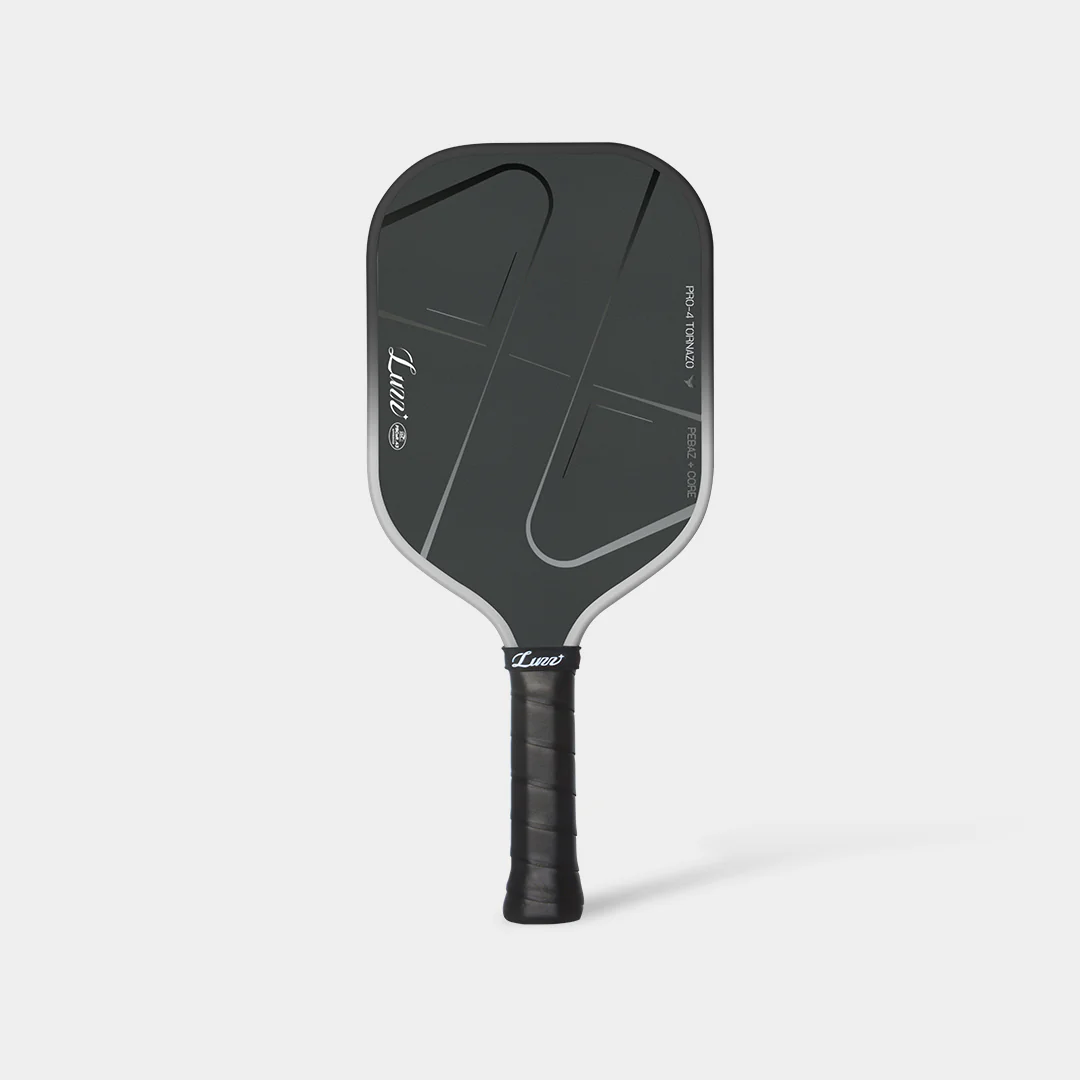
Luzz Pro 4 Tornazo
The Tornazo gives premium buyers another full-foam option with a different surface and response. I would demo it if the Inferno family feels too familiar. Save 15% at Luzz with code 11PICKLES
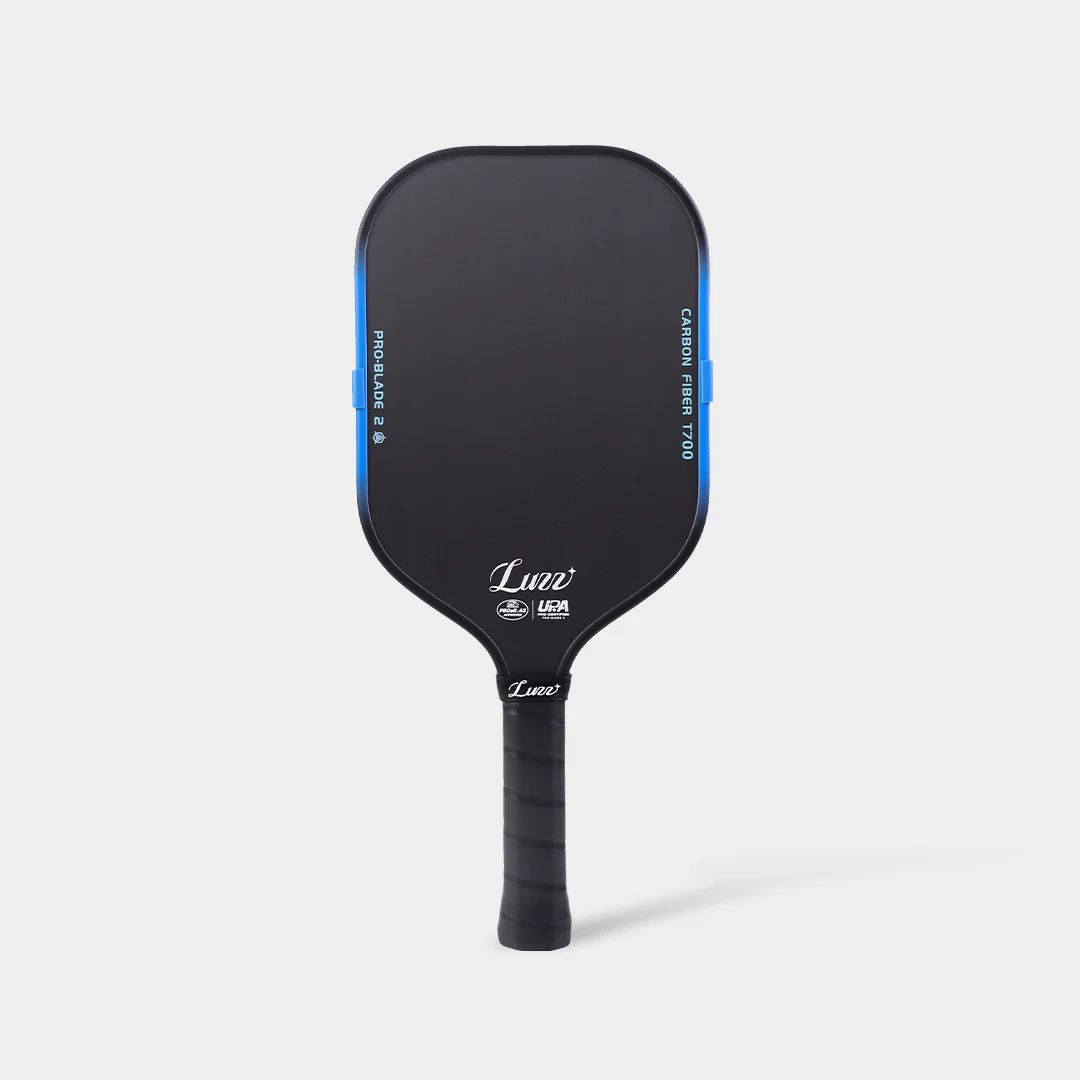
Luzz Pro Blade 2
The Pro Blade 2 brings a different shape and pro singles context. It gives players another way to balance reach, power, and hand speed.
Luzz Inferno Frozen Pros and Cons
The Frozen succeeds when I judge it as a refined Inferno. It keeps the power identity and removes some of the short-swing risk.
Pros
- High full-swing power
- Lower, more manageable pop
- Large sweet spot
- Deep and distinctive feel
- Strong spin access
- Easier resets and drops than the original
- Improved edge-guard experience
- UPA-A listed
- One-year warranty
Cons
- Premium price
- Slightly less easy power in my direct play
- Lower pop may disappoint original Inferno fans
- Higher swing-weight target can feel demanding
- Surface durability needs longer proof
- Cold-weather consistency remains unproven
- Current sales and discount stacking can change
Luzz Inferno Frozen FAQ
The core buying questions focus on the original comparison, power, pop, weather, and approval. Here are the direct answers.
Is the Luzz Inferno Frozen Less Powerful Than the Original Inferno?
The Luzz Inferno Frozen felt slightly less powerful in my direct play, but it still ranks as a high-power paddle. One independent test placed both paddles in the 94th percentile for full-swing power, so the clearest reduction appears in pop rather than maximum pace.
Does the Luzz Inferno Frozen Have Less Pop?
Yes, the Luzz Inferno Frozen has clearly less pop than the original. One independent database placed the original in the 93rd percentile for pop and the Frozen in the 67th percentile.
Is the Luzz Inferno Frozen a Control Paddle?
No, the Luzz Inferno Frozen is a power paddle with improved control. It makes resets, blocks, and dinks easier than the original while preserving a high offensive ceiling.
Does the Luzz Inferno Frozen Play the Same in Cold Weather?
The cold-weather consistency claim remains unproven. Luzz markets the MPP-Z core for temperature stability, and one reviewer confirmed normal hot-weather behavior, but meaningful independent cold testing remains incomplete.
Is the Luzz Inferno Frozen Tournament Legal?
Yes, the UPA-A currently lists the Luzz INFERNO-FROZEN 16MM, and Luzz lists USA Pickleball approval. Players should still verify the exact model on the live governing-body list before every sanctioned event.
Final Verdict: A Better-Behaved Inferno
The Inferno Frozen keeps the part of the original that made me want to swing harder. It still produces a deep, satisfying ball, carries a large sweet spot, and gives power players enough pace to finish. The short game feels calmer, the sound shifts slightly, and the edge guard has treated me better.
I would not call it a completely new paddle. I would call it a better-behaved Inferno. Players who already control the original may prefer the extra pop and save the money. Players who love the original feel but struggle to reset it should put the Frozen at the top of the demo list.
And 11 PICKLES, browse more reviews and advanced strategy while you compare. Check the 11 PICKLES Etsy shop for pickleball merch, and subscribe to the 11 PICKLES newsletter for the next long-term update. I want to see what the surface and weather claims look like after real mileage.
Transparency is key in pickleball and life. Some links on this site are affiliate links, which means if you click and make a purchase, we earn a small commission. It does not cost you extra, and it helps us keep serving up great content for the pickleball community.


.webp)