How to Avoid Tennis Elbow in Pickleball: Prevention Guide
I played through elbow pain for three weeks before I admitted something was wrong. The outside of my right elbow burned every time I hit a backhand, and dinking, which should feel effortless, sent a sharp sting up my forearm. I was gripping too tight, swinging with my arm instead of my body, and playing 2-3 hours every day without warming up. That combination broke me.
Tennis elbow (lateral epicondylitis) is one of the most common injuries in pickleball. Research shows elbow injuries account for approximately 18% of all pickleball injuries, and the number is growing as more people play more frequently. The good news: it is almost entirely preventable if you understand what causes it and make a few specific changes.
At 11 PICKLES, we play every day and train with pros. We have an existing guide on how to prevent pickleball injuries that covers the full injury landscape. This article goes deeper on tennis elbow specifically: the exact mechanics that cause it, the technique fixes, the grip and paddle adjustments, and the warm-up and strength routine that keeps you on the court.
What Causes Tennis Elbow in Pickleball
Tennis elbow is pain and inflammation where your wrist extensor tendons attach on the outside of the elbow. The extensor carpi radialis brevis (ECRB) muscle takes the most abuse. Over time, repetitive strain creates small tears in the tendon that compound into chronic pain.
In pickleball, six specific mechanical issues cause this. Most players have at least two of them.
The Death Grip
This is the number one cause. A tight baseline grip keeps your forearm muscles constantly engaged, increasing strain at the tendon attachment. It is worst on mishits and fast exchanges at the kitchen line where your wrist absorbs unexpected force. If you grip at 7 out of 10 on every shot, your forearm never gets a break.
The fix: grip at 3-4 out of 10 for most shots. Tighten only on contact, then immediately relax. For the full grip pressure breakdown by shot type, read how to hold a pickleball racket.
Arm-Dominant Swinging
The strength of a swing should come from your core, hips, and legs, not your forearm. Harvard Health specifically calls this out: many players "muscle" the ball with their arm because the lightweight paddle creates a false sense that full body mechanics are not needed.
The fix: rotate your torso on every drive. Transfer power through your legs and hips. Your arm guides the paddle; your body generates the force.
Repetitive Dinking
Dinking is low power but high volume. Extended dink rallies require constant wrist stabilization without the relief of full swings. Over a 2-hour session, your ECRB tendon absorbs thousands of micro-impacts.
The fix: keep your grip loose during dinks (2-3 out of 10 pressure). Use your non-dominant hand to cradle the paddle between points and give your forearm a break.
Late Contact and Backhand Blocks
When you make contact too late, your wrist bends backward under force. This "braking" motion puts enormous strain on the extensor tendons. One-handed backhands with poor form are a primary aggravator.
The fix: position your body early so contact happens in front of you. Consider switching to a two-handed backhand, which distributes impact force between both arms.
Wrist Flicking
Excessive wrist movement during serves, overheads, and drives overworks the forearm muscles. The wrist should stay firm and stable at contact.
The fix: keep the wrist neutral through the hitting zone. Generate spin through your swing path, not wrist snap.
Improper Body Positioning
Late footwork forces you to reach and compensate with your arm. Every time you hit a ball while off-balance or fully extended, your elbow absorbs force it was not designed to handle.
The fix: move your feet first. Get to the ball early. Hit in a balanced, athletic position.
The Right Grip Size Prevents Elbow Pain
Your grip size directly affects how hard you squeeze the paddle, which directly affects elbow strain. This connection is under-explored in most articles, so here is the breakdown.
Why It Matters
- Too small: You squeeze harder to maintain control. Death grip. Forearm fatigue. Elbow strain.
- Too large: You lose wrist mobility and grip control. Your arm compensates with awkward mechanics.
How to Measure
Use the ruler test: measure from the bottom lateral crease of your palm to the tip of your ring finger. That measurement is your grip size. For the full sizing guide, see how to hold a pickleball racket.
Grip Size by Height (General Guide)
- Under 5'2": approximately 4 inches
- 5'3" to 5'8": 4 1/8" to 4 1/4"
- Over 5'8": 4 1/2"
If between sizes, go smaller and add an overgrip. You can build up but you cannot make a grip smaller. Overgrips from 11SIX24 also add cushioning that absorbs vibration.
Use code 11PICKLES at 11SIX24 for a discount on overgrips.
The Right Paddle Weight for Elbow Health
Paddle weight affects elbow strain more than most players realize.
- Too light (under 7.2 oz): You swing harder to generate power, increasing arm strain.
- Too heavy (over 8.5 oz): The extra weight stresses the joint on every shot.
- Sweet spot for elbow health: 7.3-8.4 oz with moderate swingweight.
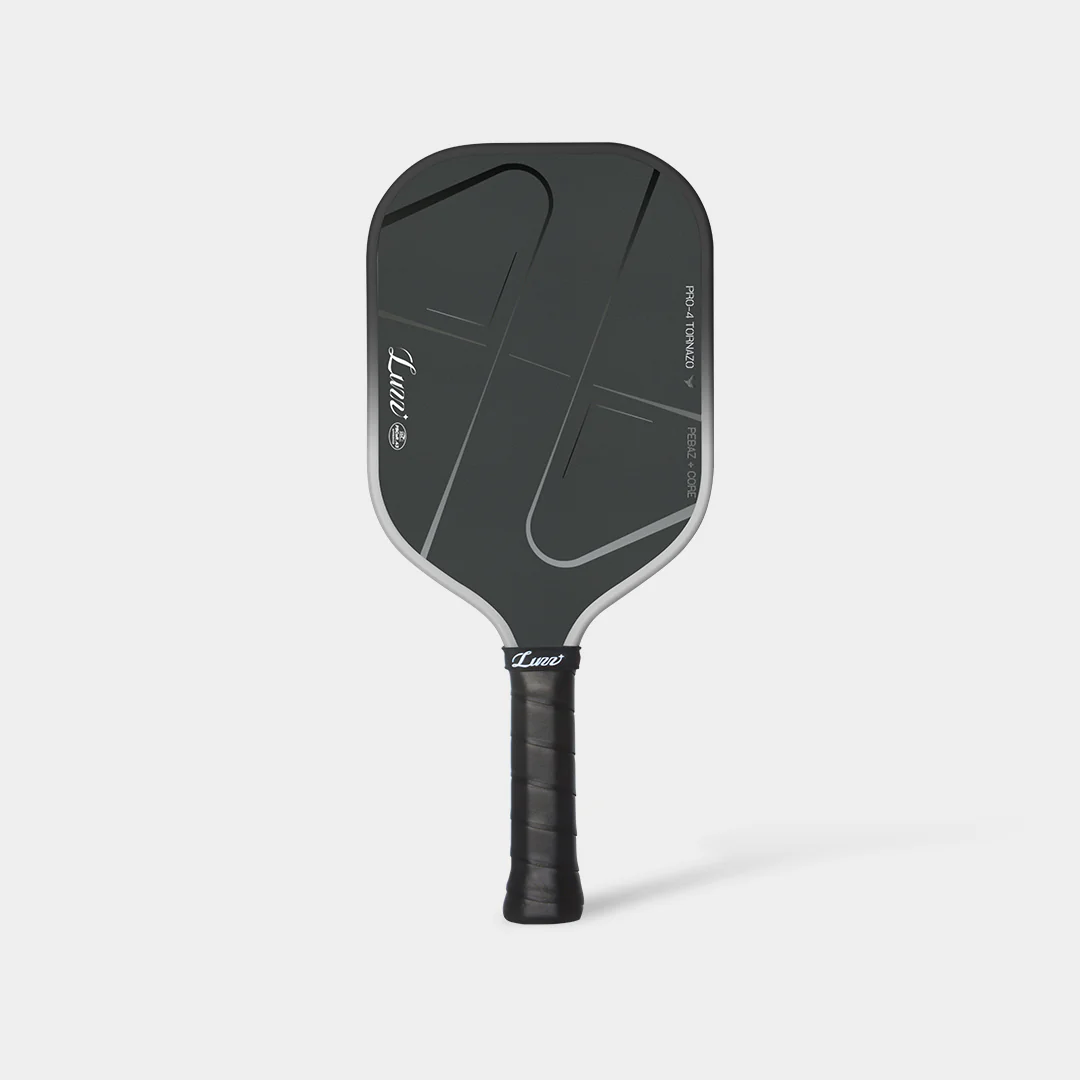
Paddles with thicker cores (16mm) absorb more impact vibration and transfer less force to your arm. The Luzz Pro 4 Tornazo at 8 oz with a 16mm core sits right in the optimal range for elbow-friendly play without sacrificing performance.
Use code 11PICKLES for 15% off at Luzz.
Warm-Up Routine That Prevents Elbow Pain
Do this before every session. It takes 5-10 minutes and reduces your risk significantly.
Dynamic Warm-Up (5-7 Minutes)
- Light cardio: 2-3 minutes of brisk walking or jogging to get blood flowing
- Arm circles: 20 seconds forward, 20 seconds backward, small to large
- Wrist circles: 10 in each direction, both hands
- Forearm rotation: Hold arms out straight, rotate palms up and down for 30 seconds
- Practice swings with increasing intensity: Start at 30% power, build to 70% over 1-2 minutes. No full-power drives until you are warm.
What NOT to Do
Do not static stretch before playing. Research shows static stretching before athletic activity decreases performance and power output. Save static stretching for after your session.
Post-Play Recovery (5 Minutes)
- Ice your elbows for 15-20 minutes after playing, even if they do not hurt. This wards off inflammation before it starts.
- Static forearm stretches: wrist flexor stretch (30 seconds each arm) and wrist extensor stretch (30 seconds each arm)
- Gentle forearm massage along the outside of the elbow
A proper warm-down routine reduces elbow pain risk by 60-70%.
How to Safely Increase Playing Time
Going from zero to playing every day is the fastest path to tennis elbow. Houston Methodist specifically warns that "many patients play pickleball one time and enjoy it so much they begin playing every day for hours at a time."
Safe Ramp-Up Guide
- Weeks 1-2: Play 2-3 times per week, 45-60 minutes per session
- Weeks 3-4: Play 3-4 times per week, 60-90 minutes per session
- Weeks 5-8: Play 4-5 times per week, 90-120 minutes per session
- After 8 weeks: Daily play is reasonable if you are warming up, cooling down, and not experiencing pain
Red Flags That Mean You Are Doing Too Much
- Pain that persists more than 24 hours after playing
- Pain that starts earlier in each session
- Weakness when gripping the paddle or opening a jar
- Tenderness on the outside of the elbow when you press on it
If any of these describe you, read our companion article on pickleball elbow exercises for recovery exercises, or see the next section on when to see a doctor.
When to See a Doctor vs. Self-Manage
Self-Manage If:
- Pain is mild and only during or immediately after play
- It has been less than 2 weeks
- Pain responds to ice, rest, and technique changes
- You can grip the paddle without significant discomfort
See a Doctor If:
- Pain persists for more than 2-3 weeks despite rest and ice
- Pain occurs during daily activities (gripping a coffee cup, turning a doorknob)
- There is visible swelling or a lump on the outside of the elbow
- You experience numbness or tingling in the forearm or hand
- Pain is severe enough to wake you at night
A sports medicine doctor or orthopedic specialist can assess whether you have true lateral epicondylitis and recommend treatment ranging from physical therapy to bracing to, in severe cases, surgery.
Strength Training for Long-Term Prevention
Building forearm and wrist strength is the best long-term defense against tennis elbow. Here is a simple program you can do at home 3 times per week.
6-Week Progressive Program
Weeks 1-2:
- Wrist extension isometrics: 5 sets x 30-45 second holds
- Grip strengthening with a stress ball: 3 sets x 15 reps
Weeks 3-4:
- Eccentric wrist extension: 3 sets x 12-15 reps with a 1-2 lb weight
- Forearm rotation: 3 sets x 10-15 reps
Weeks 5-6:
- Add resistance band wrist extensions: 3 sets x 10-15 reps
- Continue eccentric wrist curls with gradually increasing weight
For the full exercise breakdown with technique descriptions, see our companion article on pickleball elbow exercises.
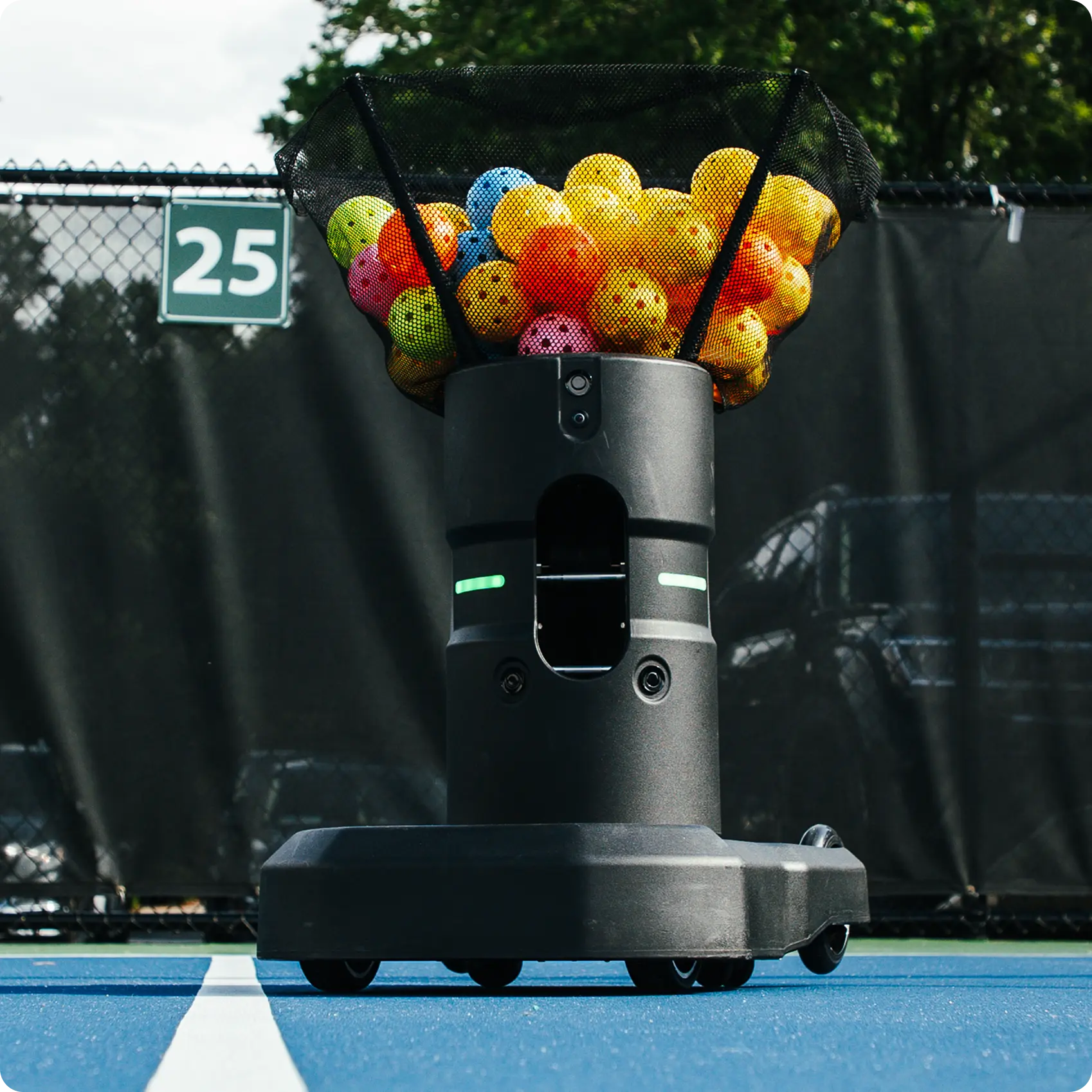
For solo training that does not stress your elbow, the Tennibot Pickleball Ball Machine ball machine lets you control the pace, placement, and spin of incoming balls so you can practice proper mechanics without overexertion.
Save $50 with code 11PICKLES on the Tennibot Pickleball Ball Machine.
And 11 PICKLES, staying healthy means staying on the court. That is what matters. We are here for all of it. Check out our apparel at 11pickles.com/products and subscribe to the 11 PICKLES newsletter for strategy content, gear reviews, and beginner guides.
Some links on this site are affiliate links, which means if you click and make a purchase, we earn a small commission. It doesn't cost you extra, and it helps us keep serving up great content for the pickleball community.
What Causes Tennis Elbow in Pickleball?
Tennis elbow in pickleball is caused by repetitive strain on the wrist extensor tendons. The six main causes are gripping the paddle too tightly, swinging with the arm instead of the body, repetitive dinking without grip breaks, late contact forcing the wrist backward, excessive wrist flicking, and poor body positioning that forces reaching. Grip size and paddle weight also contribute.
How Do I Prevent Pickleball Elbow?
Warm up for 5-10 minutes with dynamic stretches before every session. Maintain a relaxed grip (3-4 out of 10 pressure). Use proper technique with torso rotation instead of arm-only swinging. Ice your elbows after playing. Gradually increase playing time over 6-8 weeks instead of going from zero to daily. Use a paddle in the 7.3-8.4 oz range with a properly sized grip.
What Grip Size Prevents Tennis Elbow?
Measure from the bottom crease of your palm to the tip of your ring finger. Use that measurement as your grip size. A grip that is too small forces you to squeeze harder, increasing elbow strain. A grip that is too large reduces wrist mobility. If between sizes, choose smaller and add an overgrip for cushioning and vibration absorption.
Should I Stop Playing Pickleball if My Elbow Hurts?
Not necessarily. If pain is mild and only occurs during play, reduce your playing frequency, ice after sessions, and focus on technique corrections. If pain persists more than 2-3 weeks, occurs during daily activities, or includes swelling, numbness, or tingling, see a sports medicine doctor or orthopedic specialist.
What Paddle Weight Is Best for Elbow Health?
The optimal range is 7.3-8.4 ounces with moderate swingweight. Paddles that are too light (under 7.2 oz) cause you to swing harder, increasing arm strain. Paddles that are too heavy (over 8.5 oz) stress the joint on every shot. Thicker cores (16mm) absorb more vibration and transfer less force to the arm.


.webp)