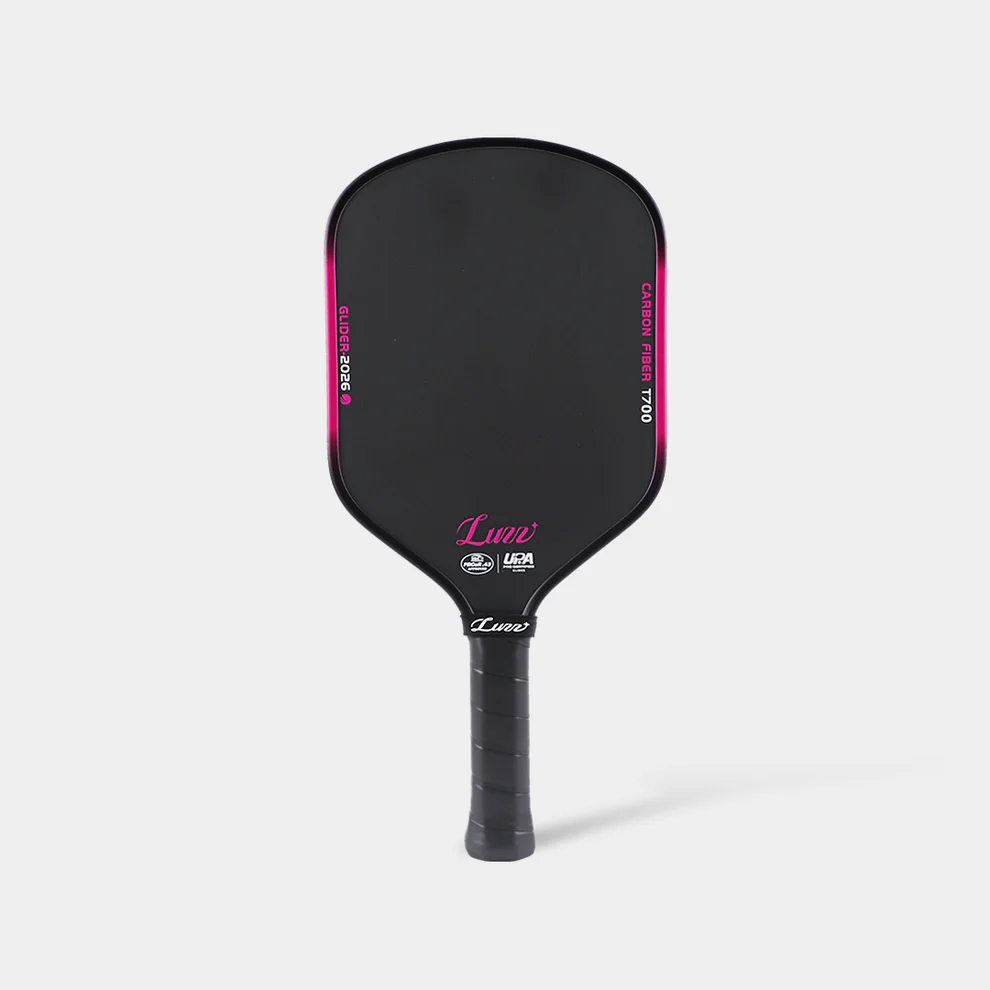
Luzz Glider 2026 Review: Cannon-Like Power in a Friendlier Hybrid

Here's my Luzz Glider 2026 review in one line: it's a $119 hybrid that gives you most of what makes the Luzz Cannon great, just with a bigger sweet spot, a softer landing, and a touch less raw power. Use the 11 PICKLES partner code and that $119 drops to $101.15. At that price, it's tough to pass up.
I need to clear up two things that keep following this paddle around, though. First: the Glider 2026 is a Gen 3 polypropylene honeycomb paddle with an EVA perimeter, not a full-foam Gen 4 paddle. It feels like Gen 3 because it is Gen 3, plain and simple. Second: my test paddle's surface has held up better than the original Glider did, but an independent accelerated test showed a 22.7% spin loss. So I'm not going to tell you the 984-Aero grit is proven to last.
None of that ruins the review for me. I still think the Glider 2026 hits the right compromise for a lot of players: enough offense, quick access to control, a forgiving hybrid shape, and current UPA-A approval, all at a price well below most premium paddles. And look, I'd rather hand you a great $119 paddle with one honest caveat than sell you a spotless marketing story.
For me, the Glider 2026 lands near the power end of all-court. I can attack with it, but it doesn't hit quite as hard as the elongated Cannon. What I get in return is a bigger-feeling sweet spot, easier placement, better transition defense, and a hybrid shape that still moves fast.
- Best for: Intermediate through advanced all-court players who want value, spin, and forgiveness
- Play style: Offense-friendly all-court
- Strongest traits: Sweet spot, control, shot shaping, price, and connected Gen 3 feedback
- Main tradeoffs: Less raw power than the Cannon and unproven grit durability
- Stock feel: Soft and dense with clear ball feedback
- Weighted feel: More stable, more powerful, and especially forgiving
- Price: $119 before discounts
- Partner price: $101.15 when 15% code 11PICKLES applies to the full price
- My bottom line: One of the easier value paddles to recommend, as long as you buy the paddle for how it plays and not for a durability slogan
Why does that matter? Because most players don't actually need the hardest-hitting paddle on the market. They need enough pace to finish a point, enough control to survive transition, and enough forgiveness that an average swing still does something useful. The Glider 2026 checks those boxes without asking you to make a $250 decision.
How I Tested the Luzz Glider 2026
I approached the Glider with two comparison points already in my head. The Luzz Cannon Pickleball Paddle Kung Fu Panda Review gave me the elongated power reference, and the earlier Glider gave me the shape and feel reference.
I used three test phases:
- I played the Glider stock to judge its natural balance, hand speed, launch, and sweet spot.
- I added perimeter weight gradually to see whether stability improved without making the hybrid shape sluggish.
- I moved back and forth between the Glider and power paddles to separate easy power from power I created with a full swing.
I tested more than baseline drives. I focused on the shots that decide whether a paddle can stay in my bag:
- Deep serves and returns
- Topspin drives and third-shot drops
- Transition resets and hard blocks
- Crosscourt dinks, roll dinks, and speedups
- Counters, flicks, and overheads
- Off-center contact above and beside the center
That last group matters. A paddle can feel incredible during clean drilling and ordinary during a live game. The Glider earned my attention because it kept enough depth and direction when I missed the center by a little.
The Glider 2026 Is Gen 3, Not Gen 4
The generation label creates unnecessary confusion, so I want to settle it before discussing feel. Luzz describes the Glider 2026 as a Gen 3 paddle with an 8mm polypropylene honeycomb core, a reinforced structure, and an EVA perimeter that brings the total thickness to 16mm.
Why It Feels Connected
Full-foam paddles can feel muted because foam changes how vibration reaches the hand. Some players love that quiet sensation. Other players struggle to locate contact on the face.
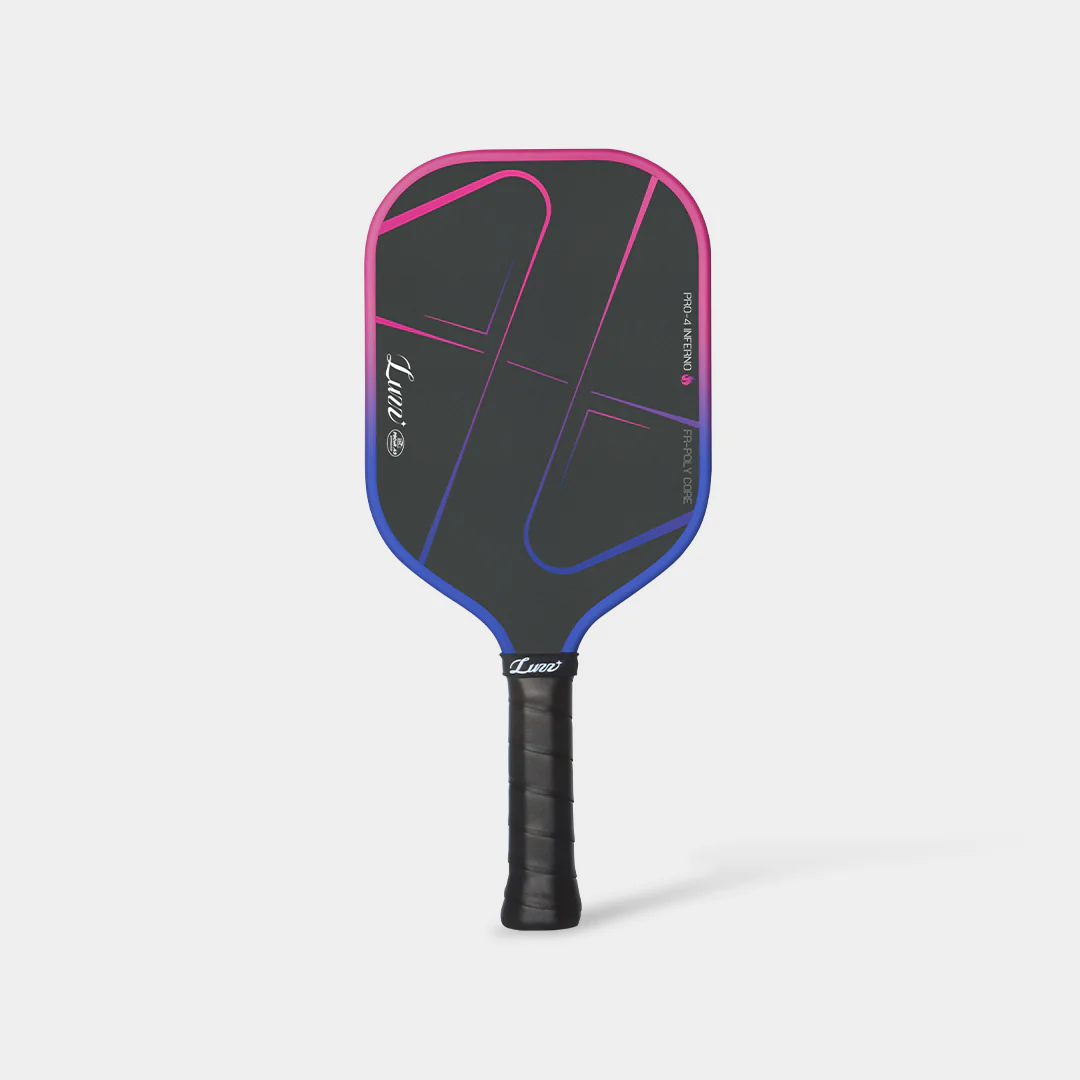
The Glider keeps honeycomb under the main hitting area, so I can feel the ball. The impact feels soft and dense, but it still tells me whether I found the center. That feedback explains why the paddle reminded me of a Gen 3 Cannon rather than the Luzz Pro 4 Inferno Pickleball Paddle Review, which uses a full MPP foam platform.
What the EVA Perimeter Adds
The EVA ring supports the edge and can help enlarge the playable area. It also changes the response compared with a basic honeycomb paddle that has no foam assistance.
In practical terms, I noticed:
- Better stability than I expected from the weight.
- A softer response outside the center.
- More dwell time than a stiff, hollow thermoformed paddle.
- Enough rebound to keep the paddle offensive.
That combination is why the Glider works for Gen 3 loyalists: you get the feedback they want without every slight miss feeling sharp or empty.
Power and Pop: A Hybrid Cannon With a Speed Limit
The Cannon comparison makes sense because both paddles share a lively Gen 3 personality. The Cannon uses an elongated shape and carries more plow-through. The Glider spreads the face wider and gives up some leverage.
Full-Swing Power
I still call the Glider powerful. Serves reached the baseline, drives carried pace, and overheads finished. I never felt trapped in a pure control paddle.
The Cannon hits harder. When I swung both with similar intent, the Cannon produced the heavier ball. The difference did not feel enormous, but it showed up when I reached late or used a shorter swing. The Glider made me finish the motion.
I would place the power ladder this way:
- The Cannon wins for the easiest baseline pace and putaway speed.
- The Glider 2026 gives up some pace but gains width, stability, and easier control.
- A pure control paddle gives up more pace than either Luzz.
That middle position will suit more doubles players than a maximum-power design. It gives me enough offense without turning a routine block into a launch problem.
Pop on Counters and Speedups
The Glider has useful pop, but it does not fire like the hottest power paddles. I could counter firmly when I met the ball in front. If I reached late, the paddle did not rescue the shot.
That response helped on resets and hurt a little during rushed hands battles. I consider the trade reasonable because the hybrid shape stays quick. I can prepare earlier rather than relying on a hyperactive face.
What Weight Changes
Perimeter weight made the Glider better for my game. The paddle already had a nice sweet spot, and weight made it feel especially solid.
I noticed three gains:
- More depth on defensive blocks
- More authority on drives and counters
- Less face movement on off-center contact
I also noticed one cost: the paddle moved a little slower. I would start small and stop early. The factory swing weight sits around 111, so the stock Glider gives players room to tune without starting from a heavy platform.
Control and Soft Game
Control separates the Glider from the Cannon more clearly than raw speed does. The wider hybrid face and soft, dense response made placement feel easy from the first session.
Drops Feel Natural
The Glider gives the ball enough dwell to shape a drop. I could brush up the back of the ball, clear the net with margin, and bring it down inside the kitchen. I did not need to guide the shot with a timid swing.
That matters because a timid drop often floats. A predictable paddle lets me use proper acceleration and spin. My guide to the Third Shot Drop Pickleball covers the technique, but the Glider lowers the equipment difficulty.
Resets Benefit From the Lower Launch
The paddle absorbs enough pace to keep a reset down. I could meet a drive in transition and guide it softly without feeling the ball jump.
This is where the Glider can help a player moving away from a power paddle. You still keep offense when you reach the kitchen, but you gain a calmer response on the way there.
Dinks and Placement
Crosscourt dinks felt predictable. I could use the grit to roll the ball or cut under it, and the face gave me a consistent distance response.
If you still think dinking means pushing a dead ball, read What Is Dinking in Pickleball. Modern dinking uses shape, height, speed, and location. The Glider gives me access to all four.
Sweet Spot and Forgiveness
The sweet spot is the best reason to choose the Glider over the Cannon. The hybrid face gives me more useful width, and the 6.4 manufacturer twist-weight target supports that court feel.
Stock Sweet Spot
The stock paddle felt forgiving without feeling vague. Small misses still traveled with useful depth. Contact toward the side lost some speed, but it did not collapse.
I would describe the stock sweet spot as above average for a $119 hybrid. I have played more expensive paddles that punish the same miss more severely.
Weighted Sweet Spot
Small amounts of equal weight on the sides made the paddle feel extremely stable for me. The center did not literally grow, but the penalty zone around it shrank.
I would tune the Glider in this order:
- Play it stock for at least one full session.
- Add a small equal amount near the lower sides if blocks twist the face.
- Move or extend the weight higher only if you want more plow-through.
- Recheck hand speed during fast volleys before keeping the setup.
The takeaway: the Glider doesn't need weight to work. It gives you a solid base and enough swing-weight room to personalize things later.
Spin and the 984-Aero Grit Question
The 984-Aero surface feels gritty out of the box, and my test paddle has retained useful bite better than the original Glider did over the same early window. That personal result supports cautious optimism, not a lifetime guarantee.
On-Court Spin
I could shape the ball easily. Topspin drives dipped, rolls changed direction after the bounce, and slices stayed low. The paddle offers the spin access I expect from a modern carbon surface.
I care about usable spin more than a single laboratory number. A surface needs to produce a predictable ball, and the Glider did that.
Accelerated Wear Test
An independent test used 100 impacts at 70 mph on one Glider face. The recorded spin dropped from 1,791 RPM to 1,385 RPM, a 22.7% loss. That result placed the surface near standard raw carbon durability in the reviewer's system.
Watch the Glider test at about 1:08:31:
Accelerated grit durability testing that includes the Luzz Glider 2026. Source: Johnkew Pickleball on YouTube.
How I Reconcile the Two Results
I hold both observations at once:
- My paddle still feels better than the original Glider did at the same early point.
- A controlled accelerated test found substantial wear.
- Accelerated impacts do not translate directly into a fixed number of normal play hours.
- The manufacturer has not yet shown long-term independent data that proves exceptional durability.
My conclusion: buy the Glider because it plays well at $119. Do not pay extra, or choose it over a better-fitting paddle, solely because of the phrase "durable grit."
Luzz Glider 2026 Specifications
The specs explain the Glider's mix of speed and forgiveness. The shape stays compact enough for hands battles, while the width and twist weight support off-center contact.
Specification
Luzz Glider 2026
Shape
Hybrid
Construction
Gen 3 honeycomb with EVA perimeter
Core
8mm polypropylene honeycomb inside a 16mm build
Face
984-Aero grit coating on carbon
Thickness
16mm
Length
16.34 inches
Width
7.68 inches
Average weight
7.94 oz
Handle length
5.31 inches
Grip circumference
4.13 inches
Swing weight
111 plus or minus 3
Twist weight
6.4 plus or minus 0.1
Warranty
1 year
Price researched
$119 on July 24, 2026
Swing weight estimates how heavy a paddle feels while moving. Twist weight estimates how strongly it resists rotating on an off-center hit. Those two figures help explain why the Glider can move quickly and still feel stable.
Price and Value
The Glider's price changes the recommendation. At $119, it competes with value paddles while offering a level of fit, finish, and court performance that feels much closer to premium gear.
Use code 11PICKLES for 15% off at Luzz. If the code applies to the full $119 price, the checkout total becomes $101.15 before tax and shipping. Promotions and stacking rules can change, so I would confirm the final cart.
I measure the value in three steps:
- The stock paddle works without lead tape or an immediate grip replacement.
- The control and sweet spot can help more rallies than another small increase in raw power.
- The one-year warranty exceeds the 6-month coverage common on some premium paddles.
The grit caveat still matters. A $101 paddle can lose surface texture and remain a good value, but a buyer should know what the evidence says.
Tournament Approval and Pro Use
Approval status changes, so I checked the current lists on July 24, 2026. The UPA-A approved paddle list includes Luzz GLIDER, model Glider, 16MM, added May 13, 2026.
Luzz also lists the paddle as dual UPA-A and USA Pickleball approved. UPA-A governs equipment for PPA Tour and Major League Pickleball competition. USA Pickleball runs a separate approved-equipment program for its sanctioned events.
Before competing, I would:
- Search the exact model on the current governing-body list.
- Match the name, thickness, and model identifier.
- Check for any new delisting or blackout condition.
- Bring a legal backup.
The pro adoption deserves nuance too. Team Luzz includes Kaitlyn Christian and Chris Haworth, and Luzz now sells a Chris Haworth signature Glider 2026. Christian has used Luzz paddles in pro competition, but her exact current model has changed across reports. I would not use one event photo as a permanent equipment record.
The signature version still tells us something useful. A high-level singles player needs reach, pace, spin, and predictable defense. The Glider's balance of offense and control fits that job.
Glider 2026 vs. Cannon
The Cannon comparison will decide the purchase for many Luzz buyers. I think of them as two shapes built around a related offensive Gen 3 idea.
Choose the Glider 2026 If
- You want a wider sweet spot.
- You play more doubles than singles.
- You value resets and placement.
- You want faster hands.
- You prefer an offense-friendly all-court paddle.
Choose the Cannon If
- You want more raw power.
- You like an elongated shape and extra reach.
- You create offense from the baseline.
- You accept a narrower sweet spot.
- You want the paddle to do more work on a short or late swing.
My decision rule has three questions:
- Do off-center hits cost you more points than missing power does?
- Do you spend more time in kitchen exchanges than baseline attacks?
- Do you want one paddle that behaves calmly on soft shots?
If I answer yes to two or three, I choose the Glider. If I answer no to all three, I choose the Cannon.
Who Should Buy the Luzz Glider 2026?
The Glider works for a broad range because it does not demand elite timing or a defensive playing identity. It gives developing players forgiveness and advanced players enough tuning room.
Buy It If
- You want an affordable Gen 3 hybrid.
- You like connected honeycomb feedback.
- You want strong control without giving up offense.
- You value a forgiving sweet spot.
- You plan to add a little perimeter weight.
- You need a current UPA-A-listed paddle.
Skip It If
- You want maximum power.
- You prefer a fully muted foam feel.
- You demand independently proven long-term grit.
- You need a very long handle.
- You dislike checking current approval records before tournaments.
I would especially recommend a demo to players leaving a hot power paddle. The Glider can make drops and resets easier without making the offensive game feel foreign.
Other Luzz Paddles I Have Reviewed
The Luzz line now covers several distinct feel profiles. I would choose by construction and court behavior, not by price alone.
Luzz Cannon
The Cannon is the direct comparison. It hits harder, carries more elongated leverage, and gives up some forgiveness to the Glider.
Luzz Pro 4 Inferno
The Inferno uses a full MPP foam core and brings a louder, deeper, more premium power experience. I would choose it for a larger budget and easier offense.
Luzz Pro 4 Tornazo
The Tornazo brings another full-foam interpretation with a distinct face and feel. It suits paddle enthusiasts who want a premium Luzz rather than the Glider's value focus.
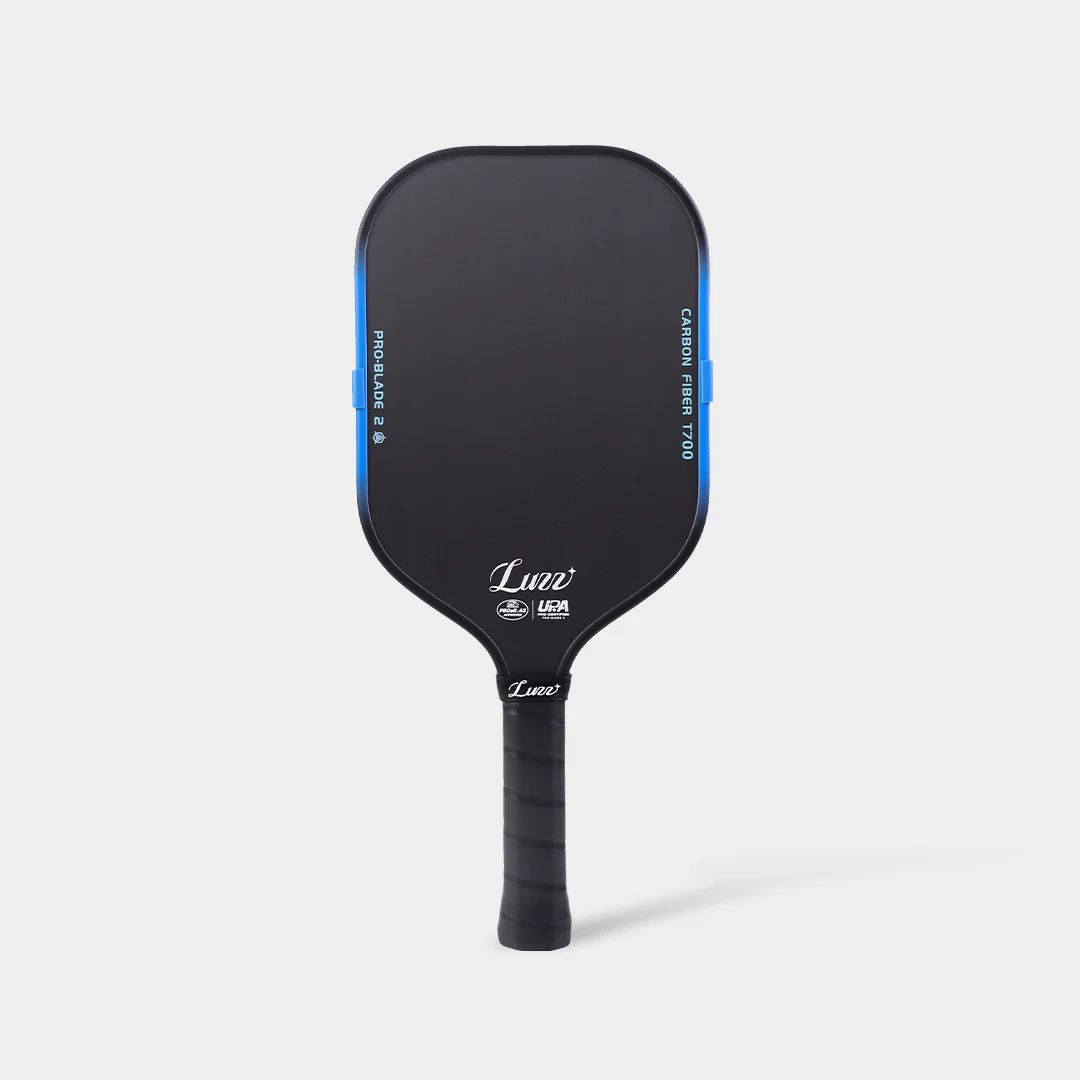
Luzz Pro Blade 2
The Pro Blade 2 has appeared in top singles play and gives buyers another Luzz shape to consider. I would compare handle, reach, and swing weight before choosing it over the Glider.
Luzz Glider 2026 Pros and Cons
The Glider wins on total balance. It loses when a buyer asks it to become the hardest hitter or the industry's proven grit-durability leader.
Pros
- Excellent value at $119
- $101.15 when the 15% code applies to full price
- Large-feeling sweet spot
- Connected Gen 3 feedback
- Easy drops, resets, and placement
- Enough power for aggressive all-court play
- Good platform for light perimeter weighting
- UPA-A listed
- One-year warranty
Cons
- Less power than the Cannon
- Short-swing pop does not match the hottest paddles
- 984-Aero durability claim lacks strong long-term support
- Accelerated testing showed 22.7% spin loss
- Added weight can reduce the quick stock feel
- Players must verify USA Pickleball status for their exact event
Final Verdict: The Right Compromise at the Right Price
The Glider 2026 gives me the part of the Cannon experience that most players need, then makes the package easier to live with. I still get enough power to attack. I gain a more forgiving face, easier resets, more natural drops, and a hybrid shape that feels ready from the first session.
I will not repeat the Gen 4 label because the paddle uses a Gen 3 honeycomb construction. I will not promise long-lasting grit because the independent wear data does not support that promise yet. Neither correction changes the larger result: this paddle plays extremely well for $119, and light perimeter weight can make it even better.
And 11 PICKLES, browse more reviews if you want the rest of the comparisons. Check the 11 PICKLES Etsy shop for pickleball merch, and subscribe to the 11 PICKLES newsletter for the next test. I will keep following the grit, approval lists, and pro setups as they change.
Transparency is key in pickleball and life. Some links on this site are affiliate links, which means if you click and make a purchase, we earn a small commission. It does not cost you extra, and it helps us keep serving up great content for the pickleball community.
Luzz Glider 2026 FAQ
The most common questions focus on construction, power, grit, and approval. Here are the direct answers.
Is the Luzz Glider 2026 a Gen 3 or Gen 4 Paddle?
The Luzz Glider 2026 is a Gen 3 paddle. It uses a polypropylene honeycomb core with an EVA perimeter, so it keeps connected honeycomb feedback instead of using a full-foam Gen 4 core.
Is the Luzz Glider 2026 a Power Paddle?
The Luzz Glider 2026 is an offense-friendly all-court paddle. It has useful power, but the Luzz Cannon hits harder and gives more pace on shorter or later swings.
Is the Luzz Glider 2026 Grit Durable?
The Glider's 984-Aero surface has retained useful bite during my early normal play, but independent accelerated testing reported a 22.7% spin loss. I consider long-term durability unproven and would not buy the paddle for that claim alone.
Is the Luzz Glider 2026 Tournament Legal?
The UPA-A currently lists the Luzz GLIDER 16MM, and Luzz markets the paddle as dual UPA-A and USA Pickleball approved. Players should confirm the exact model on the governing body's live list before every sanctioned event.
How Much Does the Luzz Glider 2026 Cost?
The Luzz Glider 2026 costs $119 before discounts as of July 24, 2026. Code 11PICKLES takes 15% off when it applies, which brings the full $119 price to $101.15 before tax and shipping.


.webp)